Mayor Cherelle Parker hasn’t been front and center in the fight to fund SEPTA. She said that’s no accident.
In an interview, Parker said she is in “constant communication” with Republicans and Democrats in Harrisburg and remains optimistic they will reach a state budget deal.
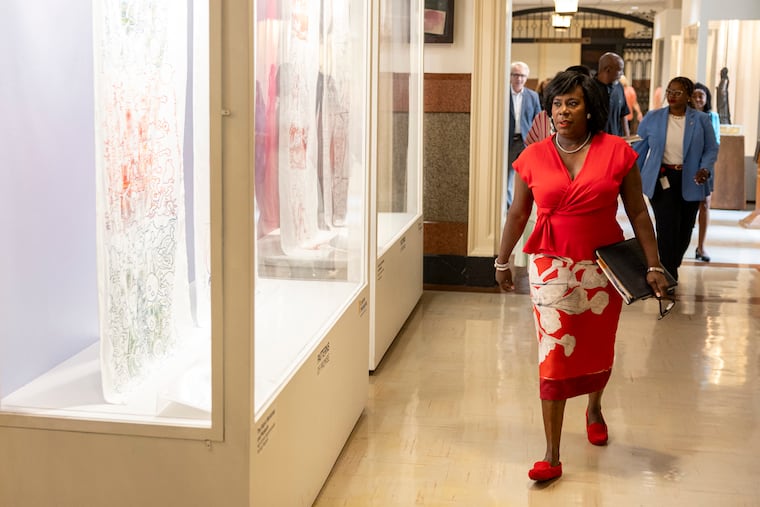
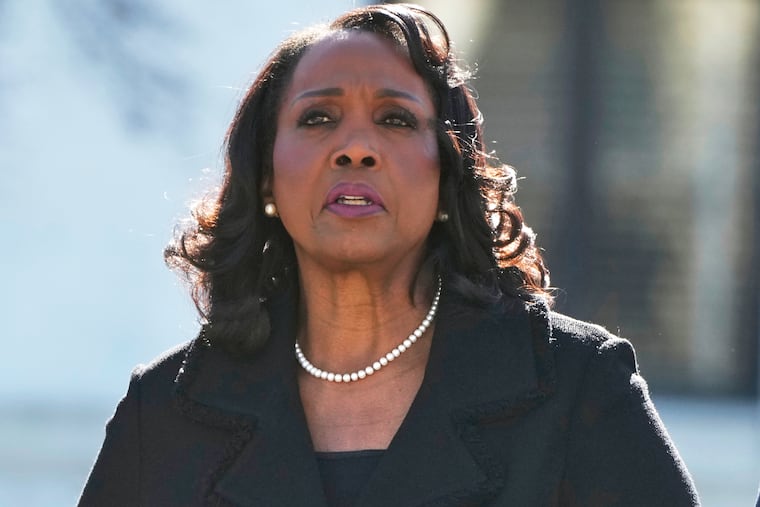
With less than a week before SEPTA’s drastic service cuts take effect, Philadelphia Mayor Cherelle L. Parker said she is in “constant communication” with Republicans and Democrats in Harrisburg and remains optimistic they will reach a state budget deal that will provide a lifeline for the beleaguered transit system.
“I have the confidence in our governor, in our legislative leaders, and even in the Republican leadership, that we will find a way to get it done,” Parker said in an interview with The Inquirer on Monday. “I’ve been a supporter and an advocate in a meaningful way for mass transit in the city of Philadelphia and the commonwealth of Pennsylvania long before it was a popular thing to do.”
In public this summer, Parker has not been highly visible in the fight to prevent the service cuts scheduled to take effect Sunday, followed by fare increases on Sept. 1. She gave her most robust comments on the crisis facing the mass transit agency Friday after being asked about SEPTA at a news conference on an unrelated subject, the new contract for the Philadelphia police union.
» READ MORE: Mayor Cherelle Parker calls Senate GOP proposal ‘fuzzy math,’ and urges lawmakers to fund SEPTA
On Monday, Parker touted her years of work promoting SEPTA as a legislator and said she has focused on the nitty-gritty tasks needed to ensure a deal gets done. The city, she said, did its “homework” by boosting its local subsidy to SEPTA in the city budget, passed in June, and working behind the scenes with lawmakers who hold the purse strings for state funding.
“For people who want me to be performative — when I have something to say, and then I call a press conference, I will say it," Parker said. “But you will not always see my work on social media, and that’s never been me, and it never will be.”
Several transit advocates said Tuesday they are not certain what Parker has done recently to advance the negotiations in Harrisburg but are hopeful she will be able to help get something done.
“It’s unclear to us what Mayor Parker is attempting to do to help resolve the situation, but we trust that she is working with our delegation to protect SEPTA riders,” said Alex Millone, a cochair of the transit committee for the urbanist nonprofit 5th Square Advocacy.
» READ MORE: Everything we know about how SEPTA could change on Aug. 24
Stephen Bronskill, coalition manager for Transit Forward Philadelphia, applauded Parker’s comments Friday, when the mayor called for a sustainable revenue stream for SEPTA and implied that a state Senate GOP proposal to reallocate mass transit capital funds to plug the agency’s operational deficit was “fuzzy math.”
“I was really encouraged to see the mayor speak out the other day,” Bronskill said. “We very much welcome the city’s involvement. We welcome business leaders, labor. … We want everybody pushing right now and grateful for the city stepping up.”
» READ MORE: Is there actually $1 billion sitting in a fund for SEPTA? Explaining the Public Transportation Trust Fund.
Parker has visited Harrisburg three times this year, in January, February, and June. She declined to comment on which Republicans she has been in contact with as the SEPTA funding ordeal has unfolded.
Former State Rep. John Taylor, a Republican who represented part of Northeast Philadelphia until 2018, said he is aware Parker has spoken with the top two GOP leaders in the Senate.
“She’s been on the phone in a lengthy way to [President Pro Tempore] Kim Ward, I know she’s been on the phone to [Majority Leader] Joe Pittman, and I know that her role is to, No. 1, make the case for the need” for SEPTA funding, Taylor said.
‘Get to yes’
In the 2023 mayoral election, Parker frequently touted her ability to work across the aisle, pointing to major pieces of legislation she helped pass when she was a Democratic state legislator during a time of unified GOP control in Harrisburg.
As chair of the Philadelphia delegation in the House, for instance, Parker helped advance Act 89 of 2013, a $2.3 billion transportation bill that boosted funding for roads and bridges — and included $450 million for mass transit.
Parker learned a formula for success while she was in the Capitol.
First, she said, Philadelphia needs to do its “homework” before it can ask the state for more money, preventing GOP lawmakers from questioning why they should cough up funds for the Philly area if the city isn’t doing its part. When it comes to the SEPTA funding crisis, Philadelphia has boosted its annual subsidy to the transit agency in both city budgets since Parker took office and is now planning to spend $792 million on SEPTA over five years.
The second step in the playbook is to ensure elected officials from the city speak with a unified voice to prevent opponents from using a divide-and-conquer strategy.
» READ MORE: The SEPTA funding debate digs up Pennsylvania’s perennial rural-vs.-urban divide
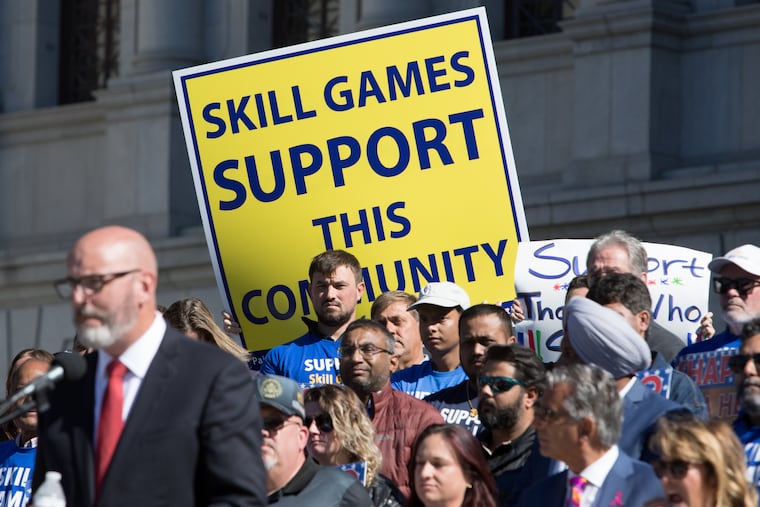
To that end, Parker appears to have swallowed her objections to the proliferation of so-called skill games, the untaxed and unregulated slot machine-style consoles that have popped up in gas stations and convenience stores. Parker is one of numerous Philadelphia officials who view them as magnets for crime, and she previously supported banning them in the city.
But to present a unified front, she has said Philadelphia must be “agnostic” on where new transit money comes from and has supported Gov. Josh Shapiro’s efforts. Shapiro’s plan involves finding new money for SEPTA in part by taxing, rather than banning, the games.
And lastly, Parker’s formula involves focusing on “getting to yes” rather than picking fights — which in this instance means declining calls from some progressives and transit activists to more forcefully denounce GOP lawmakers who they say are on the verge of devastating SEPTA.
“If anybody thinks that the mayor of the city of Philadelphia standing up telling the Republicans how bad they are and that they’re morally bankrupt,” Parker said, “if you think that is how you get to yes in the Pennsylvania General Assembly, you know nothing about how to get to yes.”
But despite her talk on the mayoral campaign trail about boosting Philly by brokering deals with Harrisburg Republicans, Parker said it is not her role to hash out the final agreement for SEPTA, which is tied up in negotiations over the state budget, now eight weeks overdue.
“Ultimately, I’m not at the budget table,” Parker said.
‘Not concerned about a political impact’
The political climate has changed since Parker left Harrisburg in 2015.
Republican antipathy to large, diverse cities has only grown during the rise of President Donald Trump, and centrists like Parker have lost ground in both parties.
Asked if she was worried that the GOP-controlled state Senate may cripple SEPTA to hinder Shapiro, who is seen as a potential top Democratic contender in the 2028 presidential race, Parker tellingly pivoted to talking about another group: progressives.
Parker noted that polls about her performance have been sent to Philadelphia voters during two crises this summer — the municipal union strike in July and the SEPTA funding deadline — and she suspects it’s because groups on the left are testing for weaknesses to potentially challenge her reelection in 2027.
“There’s something happening here politically,” she said. “What is clear to me is that there is a constituency to whom politics is more important than the policy and the budget. I’ll let them stay focused on doing polls and politics. I’m the mayor of this city.”
Parker said she was not sure if Republicans were playing games with SEPTA to hurt Shapiro — and said she hoped that was not the case. But for her, the idea that conservatives would jeopardize mass transit for that reason was tantamount to her potential political opponents on the left attempting to capitalize on crises facing the city.
The progressive Working Families Party was indeed behind the first poll on Parker’s performance, which surveyed Philly Democrats during and in the days after the contentious eight-day strike by the American Federation of State, County and Municipal Employees District Council 33.
» READ MORE: ‘They are my people’: Mayor Cherelle Parker on why she stood firm in the DC 33 city worker strike
“Like all organizations, the Working Families Party often conducts polling to measure the electorate’s opinion on important events happening across the city,” said Nick Gavio, a Working Families Party spokesperson. “We were proud to strongly support the striking AFSCME DC 33 workers and are fighting to ensure that Harrisburg delivers a budget that funds transit, increases the minimum wage, and improves conditions for working people across Pennsylvania.”
It was not immediately clear who paid for the second poll, which surveyed residents on their views on Parker, SEPTA, and State Sen. Joe Picozzi (R., Philadelphia), who has been heavily involved in the transit funding conversation. Gavio said the WFP was not involved.
The first poll of 501 likely 2027 primary voters, the results of which were obtained by The Inquirer, had mixed results for Parker. Despite taking place in the middle of a crisis that saw “Parker piles” of trash lining city streets, the poll showed the mayor with a net-positive approval rating, with 50% approving of her performance and 47% disapproving.
But that was substantially lower than the 63% approval rating she secured in a Pew Charitable Trusts poll earlier in the year that used a very different methodology.
A 52% majority, however, said they would rather vote for someone else for mayor in 2027 than Parker, and only 32% approved of how she was handling the strike.
Parker said she would not let the polls distract her.
“I would argue that there are some people who are hoping for the worst, that are hoping that it does have a negative political impact here,” Parker said, “but I’m not concerned about a political impact. What I am concerned with is doing what I am supposed to do as mayor.”
Staff writer Gillian McGoldrick contributed to this article.