Philly City Council is holding up a proposal to borrow $200M to buy the police headquarters building
Officials warned if the city does not exercise its option to buy the building this year, the annual rent price is set to nearly double. Council members balked at the price tag.
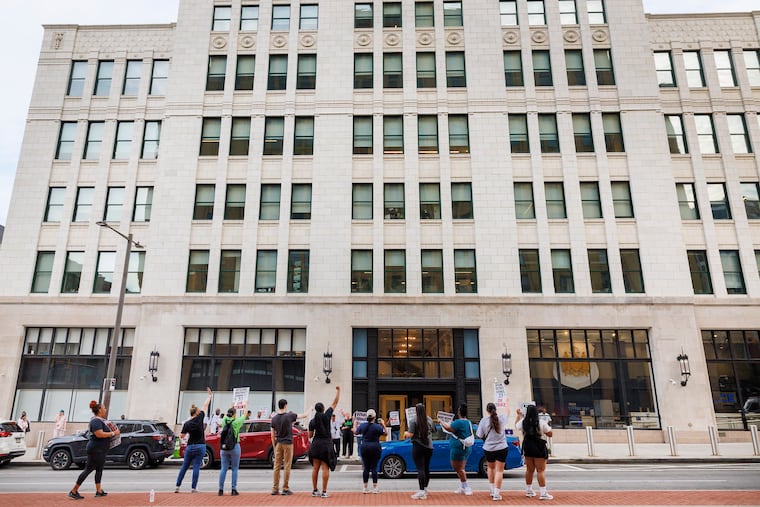
Philadelphia City Council members on Wednesday threatened to derail a plan for the city to borrow $200 million to purchase the North Broad Street tower where the Police Department is headquartered, a development that came amid a looming budget deadline and after lawmakers balked at the price tag.
The city is currently leasing 400 N. Broad St., a 1924 Beaux-Arts landmark that housed The Inquirer until the newspaper moved out in 2012.
The city leases the building from developer Bart Blatstein for $15 million per year, and the Police Department moved into it in 2022. The building is appraised to be worth $21.5 million. Purchasing the building would involve incurring roughly $200 million in outstanding debt on it and an associated renovation.
Now, Mayor Cherelle L. Parker’s administration is looking to exercise a one-time option to issue roughly $200 million in bonds to purchase the building and its remaining debt.
The option is available to the city only this year, administration officials said, raising the issue as Council is in the midst of finalizing a budget deal to fund the city government for the coming year.
The city’s eventual purchase of the police building was expected due to a complicated and controversial financing arrangement the city reached with Blatstein in 2017 under former Mayor Jim Kenney’s administration. At the time, Blatstein borrowed $252.5 million for a $209.5 million renovation and $39 million for the building itself.
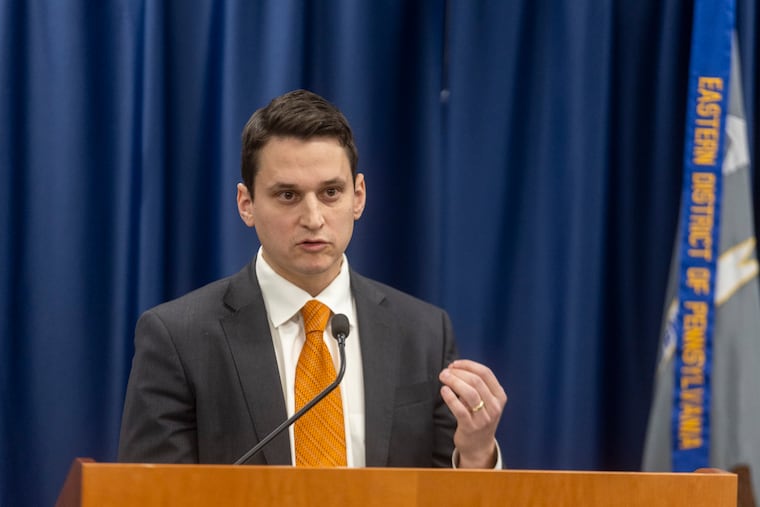
If the city does not exercise its option to buy the building this year, the annual rent price is set to nearly double under the terms of the city’s deal with Blatstein, City Treasurer Jackie Dunn told members of Council’s Finance Committee on Wednesday.
Dunn said that’s a worse deal for the city than borrowing the money to buy the building and paying annual debt service on it, which would be roughly the same amount as the current rent.
In addition, if the city does not buy the building now, it could continue leasing it for only 10 years from this coming fiscal year, which begins July 1. That means the Police Department would be forced to find a new headquarters fewer than 15 years after moving into the North Broad Street location.
Still, Council members said they were baffled by the last-minute situation, and Finance Committee chair Katherine Gilmore Richardson recessed the committee hearing without holding a vote. The committee is scheduled to reconvene Thursday.
The issue came to a head in the midst of around-the-clock budget negotiations between Council and Parker’s administration. Council is expected to take an initial vote on the mayor’s budget plan this week.
As part of her budget proposal, the mayor has asked Council to approve several tax increases, including a controversial $1-per-ride surcharge on rideshare services to help the School District of Philadelphia weather a $300 million budget deficit.
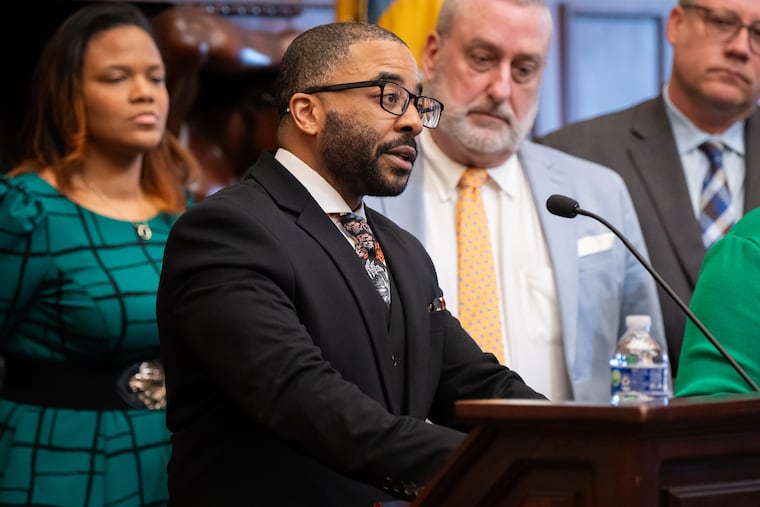
“This is not making sense for us,” said Gilmore Richardson, a Democrat who is also the majority leader. “We’re in the middle of budget negotiations where we’re being asked to do things for similar amounts of money [and] we’re in a predicament to pay almost a quarter-billion dollars for one building.”
» READ MORE: Mayor Parker’s proposal to increase taxes on hotels and Airbnb collapses amid City Hall budget negotiations
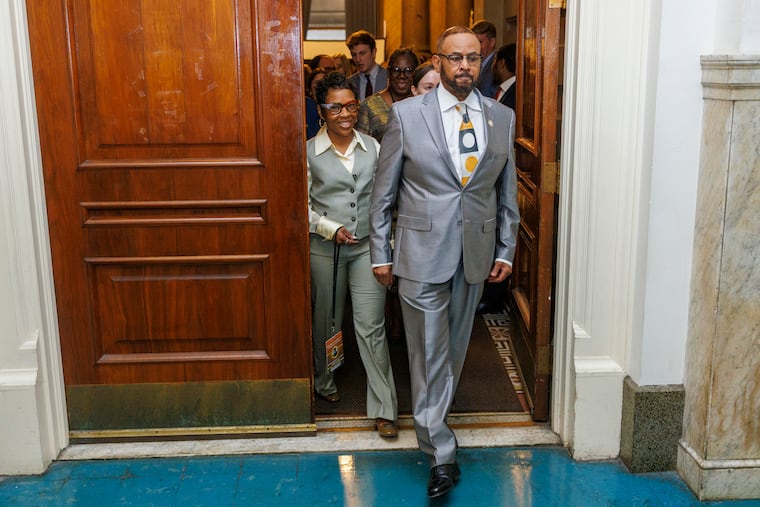
Councilmember Jeffery Young Jr., who represents the district where the police headquarters is located, said borrowing money to own the tower is a “noble cause” and said the department needs a “state- of-the-art” facility.
“But for the record,” he said, “there are other public facilities that the city owns that could use $200 million worth of renovations.”
Young’s comment was an apparent reference to his controversial efforts to change the city’s long-standing plans to renovate the Cecil B. Moore Library, which is also in his district. To the dismay of many North Philly residents and advocates for the library, Young has at times held up progress on the city’s renovation plan in favor of a more ambitious, but undefined, redevelopment of the site that could include housing.
During budget season, it’s common for Council members to threaten to hold up the administration’s goals while attempting to secure more resources for their own priorities.
“Everything’s related to the budget,” Young said in a brief interview Wednesday. “We’re trying to figure out what’s the best path to move forward so that everyone can be satisfied.”
Blatstein declined to comment. City Council President Kenyatta Johnson, who sponsored the bill to authorize the acquisition, did not respond to a request for comment.
The deal between Blatstein and the city was controversial when it was initially negotiated. The developer bought the building, the former home of The Inquirer and the Daily News, in 2011 for $22.7 million. He pursued plans to turn the building into a casino and hotel, both of which stalled.
In 2017, Council approved a plan to move the police headquarters to the building. Under the terms, a subsidiary of Blatstein’s Tower Investments Inc. would redevelop the site and lease it to the city, alongside an adjacent parking garage, for nine years, after which the city could acquire the property.
The purpose of the arrangement was to allow Blatstein to maintain possession of the building over the period that construction would take place, plus an additional five years, in order to qualify for $40 million worth of historic tax credits from the federal government. Only private actors are eligible for the program, so the city wouldn’t have qualified for such a credit.
Former City Councilmember Allan Domb, a real estate magnate, said in an interview Wednesday that, in 2017, he helped the city negotiate a sale price of $80 million to be paid at a fixed rate over 19 years.
But he said the Kenney administration “switched it on me against my will.”
“I said at that time ‘this is the best rate we will ever see, we could end up paying twice as much.’ And that’s what they will be doing,” Domb said. “It’s such poor economic policy.”