Mayor Parker’s proposals to tax tech companies falter as city budget deadline looms
City Council leaders on Wednesday put a bill to increase the city's hotel tax on hold indefinitely. Parker's proposed $1-per-ride tax on rideshare remains the biggest budget holdup.
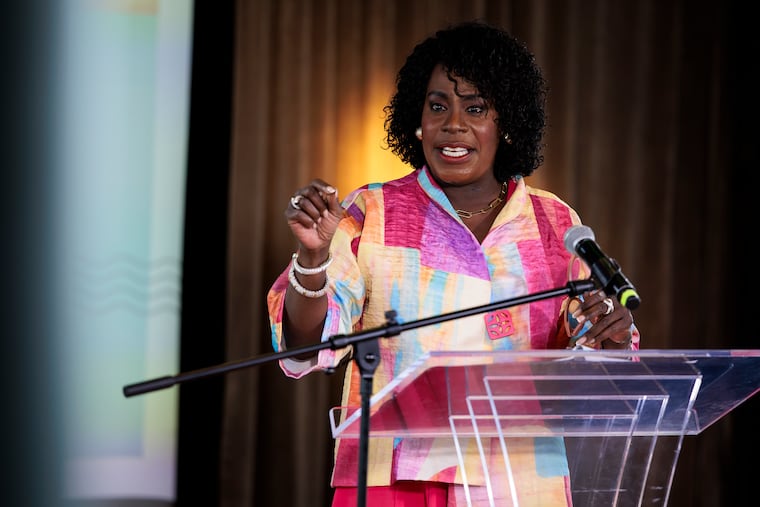
Mayor Cherelle L. Parker’s proposals to buttress the city budget with new or increased taxes on gig economy tech companies like Uber, Airbnb, and DoorDash appear to be running out of battery.
With one day to go before City Council must give preliminary approval for the next city budget, Council President Kenyatta Johnson on Wednesday effectively killed Parker’s proposed tax increase on hotels and short-term rental companies like Airbnb and Vrbo, which the mayor pitched as a means to fund homelessness-prevention programs.
And opposition appeared to be growing among Council’s 17 lawmakers to Parker’s proposal to plug a School District of Philadelphia budget shortfall with a new $1-per-ride tax on rideshare services like Uber and Lyft.
“Currently, as we stand now, none of the mayor’s taxes have the necessary nine votes,” Vincent Thompson, a spokesperson for Johnson, told reporters Wednesday evening.
Thompson said that negotiations between Council and the administration are ongoing and that a deal could be reached overnight or on Thursday, the deadline for taxing and spending legislation for the fiscal year beginning July 1 to receive committee approval.
But on Wednesday evening, things appeared to be heading in the wrong direction for the mayor’s priorities in her third budget season since taking office in January 2024.
Typically, last-minute negotiations stretch deep into the night on the eve of the legislative deadline, with the mayor and Council president triumphantly announcing a final deal in the early morning hours. But at about 5:20 p.m. Wednesday, Johnson recessed the Committee of the Whole, which includes all members and considers budget legislation, until 9 a.m. Thursday, indicating he did not believe a deal was imminent.
Earlier in the day, Johnson put Parker’s proposal to increase the city’s hotel tax on hold indefinitely, a move that came just hours after The Inquirer reported that state legislators were unlikely to approve any tax increases associated with Parker’s budget proposal.
The mayor was looking to raise taxes on city hotels by 0.6% and impose a 6% increase on taxes on short-term rentals, like those reserved through services like Airbnb and Vrbo. Increasing that tax requires approval from City Council, as well as authorizing legislation to be passed by the Pennsylvania General Assembly and signed by the governor.
However, sources close to budget negotiations in Harrisburg said there was little appetite to raise taxes, even among Democrats, in a year when every state House seat and half of the state Senate seats are up for election.
Democratic Gov. Josh Shapiro had previously said he was “not looking to raise taxes” when asked about Parker needing Harrisburg approval for some of her revenue-raising proposals.
» READ MORE: Pa. state lawmakers won’t back Mayor Parker’s tax hikes, jeopardizing key pieces of her budget proposal
Parker on Wednesday afternoon personally visited some Council members’ offices in City Hall to promote her budget priorities as negotiations came down to the wire. Asked about the hotel tax setback, the mayor stuck to an optimistic message.
“We’re talking to members of Council and doing what we’re supposed to do during budget negotiations — keeping our eyes on the prize and just moving the city of Philadelphia forward in every way that we possibly can,” Parker said in an interview after visiting the offices of Johnson and Councilmember Mike Driscoll.
“There are shared synergy and values and commitments regarding these seemingly intractable problems that have long existed,” Parker said.
She declined to discuss any details about her negotiations with Council.
The developments Wednesday came at the start of what was expected to be a marathon day of negotiations between the Parker administration and Council members as they hammered out a deal to fund the city government. The main point of contention remained Parker’s proposed $1-per-ride tax on rideshare services, which is intended to generate nearly $50 million a year for the School District of Philadelphia as it stares down a $300 million budget deficit.
» READ MORE: Mayor Parker turns to Harrisburg — and GOP allies — to make her budget priorities work
Unlike the hotel proposal, the rideshare tax would not need approval from the state if it is passed by Council. However, members have appeared skeptical of the flat-rate tax, and Uber has lodged an aggressive lobbying campaign in City Hall against it.
Parker on Wednesday afternoon declined to say whether she would be open to negotiating a compromise that would set the tax rate at less than $1 per ride.
“I think we have a committed legislature and this administration doing our best to work together to solve these challenges that we’re facing here,” she said when asked about the rideshare tax.
Council’s Committee of the Whole, which is composed of all 17 members, must approve a budget plan this week for it to be fully passed by the start of the new fiscal year on July 1.
It is unclear if Council and the Parker administration will look for another way to generate the $15 million a year that was expected to come from an increase in hotel and short-term rental tax revenue. The money was intended to fund an additional 1,000 beds in the city’s shelter system, as well as an expansion of behavioral health and drug recovery options in the city.
Advocates for homeless people said they were disappointed at the potential loss of millions of dollars for programs that would serve residents with mental and behavioral health needs.
Jeannine Lisitski, the CEO of the Philadelphia-based Mental Health Partnerships, said that her organization provides street outreach services but that there is often not enough shelter space to house the people they engage with.
The proposed new funding, Lisitski said, is “not something that’s just nice to have. This is critical.”
Parker had initially proposed generating millions of dollars in new revenue by increasing the city’s hotel tax by 2 percentage points, to go from 15.5% to 17.5% — one of the highest hotel taxes on the East Coast. That would have applied to hotels and short-term rentals.
But last week, in what amounted to an eleventh-hour revision, Parker announced that she had reached a deal with hotel industry leaders to increase the tax on hotels by just 0.6% but raise the tax on short-term rentals by 6%.
Airbnb vehemently opposed the proposal, which company officials called a “hotel handout.” About 400 Airbnb operators in Philadelphia signed a letter drafted by the company to express that they were being “singled out” by the administration.
» READ MORE: Philly Mayor Cherelle Parker wants big tech companies to pay up. With the clock ticking, she’s meeting resistance.
The city’s three major tourism agencies — Visit Philadelphia, the Pennsylvania Convention Center Authority, and the Philadelphia Convention and Visitors Bureau — also opposed increasing the tax to divert revenue to basic city services.
Those agencies are partly funded by hotel tax revenue, which last year was nearly $90 million. The tax was enabled decades ago to support tourism promotion, convention business, and other investments that drive visitation.
“Hotel tax revenues have long been intended to support efforts that drive visitation and overnight stays,” the agencies said in a joint statement, “not fund municipal services that already benefit significantly from the economic activity visitors generate.”
Staff writer Gillian McGoldrick contributed to this article.