Philadelphia to take over sexual assault response center after years of funding uncertainty
The nonprofit program is currently operated by Drexel University and serves about 300 patients a year.
The city government will assume control of the Philadelphia Sexual Assault Response Center, the only program in the city that offers free sexual assault exams, after years of uncertainty over how the center would be managed and financed.
Mayor Cherelle L. Parker’s administration announced Wednesday that the Philadelphia Department of Public Health will take over PSARC, a nonprofit program that is currently operated by Drexel University and serves about 300 patients a year.
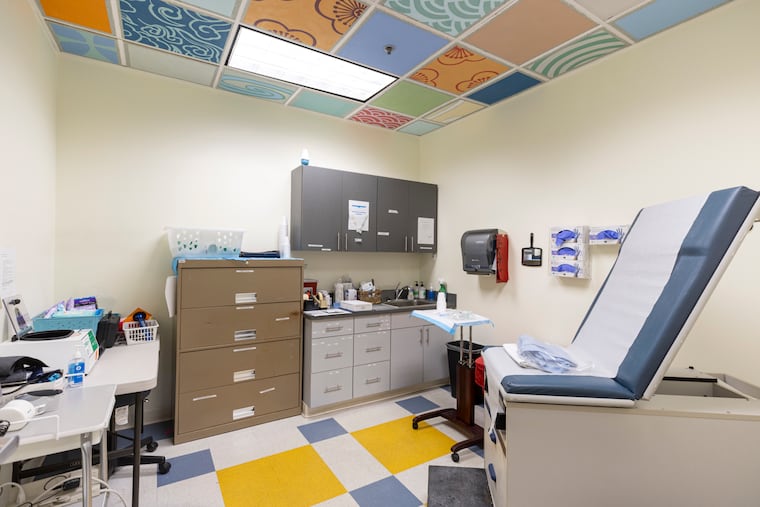
The center is staffed 24-7 by nurses trained to conduct sexual assault exams that are performed to collect DNA and other evidence, sometimes known as “rape kits.” The center is located at 300 E. Hunting Park Ave., in the same building as the Philadelphia Police Special Victims Unit; patients are not required to report sexual assault to police, however.
PSARC was founded in 2011 and contracts with hospitals that do not have staff specially trained in handling sexual assault response. It was previously managed by Hahnemann University Hospital, the historic Center City facility that shuttered in 2019 after filing for bankruptcy.
» READ MORE: Philly’s only dedicated center for treating adult sexual assault never has enough funding, its leader says
Since then, Drexel’s College of Nursing and Health Professions has managed the center.
But PSARC has struggled to survive amid years of funding challenges. Prior to last year, it did not receive dedicated funding from the city — it was funded entirely by Drexel, and the state reimbursed the center $1,000 for each patient treated there.
Drexel officials told members of Parker’s administration last year that the university could not continue managing the program, according to two sources involved in the conversations who spoke on the condition of anonymity because they were not authorized to discuss the matter. Last fall, Drexel was in the midst of cutting staff and benefits university-wide amid a massive operating deficit and low enrollment.
The Parker administration explored transitioning the program to the control of another crisis center, the sources said.
But other nonprofits were facing their own funding-related disruptions last year. For example, in October, Philadelphia’s only rape crisis center, the Philadelphia Center Against Sexual Violence, paused some of its services and laid off staff amid the monthslong state budget impasse.
Ultimately, Drexel continued operating PSARC, with the city allocating $250,000 in emergency funding last year to support the program.
This year’s city budget, which took effect on July 1, includes $300,000 in funding for PSARC. That money was allocated to the health department.
» READ MORE: Amid record-low violence, Mayor Parker’s policing budget invests in more technology, funds sexual assault center
In a statement, Crystal Yates-Gale, the city’s deputy managing director for health and human services, thanked Drexel “for supporting PSARC since its founding and for making this transition seamless so there is no pause in operations.”
Emily Roper, the dean of Drexel’s College of Nursing and Health Professions, said in a statement that the transition “has been thoughtfully planned in close collaboration with the City of Philadelphia to ensure continuity of services for survivors.”
“For more than a decade, PSARC has provided compassionate, expert care to survivors of sexual assault,” she said, “and we are deeply grateful to the dedicated clinicians and staff whose unwavering commitment has made that possible.”