Comcast promises to ‘turbocharge’ East Market revitalization efforts championed by Mayor Parker
The mayor unveiled a list of 60 people who will sit on her Market East advisory committee.
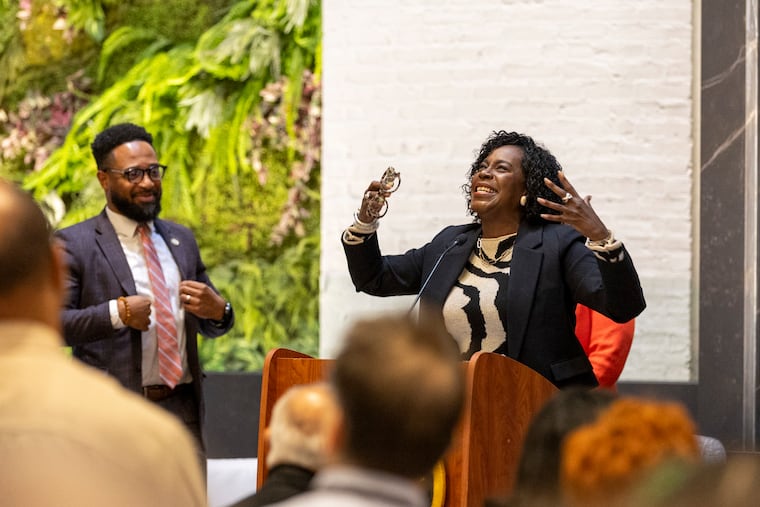
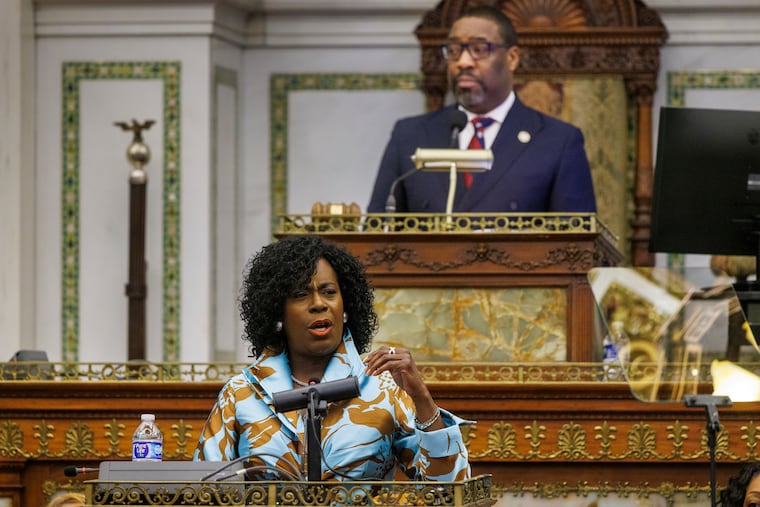
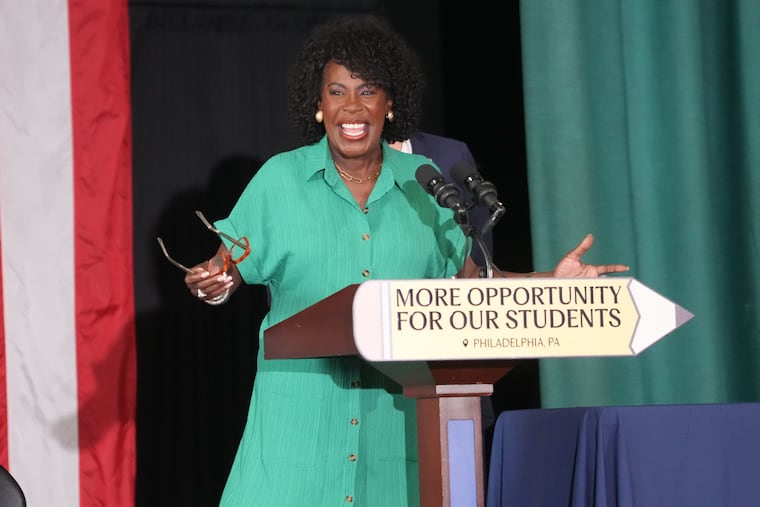
Mayor Cherelle L. Parker promised at a news conference Friday that her administration’s plans to revitalize East Market Street will unfold quickly and in partnership with large private-sector supporters — most notably Comcast and the Philadelphia 76ers.
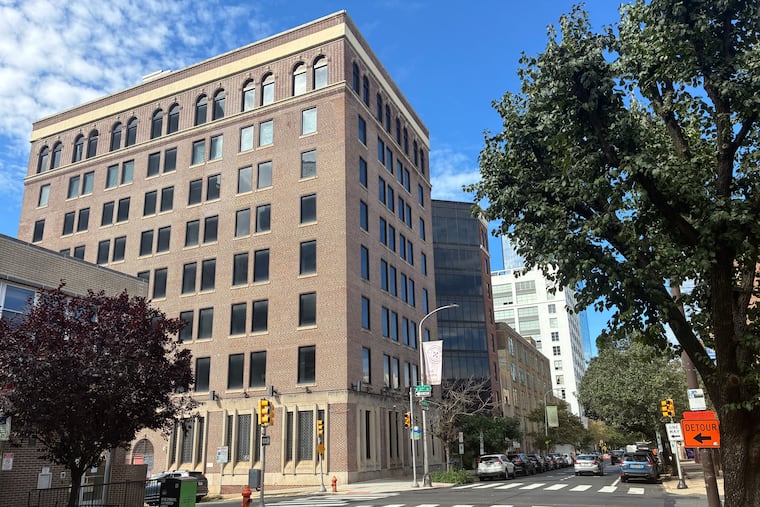
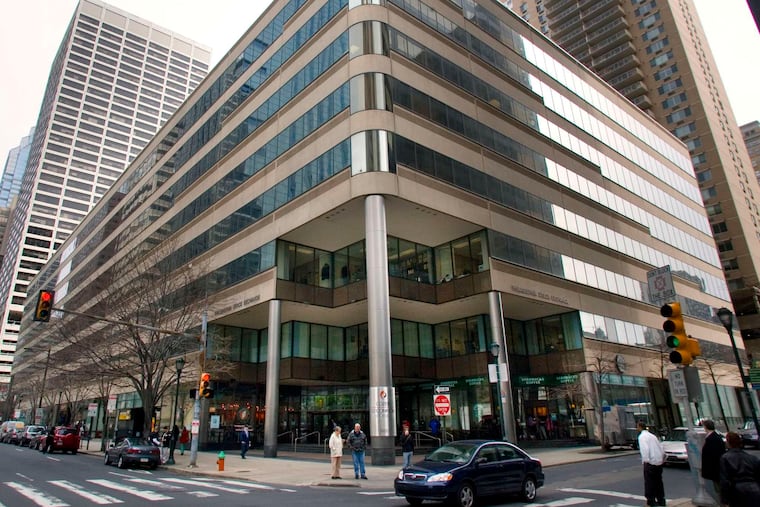
First up, according to Comcast executive Thomas Reid, would be demolishing a handful of buildings the company owns in partnership with the 76ers on the 1000 block of Market. He said the buildings would come down well in advance of next year’s World Cup, which Philadelphia will partially host, and for the United States’ 250th anniversary celebration.
“We’re moving to [tear] down the buildings … as quickly as we can,” Reid said. “Because the eyes of the world are going to be on Philadelphia next summer … We have got to provide as much great space as we can for a truly celebratory atmosphere. And that is what we’re doing by taking those buildings down.”
Reid is just one of dozens of names on Parker’s Market East Advisory Group, which includes many of the top real estate developers in Philadelphia, along with community advocates, labor union leaders, and other businesspeople. Brandywine Realty Trust CEO Jerry Sweeney will lead the committee, as Parker has advertised all year.
Because the committee has more than 60 members, much of the work will be broken down by subcommittee.
Throughout the news conference Parker used older city plans for Market East as props, showing them as examples of pretty but impractical ideas that previous municipal governments had failed to enact.
“Guess what’s missing in all of these plans? An anchor partnership between the likes of a Comcast and the Sixers with the leadership of a Jerry Sweeney,” Parker said. “No more shiny, glossy plans where a lot of people get a chance to talk and then go and sit on someone’s bookshelf and collect dust.”
Comcast’s Reid spoke after Parker and promised that the two corporate partners would act quickly to bring more development to Market East.
“We’re actually also going to be turbocharging this thing,” Reid said.
What Comcast and the Sixers have planned for Market East is not yet clear. Over the summer, they officially purchased buildings on the south side of the 900 and 1000 blocks.
In late October, they announced plans to demolish 1000-1024 E. Market St., which includes the facade of former Robinson’s Department store, a move that has outraged many preservationists. A longstanding methadone clinic on the 900 block will close this year, although there are no stated plans for the demolition of those buildings.
More residential buildings?
Many expect that Comcast and the 76ers will build mixed-use residential developments on the corridor.
Multiple speakers at Friday’s news conference praised the residential and mixed-use character of Center City Philadelphia — which is distinct from the office-dominated nature of many American urban downtowns — and its walkability. Parker promised to improve pedestrian conditions on East Market and make it safer to cross the busy thoroughfare.
“A lot of people live downtown here in Philadelphia. It’s not just the commercial area,” said Jessie Lawrence, director of the city’s Department of Planning and Development. “Imagine the progress that we can make by developing Market East … by partnering with developers, businesses, building trades, banks and communities to bring more housing to the corridor.”
To attract more investment, Parker’s chief of staff Tiffany Thurman promised “creative financing” and “legislative innovation.”
Councilmember Mark Squilla, who represents the area, has previously mentioned potential abatements or other tax incentives and zoning changes although Market East already has some of the most flexible land use districts in the city.
A revitalization plan for Pittsburgh that Gov. Josh Shapiro championed last year — with $62.6 million in state funds for the $600 million plan — is seen by Philadelphia leaders as a potential model. Given that Philadelphia is more than five times bigger than Pittsburgh, the city hopes for even more state aid.
“I want to state for the record that our governor, Josh Shapiro, affirmed from the very beginning … he’s fully vested, particularly as it relates to infrastructure, transportation adjustments that we have to make in this area,” Parker said. “Anything that we need to do, our governor, Josh Shapiro, will be working in partnership with us.”
New, old home for Greyhound
The mayor also highlighted the latest plan for Philadelphia’s intercity bus terminal, which will sit between Chinatown and the Fashion District mall, where the old Greyhound station used to be.
Parker described the Filbert Street terminal as an “interim” location while a more permanent plan is being worked out, although she indicated it could be part of a long-term solution.
“When you see the interim solution actualized and the aesthetic appeal of it, I want you to know it lays the foundation for what the long-term solution will look like,” said Parker, noting that anti-social behavior and blight that had often surrounded the Greyhound station would not be allowed near the terminal, which will be run by the Philadelphia Parking Authority.
“Any of the sins associated with the past, we are not going to allow that to hinder innovative thinking and collaborative partnership about reimagining what Market East or the bus terminal will be like as we seek … a permanent solution,” Parker said.
Neighborhood groups in Chinatown have long inveighed against the presence of the Greyhound terminal on their border. When The Inquirer broke the news of the return of the city-run terminal last week, stakeholder groups in the neighborhood and Councilmember Squilla were surprised the location would be reactivated for its old use.
John Chin of the Philadelphia Chinatown Development Corp. said he hoped it’s not a permanent station, noting that heavy bus traffic would burden Market East.
“This news was a complete surprise to us,” Chin said. “I’m glad to hear the mayor say it’s interim. Because when you think about Market Street and Chinatown, the bus terminal can be a barrier to what Market Street East can become.”