Troubled Fashion District hires outside help to fill vacant storefronts
Macerich recommitted to the struggling 850,000-square-foot mall, announcing a partnership with real estate services firm CBRE.

The future of the Fashion District of Philadelphia has been hazy almost since its opening.
First the COVID-19 pandemic struck just months after the mall’s debut, cratering foot traffic. Then the property’s longtime owner, Philadelphia-based PREIT, declared bankruptcy and gave up its share of the mall to California-based Macerich. And in 2022 the Philadelphia 76ers announced plans to buy and demolish half the mall to make way for their now-abandoned Center City arena.
As a result, Macerich waited to fill some vacancies as the future remained uncertain. Last year, Fashion District had an occupancy rate of 80%, well below the healthy level for shopping destinations of this size.
But this week, Macerich recommitted to the struggling 850,000-square-foot mall, announcing a partnership with real estate services firm CBRE to boost its retail leasing efforts.
“Macerich is committed to Philadelphia and the Fashion District,” said Steven Gartner, executive vice president with CBRE’s Philadelphia office. “When the arena went away, Macerich said, ‘It’s time for us to get real and refocus.’”
Gartner says the Fashion District sports many large-format, popular tenants like Primark, H&M, Burlington, Sephora, and a bustling AMC Theater, which provide a strong base.
It also enjoys structural advantages, sitting atop the heart of SEPTA’s public transit operations and surrounded by parking garages.
“It has abundant, easy parking,” said Gartner, who will be working with CBRE’s Erica Schiffman and Anto Keshgegian on retail leasing at the mall. “That’s what you hear when people complain about shopping in Center City, it’s the ability to access it and get to it.”
» READ MORE: The Fashion District is good enough for these Philly shoppers
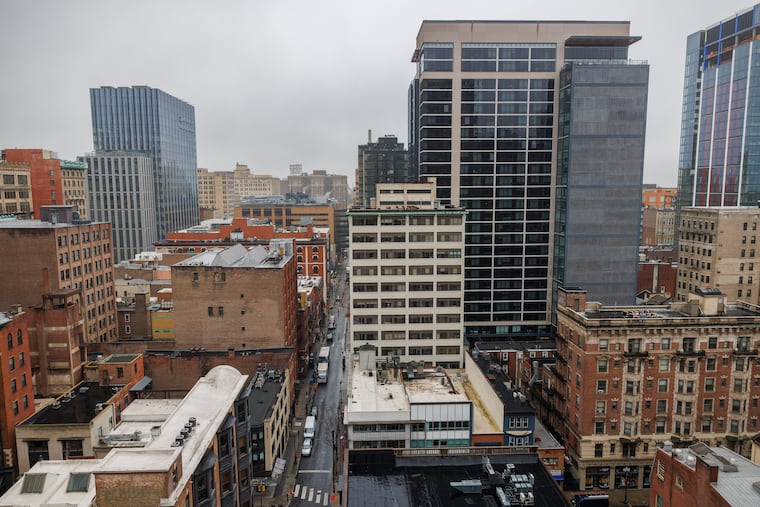
The Fashion District’s challenges have been compounded by the larger woes besetting the East Market Street corridor, which has struggled to bounce back from the pandemic despite recovery in other corners of Center City. Office and retail occupancy have lagged, and Mayor Cherelle L. Parker’s administration pinned many of their hopes for its future on the 76ers arena.
Then the team stunned city leaders by abandoning the project in January, shortly after the Macy’s in the Wanamaker Building announced its closure.
But Gartner argues that those events have clarified the future of Market East.
In the wake of the arena deal’s collapse, the 76ers and Comcast have purchased properties from Macerich on the south side of the corridor for a residential and retail project. The closure of Macy’s allowed Wanamaker owner TF Cornerstone to move forward with an aggressive reimagining of the historic building, with hundreds of apartments and reinvigorated retail offerings to come.
“It’s a new era on Market East, with major stakeholders that are all now aligned,” said Gartner.
Gartner says his team hopes to add more apparel retailers to the Fashion District, along with fresh food and beverage offerings to capitalize on the city’s restaurant boom. There is also the possibility of more experiential retail, which has boomed in Center City since the pandemic with businesses like the F1 Racing Arcade, Puttshack minigolf, and Flight Club darts bar.
Earlier this summer, FIFA announced that an 18,000-square-foot space within the Fashion District will be used as a hub for 4,500 volunteers from around the globe in June and July of 2026, when six World Cup matches will be held at Lincoln Financial Field.
“Working with CBRE, which has a dedicated focus on long-term, harder-to-lease spaces, is another way we are moving even faster to secure the right tenants for our spaces,” said Jamie Bourbeau, Macerich’s senior vice president of leasing, in a news release.
Macerich declined a request for further comment.
Gartner says the Fashion District’s main challenge has been one of narrative. The businesses within the mall are doing well, he argues, and customers are broadly satisfied — which The Inquirer also found after interviewing shoppers earlier this year.
“It’s a clean, safe, and modern shopping experience,” said Gartner. “It isn’t like it’s declining or failing. It’s just not on people’s radar, but it’s ideally positioned for the downtown resident, the office tenant, the tourist.”