This program has helped 1,000 Philly homeowners write wills to protect their properties
Affordable Housing Centers of Pennsylvania and Community Legal Services of Philadelphia collaborate to offer the Will Power Program, which has helped create 1,000 wills across the city.

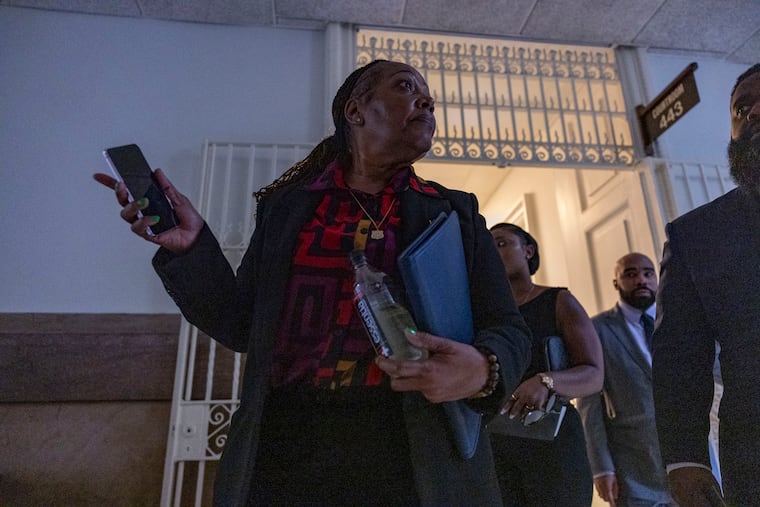
Vendetta Stephens used to think that wills were only for rich people.
Stephens, 72, said she doesn’t have a lot of belongings. But she does own an Olney rowhouse where she gathers her children, grandchildren, and great-grandchildren for Sunday dinners.
She’s one of 1,000 Philadelphians who have created wills through the Will Power Program, launched in late 2022 to guide low- and moderate-income homeowners through estate planning, which can help keep families from losing their homes to disputes among relatives or deed thieves.
“I feel better knowing that there is a plan after I pass away, and [I] was able to protect my family home for the next generation,” Stephens said. “That’s my legacy. And I am proud of that.”
On Wednesday, Affordable Housing Centers of Pennsylvania and Community Legal Services of Philadelphia, nonprofits that collaborate to offer the Will Power Program, celebrated the milestone of creating 1,000 wills across the city at a ceremony at Zion Baptist Church in North Philadelphia.
“This is just a gigantic accomplishment,” said Debby Freedman, executive director of Community Legal Services. “Wills help to stabilize neighborhoods and families, build and maintain intergenerational wealth, and in many cases, work to close the racial wealth gap in our city.”
Roughly seven in 10 homeowners who created wills through the Will Power Program are Black. They are a median of 69 years old and make a median of $22,320 per year.
The importance of a will
When a homeowner dies and the deed is not transferred to a new owner, the legal ownership of the property becomes unclear, creating a situation that is called a “tangled title.” Fixing tangled titles is more complicated when the owner dies without a will that says who should inherit the property.
People who live in homes with tangled titles can’t use their home equity, sell their homes, or take advantage of home repair or other homeowner assistance programs. Tangled titles also leave properties vulnerable to scammers who steal deeds.
A 2021 report from the Pew Charitable Trusts found that more than 10,400 homes in Philadelphia have tangled titles. Philadelphians risk losing more than $1.1 billion in generational wealth because of them.
Derrick Thomas, program manager of the Will Power Program, said residents in Black and Latino communities in particular have been understandably hesitant about working with lawyers and formal institutions because of histories of mistreatment.
So the program has focused on partnering with trusted groups such as churches, senior centers, and community nonprofits to hold more than 140 will workshops to teach residents how to protect their family homes.
Kenneth Bigos, executive director of Affordable Housing Centers of Pennsylvania, said helping homeowners create 1,000 wills “is a great start.”
“These homeowners who have worked tirelessly to maintain their homes, pay their mortgages, pay their real estate taxes, upkeep their property can now ensure that their homes are passed on to future generations,” he said.
On Wednesday, State Sen. Sharif Street announced that Affordable Housing Centers of Pennsylvania will be getting $100,000 in state funding for the Will Power Program.
Wells Fargo, United Way, TD Bank, the Sarah Ralston Foundation, the Pennsylvania Housing Finance Agency, and the city also help fund the program.
Mayor Cherelle L. Parker’s budget resolution for the first year of funding for her Housing Opportunities Made Easy, or H.O.M.E., initiative includes a total of $2.5 million to resolve tangled titles and to prevent them by helping people write wills when they become homeowners.
After celebrating the milestone of creating 1,000 wills, Thomas held a wills workshop for about 20 people. And the program is looking ahead to the next milestone.
“There are still thousands of families who need this support, who deserve this peace of mind,” Thomas said. “Together, we will build trust, together we will keep protecting homes, and together we will keep preserving legacies.”