Meet the architect who’s trying to revive Market East with retail pop-ups
This summer’s experiment could help Philadelphia develop a strategy to counter the retail apocalypse.
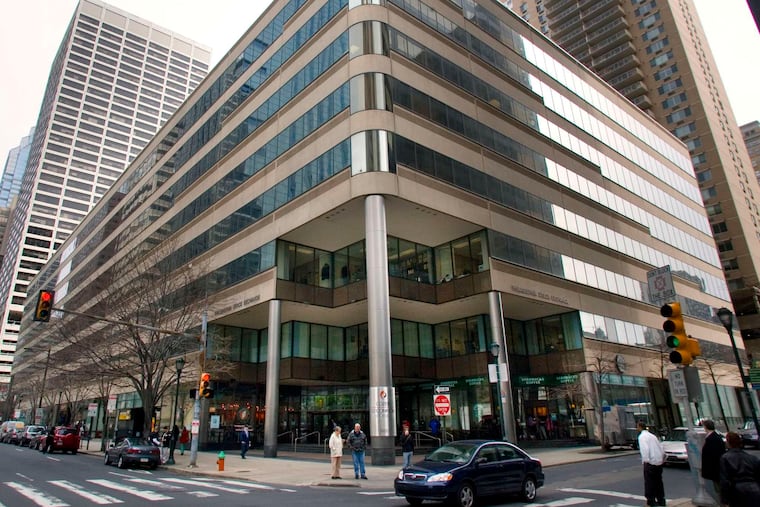
Market East may be Philadelphia’s most notorious retail basket case, but it’s hardly the only commercial corridor in the city dotted with empty storefronts. The more we shop online, the harder it is for brick-and-mortar stores to survive. And the more shops that close, the more we’re forced to turn to e-commerce, even for everyday staples.
If you play out this scenario over a few more years, it doesn’t look good for cities.
The stores that once sold us stuff — clothing, housewares, furniture, — were never just about satisfying our consumer needs. They gave people from different backgrounds a reason to come together, transforming our sidewalks into a public commons. Sure, we’ll always have restaurants and hair salons, but they alone can’t support the concentrated activity that is the lifeblood of cities.
While I don’t believe it’s inevitable that our legacy shopping streets will completely wither and die, it’s already clear Philadelphia now has more storefronts than it can use. If we hope to keep our commercial corridors intact, it’s going to require a new way of thinking about retail.
That’s what makes this summer’s Market East pop-up storefronts worth watching.
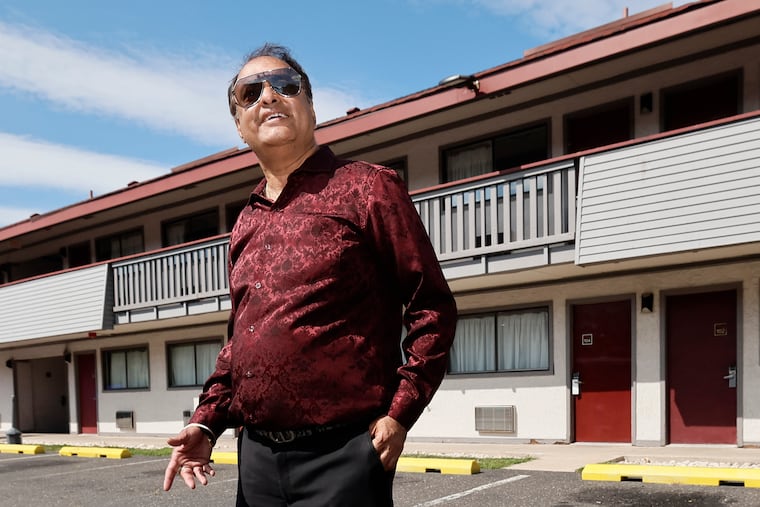
To spruce up the bedraggled high street for our nation’s 250th birthday celebrations, the Center City District brought in South Kensington architect Brian Phillips as an emergency retail doctor to activate empty storefronts between Ninth and 10th Streets, currently owned by a 76ers-Comcast real estate partnership.
Rather than chase after national chains, he’s populating those storefronts with quirky local businesses that have strong community and social media followings: Rarify, a mid-century furniture gallery; Clubfriends, which will operate a music-listening room; Two Persons Coffee; and Siddiq’s Water Ice, known for its fresh-fruit concoctions. The group plans special events to encourage people who don’t usually shop on Market Street to visit, yet each of these retailers is intriguing enough to attract people strolling between Independence Hall and City Hall.
The challenge of ground-floor space
An architect probably isn’t the first person you’d expect to be battling the retail apocalypse. Phillips’ firm, ISA Building Lab, specializes in housing, both townhouses and apartment buildings.
He’s also a committed urbanist. His strong interest in the intersection of public and private has made him the go-to architect for rough-and-ready placemaking projects, like the Cherry Street Pier and Frankie’s Summer Club.
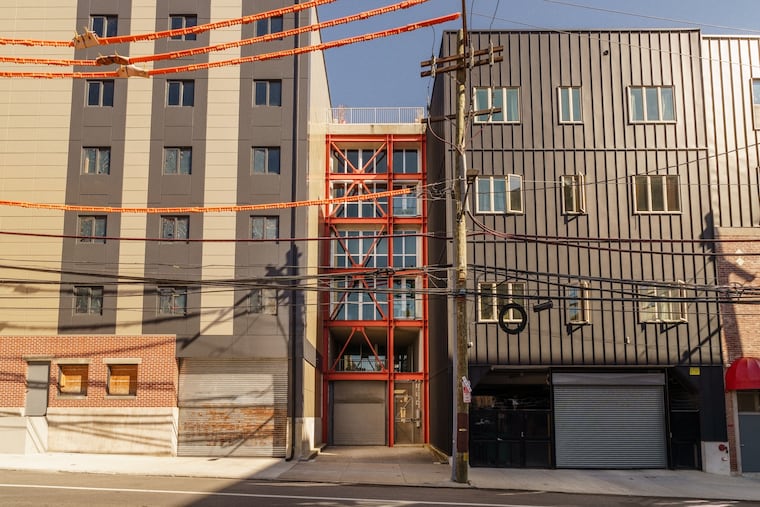
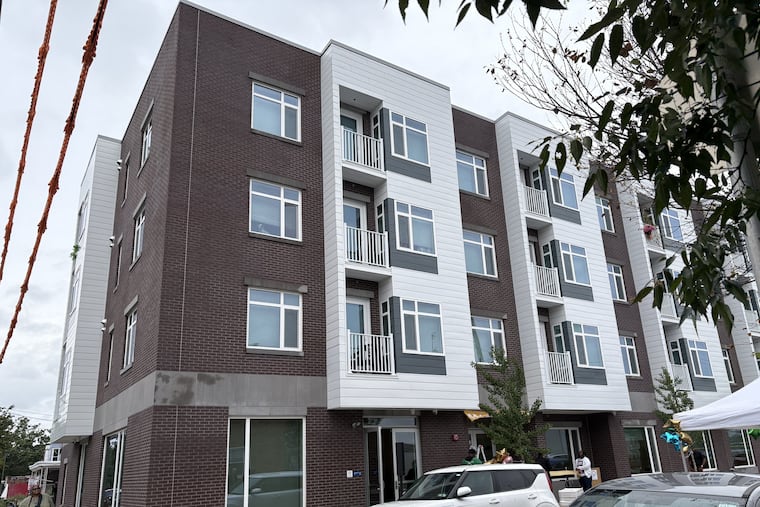
A few years ago, Phillips was struck by a worrying trend: The apartments he had designed would fill up quickly, but the storefronts would remain empty, sometimes for years. Commercial rents had fallen so low in some neighborhoods that developers felt it wasn’t worth the effort to hunt down retail tenants.
Phillips happened to know plenty of makers, artists, and vintage dealers on the lookout for cheap space. In 2022, when many people were still afraid to venture out because of COVID-19, ISA spun off a nonprofit company to match those creators with developers. Phillips called the initiative Meantime because it was meant to be an interim measure to fill storefronts until a long-term tenant came along.
“It was a way for developers who aren’t retail savvy to fill the ground floors,” Phillips said as we sat in one of the just-refurbished Market East storefronts.
As we talked, curious passersby pressed their noses to the window; one even opened the door and demanded to know what was coming to the space. “We shouldn’t just accept vacancy,” Phillips told me.
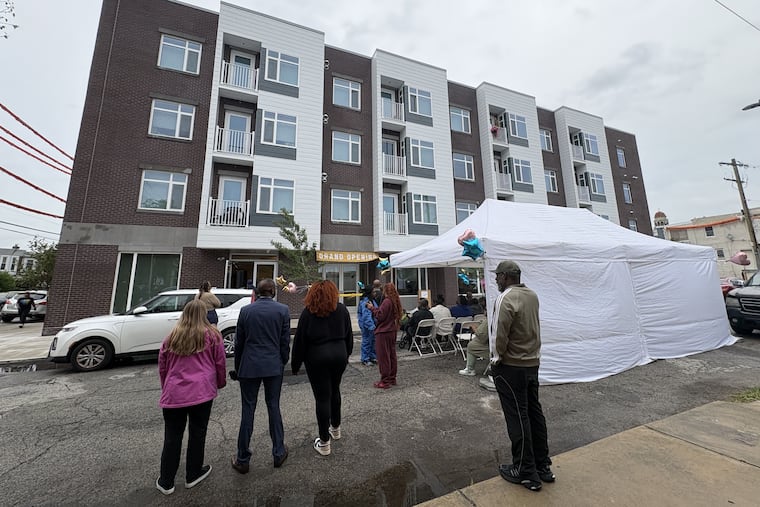
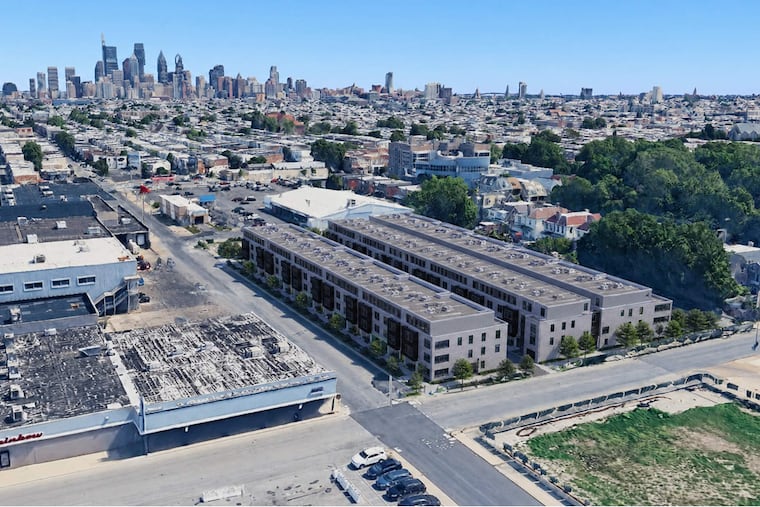
His clients soon discovered that Meantime’s temporary occupants could be a powerful marketing tool. After Meantime installed a craft market at The Magnet, a 91-unit apartment building in Fishtown, a local restaurateur wandered in. Impressed by the number of shoppers, he contacted The Magnet about renting the storefront. Within weeks, a lease was signed.
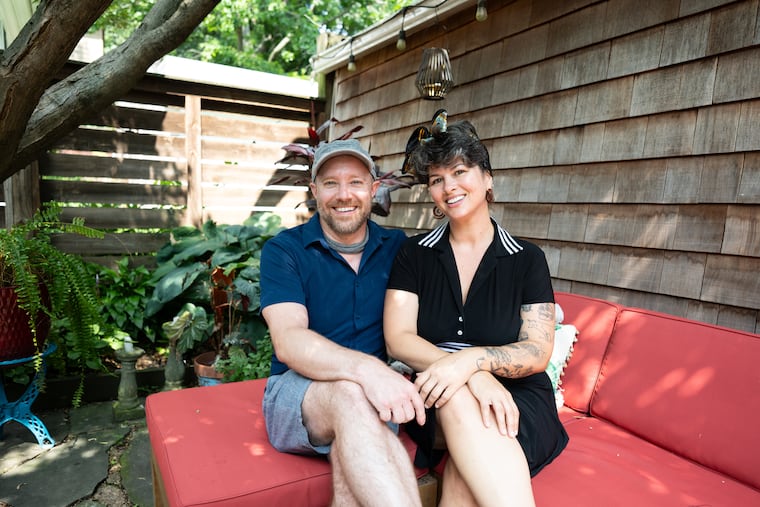
The Magnet’s principal owner, Matt Ross, told me that he had initially despaired of ever finding a tenant for the space, which is in the shadow of the SEPTA El on Front Street.
“We started leasing around 2022, post pandemic, when there was a lot of competition for street-level retail, and we weren’t getting a lot of traction,” Ross said.
When Meantime proposed a pop-up, Ross figured there was nothing to lose. Phillips’ nonprofit offered to take care of everything, from finding the right tenant to providing insurance. Meantime, which is funded through grants and donations, “was very effective for us,” Ross said.
How pop-ups are working elsewhere
You can also see the power of pop-ups on the 3600 block of Lancaster Avenue, where Meantime has been curating empty storefronts for LA21, a business improvement group.
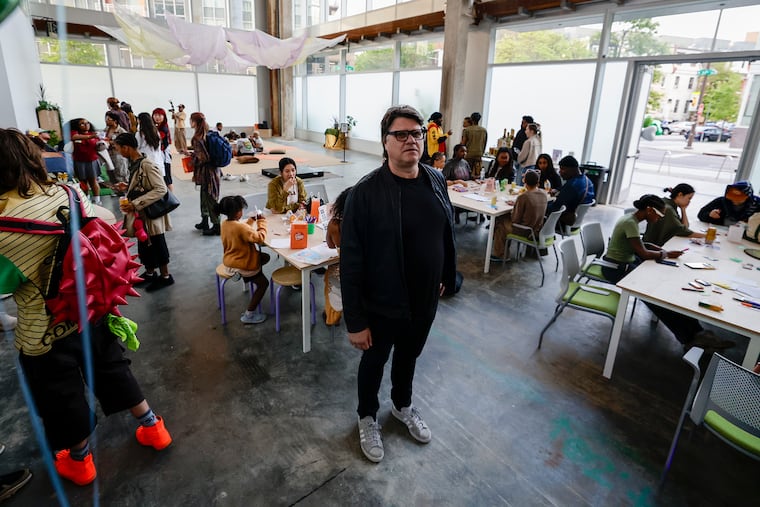
On a warm Friday evening, people of all ages strolled the sidewalks, stopping to peruse the vintage goods at West Philly Bizarre, which bills itself as “the People’s Market.” Some wandered into DumoLab, where University of Pennsylvania architecture students had set up prototype structures made from sustainable materials, like cellulose and shrimp shells. Around the corner, another pop-up, Forbidden Fruit, offered crafting sessions to neighborhood residents in a storefront owned by uCity Square. Every seat was filled.
The Market East pop-ups, which open May 6, are Meantime’s first downtown effort, and the stakes are higher than anything the nonprofit has attempted before. The curated retailers have the potential to change perceptions of the battered street, something that’s badly needed in the aftermath of the Sixers’ arena debacle.
The particular challenge of Market Street
Once lined with grand department stores, smart shops, and theaters, Market Street has been in decline for almost half a century, long before online shopping took over our lives. Last fall, Mayor Cherelle L. Parker convened a task force to come up with a new plan for Market East. The group is composed largely of developers and property owners, with a few stakeholders from the adjacent neighborhoods.
Because multiple transit lines converge at what’s now called Jefferson Station, some commission members want to see Market Street become the city’s entertainment and nightlife district. (Don’t tell the Avenue of the Arts that!)
There’s nothing wrong with bringing in more attractions, like City Winery, a stalwart at Ninth and Filbert. But the success of National Real Estate Advisors’ project on the 1100 block suggests that Market Street might also prosper as a residential boulevard.
That mixed-use development already includes two apartment towers, as well as a smattering of neighborhood-centric retail. And once TF Cornerstone completes its transformation of the Wanamaker Building, which will have 600 apartments, there will be even more local residents, which would translate into a bigger demand for Market Street retail.
The key word here is neighborhood. All the Meantime pop-up retailers originated outside of Center City. They promise to bring an intimate neighborhood feel to a street that has become an impersonal no-place.
Prema Katari Gupta, the Center City District’s president and CEO, said she’s hoping that Meantime’s Market East effort can replicate its successes in Fishtown and West Philadelphia.
“Philadelphia has so many homegrown businesses,” she said. “What happens when you bring those diverse neighborhood businesses to a part of the city that has the highest pedestrian counts?”
Gupta’s willingness to experiment with different approaches to retail has already started to bear fruit. Two years ago, the CCD launched its Open Streets initiative, which turned Walnut Street into a pedestrian zone several Sundays a year. Closing the street to cars attracted so many people that the CCD expanded the effort to 13th Street in Midtown Village.
The Parker administration, which provided an $1.85 million grant to beautify Market Street for the 250th anniversary events, now wants to host an Open Streets day there, too.
Obviously, the Sixers-Comcast partnership will have a big influence on what happens next on Market Street. After the two patched up their differences over the arena, they pledged to take an active role in reviving the corridor. They started by purchasing a group of buildings on the 900 and 1000 blocks.
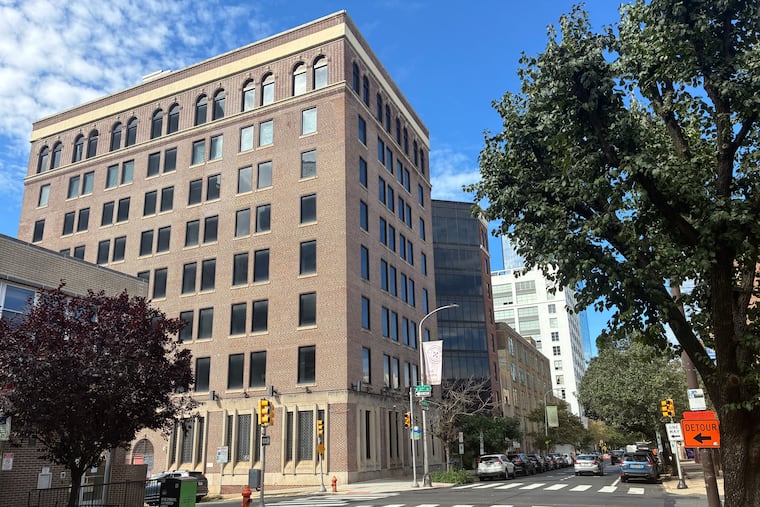
Unfortunately, their idea of redevelopment involves razing two handsome buildings, including the architecturally significant Robinson department store. That would punch another big hole in a corridor that is bookended by two lifeless surface parking lots. Demolitions are expected to begin once the summer’s festivities end, according to Jacklin Rhoads, the vice president of communications for the Sixers.
Let’s hope the mayor’s task force can talk some sense into them. It could be months or years before the group’s recommendations can be realized. In the meantime, there’s … Meantime.
The great thing about retail pop-ups is that they’re ready to go in a couple of weeks. Deep clean the space, slap on a coat of paint, and those storefronts are ready for occupancy. If they don’t work out, Phillips said, there’s always another small local entrepreneur looking for cheap, high-profile space.
Pop-ups alone can’t stave off the retail apocalypse. But assemble enough of them and even a place like Market Street might start to feel like a neighborhood where you might want to live.