Remember SEPTA’s plan to redo bus routes? It’s back and it’s happening (for real this time).
Originally called the Bus Revolution, the plan will focus more time and attention on riders in neighborhoods most affected by each set of schedule and route changes.
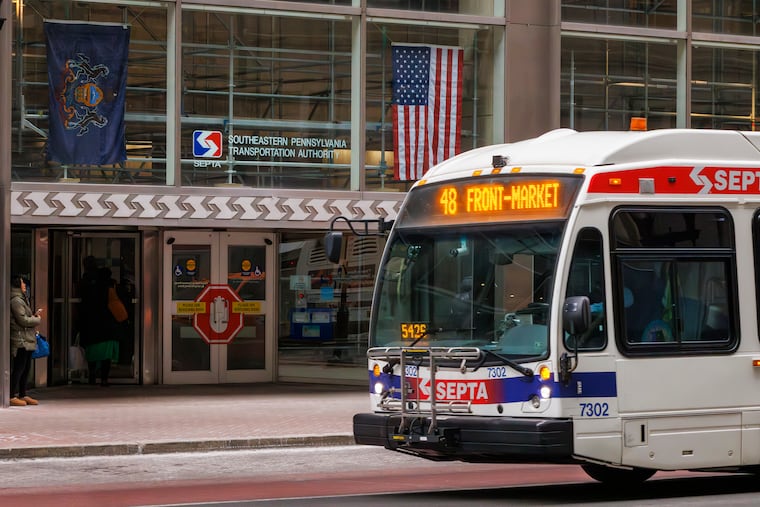
A change is going to come. Just don’t call it a revolution.
SEPTA says it will implement — in phases over the next 18 months — the redesigned bus network that was shelved last year when the public transit agency was in a financial meltdown.
Except for some technical adjustments, officials said the route revisions are the same as those the SEPTA board approved in May 2024, after more than two years of debate and redrafting of the plan in response to public criticism.
That includes cutting 18 bus routes, speeding up frequency on some routes and adding or extending others.
But the approach to communicating with riders will be different, starting with the name.
Originally, the project was called Bus Revolution, a signal that a shake-up was needed to improve service and draw riders.
Now, the title is New Bus Network.
“We want to be very simple and straightforward,” said Lex Powers, SEPTA’s deputy chief communications officer for customer experience. The reset is “an opportunity to think forward about what the bus network can be.”
Here’s what you need to know about the New Bus Network.
When will changes happen?
SEPTA believes that staggering the implementation will allow it to focus more time and attention on riders in neighborhoods most affected by each set of changes.
“It’s full throttle until we’re done,” said Colin Foley, SEPTA’s deputy chief planning officer.
March, April, May 2026: Public engagement on overall plan
May 2026: Board vote on overall plan
June 2026: Engagement with communities impacted by Phase 1
August 2026: Phase 1 changes begin. The most impacted areas will be:
Kensington/Juniata
Cheltenham Avenue Corridor
Lancaster Avenue Corridor
February 2027: Phase 2 changes begin. The most impacted areas will be:
City Avenue Corridor
Roosevelt Boulevard Corridor
Fort Washington
June 2027: Phase 3 changes begin. The most impacted areas will be:
Phoenixville
Spring City
Fall 2027: Phase 4 changes begin. Some details are still being worked out, but the most impacted areas will be:
Northeast Philadelphia
Parts of Delco
Parts of Bucks
What is actually changing?
Once the plan is fully implemented, the number of bus routes in SEPTA’s system would drop from the current 124 to 106.
“The authority has been talking about these changes for years,” Foley said, describing them as “transformative.”
Frequency improvements
The current network has nine high-frequency bus routes, defined as those running every 15 minutes or better for seven days a week, Foley said. That should increase gradually, to 13 high-frequency routes in the fall and about 29 at the end of the process in the fall of 2027, he said.
Slower routes will be sped up, too.
New and expanded routes
August 2026: Route 72, a new crosstown bus running along Cheltenham Avenue, and the new Route 76 bus from Columbus Commons to Rising Sun and Olney.
Route 45 will be extended to provide service to the Navy Yard and Route 79 will be extended from South Philadelphia into University City.
February 2027: an extension of limited stop Direct Bus service between Frankford Transit Center and Wissahickon Transit Center; and the extension of Route 43 to 69th Street Transit Center.
Also, two “SEPTA Go” on-demand transit zones and a new Route 142 will be added in Chester County.
June 2027: a new on-demand SEPTA GO zone will be started in Montgomery County.
Fall 2027: new Routes 83, 85, 86, and 87 will be added. SEPTA Go Service will be added in Bristol to replace bus Route 133
Eliminated routes
August 2026: Routes 35, 47M, 62, 78, 80, 89 and 106.
February 2027: Routes 1, 30, 92, 150, 201, 204, and 206.
June 2027: Routes 90 and 139.
Fall 2027: Route 50 and Route 133

How will SEPTA tell riders about the changes?
For the next two-plus months, SEPTA plans to raise awareness of what’s about to happen throughout the region. Public hearings on the agency’s updated service plan are set for April 15 at SEPTA headquarters.
Powers and other SEPTA officials say that the reintroduction of the bus-route overhaul is informed by the experience of having to explain, on the fly, 20% service cuts last August that included the shutdown of 32 bus routes.
The transit agency was facing a $213 million operating budget deficit and the cuts were lifted after a Philadelphia court ordered SEPTA to undo them, and Gov. Josh Shapiro’s administration allowed the authority to use state capital money to operate.
But navigating the cuts reinforced the importance of “meeting people where they are … sharing information about what’s happening when,” said Ryan Judge, interim assistant general manager of planning and strategy at SEPTA.
That means residents can expect personal contact at bus stops, transportation centers, rail stations and community events, Judge said, “putting boots on the ground so we can talk through those changes and answer questions face to face.”
Education efforts will start Wednesday with SEPTA staff distributing leaflets to riders at bus stops around the Municipal Services Building across from City Hall. Ads, announcements on buses and face-to-face discussion will follow.
Why redesign the bus network?
SEPTA launched bus redesign efforts in earnest after ridership declined 13% from 2013 to 2019, a change attributed to slow speeds, problems with reliability, and competition from ride-sharing companies. And that was before COVID-19.
Bus ridership rebounded faster than it did on other transit services, but the thinking is that simplifying the network will make it easier to use, with more frequent service on fewer or shorter routes.

Will bus stops be changed?
No, not at this point.
Philadelphia had the shortest median distance between bus stops of any large U.S. city as of 2021, at 564 feet. That beat out Pittsburgh (623 feet) and Chicago (673 feet).
Having more stops per mile provides access to more people, but closer stops also slow buses and make them less reliable.
Early plan for Philadelphia’s bus network redesign aimed at “rebalancing” stops, spacing them farther apart to improve speed. But the idea has been unpopular.
The goal may be tackled later.
“For now, we’re trying to focus on implementing the new bus network,” said Foley. “And I think if we’re moving someone’s bus route, we probably should keep the bus stops similar to where they were before. Just keep it simple, one thing at a time.”
More questions about the New Bus Network?
Email transportation reporter Thomas Fitzgerald at tfitzgerald@inquirer.com.