NOAA sees a below-average hurricane season, but El Niño is a wild card
All the major forecast services see a below-normal Atlantic hurricane season.
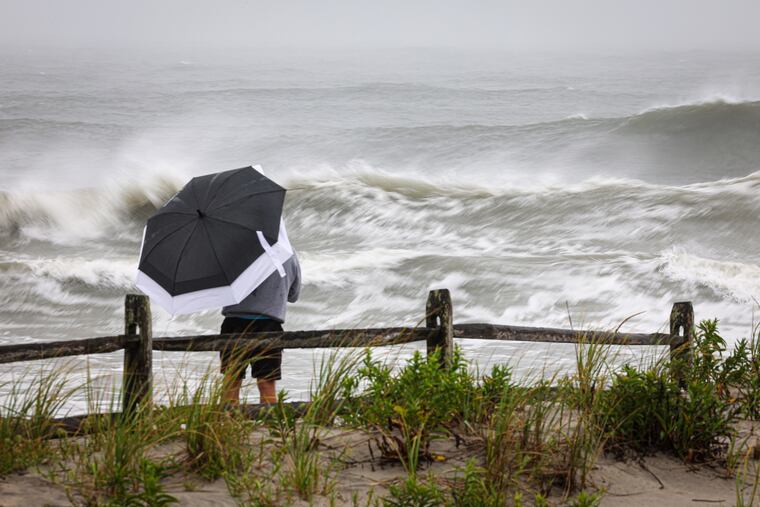
With a potentially huge influence brewing in the Pacific Ocean, the 2026 Atlantic hurricane season is likely to be quieter than usual.
That is the consensus of meteorologists with the major forecast services, including those with the National Oceanic and Atmospheric Administration, which released its forecast Thursday.
The agency predicted eight to 14 named storms, those with winds of at least 39 mph, with three to six of those becoming hurricanes, which have winds of 74 mph or higher. Of those, it predicted one to three would pack winds of 111 mph or higher, qualifying as “major” hurricanes. The agency saw just a 10% chance the season would be above normal.
The long-term averages for the season that begins June 1 and ends Nov. 30 are 12 named storms and seven hurricanes, with two of those becoming major.
While the forecasts are about what will happen in the Atlantic, the Pacific has been stealing the show for the last several weeks as waters have warmed rapidly toward a state of El Niño. And oceanographers and meteorologists have been warning this could become one for the ages.
That could end up being a welcome development for residents along the Gulf and Atlantic Coasts.
Philip Klotzbach, an atmospheric scientist at Colorado State University whose hurricane outlooks dating to 1984 have become a prototype for other services, said this week he had seen enough already to trim back his forecast for 13 named storms and six hurricanes.
El Niño, and why it matters to the Atlantic hurricane season
An El Niño of some intensity is all but certain, according to NOAA’s Climate Prediction Center, with a better than 80% chance it takes hold this summer, and a 96% likelihood it is present during the winter.
Global warming is projected to increase top tropical-storm wind speeds by 3%, and precipitation totals within the storms by 15%, said Matthew Rosencrans, a scientist with the NOAA Center for Weather and Climate Prediction.
But what impact Earth’s rising temperatures will have on the frequency and intensity of El Niño remains the subject of extensive research.
It is documented that every two to seven years east-to-west trade winds that pile up warm water in the western Pacific slacken, part of a natural process that likely has been occurring for eons. That allows vast amounts of warmer water to slosh eastward. Peruvian fisherman centuries ago noticed that the tepid waters ruined their important anchovy catch and called it El Niño. That was a Spanish reference to the Christ child, since this tended to happen around Christmastime, and the name has endured.
The unusual warmth interacts with the overlying atmosphere and disrupts circulation worldwide.
One effect of the warming is that it generates powerful upper-air winds from the west that can have shearing effects on incipient tropical storms in the Atlantic, thousands of miles away.
Some of the quietest Atlantic hurricane seasons on record have occurred during strong El Niño years.
How strong will this El Niño become?
That is impossible to predict, but some commercial services say it could become what they call a “super” El Niño.
That is not a term the feds use, said Michelle L’Heureux, a meteorologist who is the El Niño team lead at NOAA’s Climate Prediction Center.
To qualify as an El Niño event, sea-surface temperatures over thousands of miles in a key area of the tropical Pacific have to be about 1 degree Fahrenheit above normal — roughly where they are now — for several consecutive months.
NOAA foresees a 1 in 3 chance the sea-surface temperatures rise to at least 2.7 degrees above normal, which the agency “informally” would consider a “strong event,” L’Heureux said. The agency also lists an outside chance it would reach the level during the hurricane season.
However, when the effects would take hold is another forecast issue, since the atmosphere typically takes some time to respond to the warming.
Even if conditions in the Pacific quiet the Atlantic, hurricane forecasters warn that a below-average season can be eventful and destructive.
They point out the 1992 hurricane season had only seven named storms and one major hurricane.
That happened to be Andrew, the first named storm of the season. It formed in late August, exploded, and buzz-sawed through South Florida, becoming one of the costliest and deadliest hurricanes on record. Its peak sustained winds reached 175 mph.