
See it, hear it, feel it: All the Philly art we loved this week
By Bedatri D. Choudhury, Rosa Cartagena, Elizabeth Wellington, Dan DeLuca, Peter Dobrin
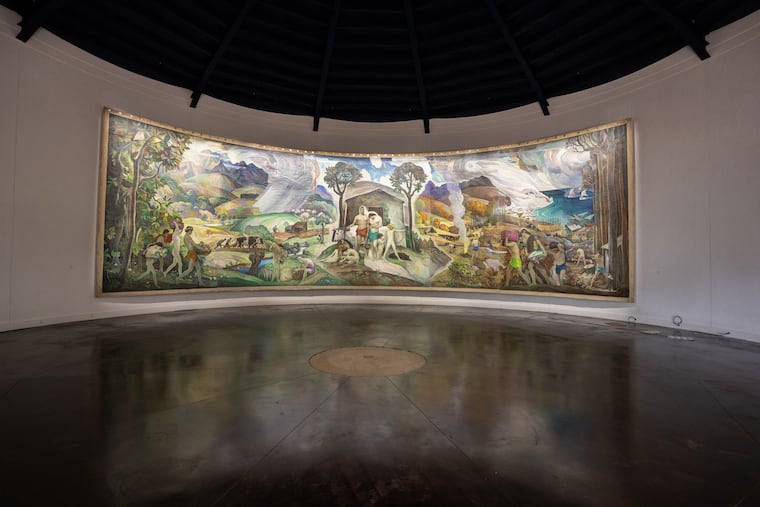
N.C. Wyeth’s ‘Apotheosis of the Family’
he implicit promise of the golden age of illustration was the feeling that if you looked hard enough at a Maxfield Parrish pastorale or piratical encounter by N.C. Wyeth, you might break through the fourth wall and land in the book yourself.
The sensation is fully realized when you walk before Wyeth’s mammoth Apotheosis of the Family slowly from one end to the other. Because your entire field of vision is filled with the painting — it is 19 feet high and 60 feet long — you become a character in the artist’s world.
Photographs of the work don’t prepare you for the impact. Colors both pastel and deeply saturated glow. Stories unfold. The work from 1932 was once resident in a bank, and, true, it was seen by more people there. But now, thrillingly lit and presented in a specially built round barn by Wyeth’s grandson Jamie on his Wilmington homestead, Apotheosis feels like it finally has the setting it has always deserved.
Access is limited. Tickets for the summer season of tours will be available in mid-June. brandywine.org.
— Peter Dobrin
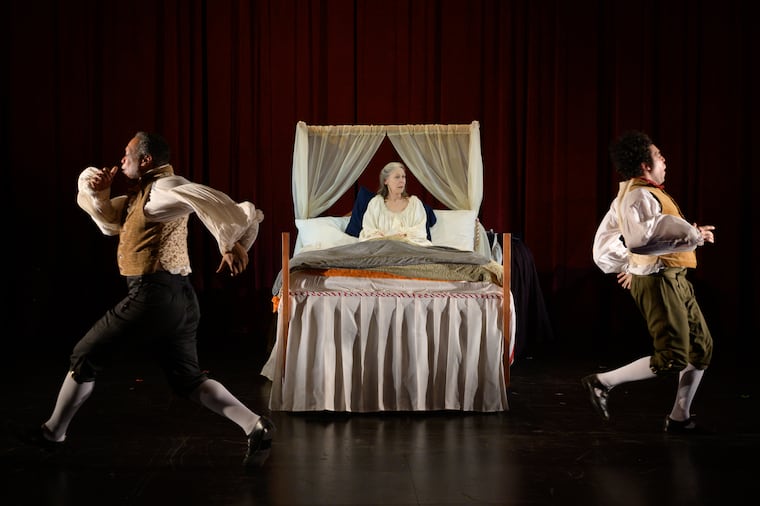
‘The Most Spectacularly Lamentable Trial of Miz Martha Washington’
I’d heard so much about this play before seeing it, and knowing James Ijames’ style from other works like Fat Ham, I definitely expected to laugh. I did not expect a game show scene directing the audience to applaud as Queen Charlotte shot an image of George Washington.
Subversive, inventive, and challenging, this play feels essential right now, not only because of the current presidential administration’s efforts to erase Washington’s legacy of slavery but because it pushes us to face the thorny, complicated nature of accountability.
Historians have often praised Washington for his supposedly generous act of freeing the people his family enslaved upon his wife’s death.
In Miz Martha, that act becomes something like a death sentence for Martha Washington as she lies sick in bed, spiraling into paranoia, fearing that the enslaved people around her are plotting to kill her (which she actually did believe).
There are key moments that have stuck with me: When Betsy Ross and Abigail Adams — played by Black actors — break the colorblind sisterhood solidarity facade for a moment and ask Martha, “What does that feel like, to be free?” When Martha chuckles as she explains that Sucky Boy got his name because he cried whenever his mother was forced to stop feeding him and work in the field; She asks, “Isn’t that funny?” and is met with silence. When Ann stands up for herself and disputes that Martha ever really knew her at all.
The show offers a rare sense of satisfaction that a powerful figure is answering for her cruelty and complicity. It’s fleeting and fictional, but still gratifying.
“Miz Martha” is available to stream through May 3. More info at wilmatheater.org.
— Rosa Cartagena
Kurt Vile, ‘Chance to Bleed’ video
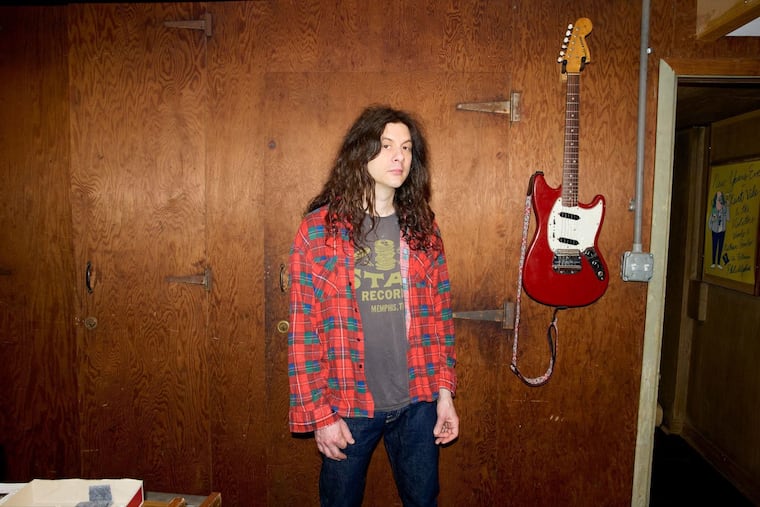
Could Kurt Vile get any more Philly? This week he announced Philadelphia’s been good to me, the Lansdowne-raised, Mount Airy-based artist’s first album in four years. Lead single “Chance to Bleed” might be the catchiest riff rocker he’s ever written, an invitation to enjoy “old-time, lo-fi, DIY rock and roll … Nights!”
The song comes with a delightfully loopy Lucky Marvel-directed video featuring cameos by gangsta rap progenitor Schoolly D, comedian Jim E. Brown and KV sibling Paul “Jelloman” Vile. It was shot in Fishtown at Kung Fu Necktie, under the Market-Frankford El and just up Front Street from the Steve “ESPO” Powers painted Wakin On A Pretty Daze mural.
Philadelphia has been good to me drops May 29 and Vile & the Violators play Connor Barwin’s Make The World Better benefit at the Dell Music Center on July 25.
— Dan DeLuca
‘Mohammed Omer Khalil: Common Ground’
In the last few years, we have seen several images of Sudan; women crying, young boys carrying guns, children standing against war-torn cities, men in army uniforms.
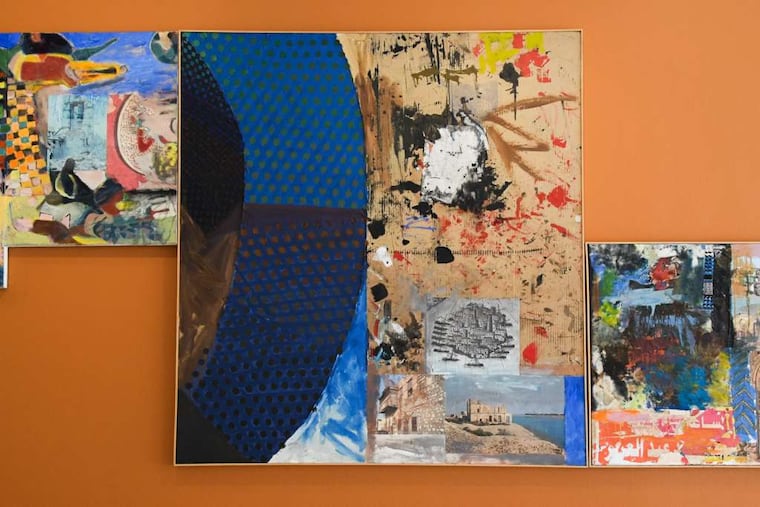
A different, vividly colorful Sudan appears in the collage paintings of Sudanese artist Mohammad Omer Khalil.
The artist, who turned 90 this year, is being celebrated with shows in Wexford, Pa., Brooklyn, N.Y., and Dearborn, Mich. “Common Ground” at Old City’s Twelve Gates Arts is a part of that multicity celebration.
Here, the Red Sea coastal city of Suakin comes alive in the brightest of blues and a sharp yellow. A trip the artist took to the Sudanese port city inspired him to make 52 collage paintings, some of which hang in this show. Cats, latticed screens, and fortress facades all meld into one another as Khalil reimagines and remembers the feeling of home, commanding a vision of a past in color.
In these collages, Sudan is blooming. Its past is in harmony with its future.
Two smaller collages hang on the opposite wall — British stamps on envelopes addressed to an American address, George Washington staring grimly from postage stamps, and bits of advertisements in English peep out of brown paper bag bits. Almost in conversation with the Arabic in the road signs of Suakin.
The artist was born in Sudan, lives in New York, and is a citizen of the world. Someone who studied bookbinding and woodwork as a child in Burri and built a world of paper and wood that can help him teleport; beyond wars and borders, and across geographies.
“Mohammad Omer Khalil: Common Ground,” through May 15. Twelve Gates Arts, 106 North 2nd Street, twelvegatesarts.org
— Bedatri D. Choudhury
The ‘Gerald’ at Boyds
Good fashion always includes a nod to history.
And in the case of Boyds Philadelphia — founded as a big and tall men’s store by Alexander Gushner in 1938 — history runs deep.
That’s why I was interested in the specialty store’s newest collection “Gerald," a collection of suiting named after the founder’s son.
Gerald “Gerry” Gushner started by working in sales and, by the mid-1960s, was Boyds’ president and co-owner. Under him, the once big and tall store started selling sleek European designer suits; marking the beginning of its upscale retail transformation.
The fitted blazers nod to yesteryear’s dressed up vibe with today’s casual twist. Part of a suit — also available in khaki and olive hues — these are paired as easily with denim as with slacks.
Designed in-house by Gerry’s grandson Andrew, the Gerald collection isn’t ostentatious. But its clean lines speak to class and an easy going style in a complicated world.
Boyds Philadelphia is located at 1818 Chestnut St. The navy Gerald blazer is $695.
— Elizabeth Wellington


