
Yet another Philadelphia backstory to ‘The Gilded Age’ drama is our best art pick this week
By Rosa Cartagena, Elizabeth Wellington, Dan DeLuca, Earl Hopkins
Another 19th century Philly writer gets love on ‘The Gilded Age’
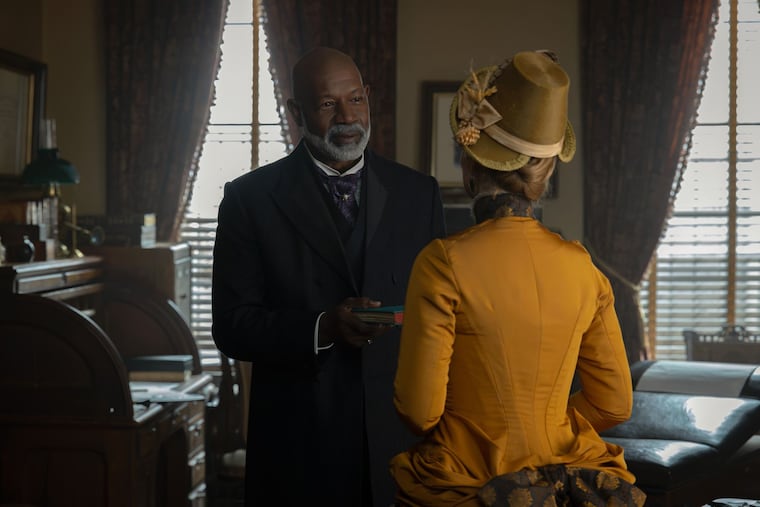
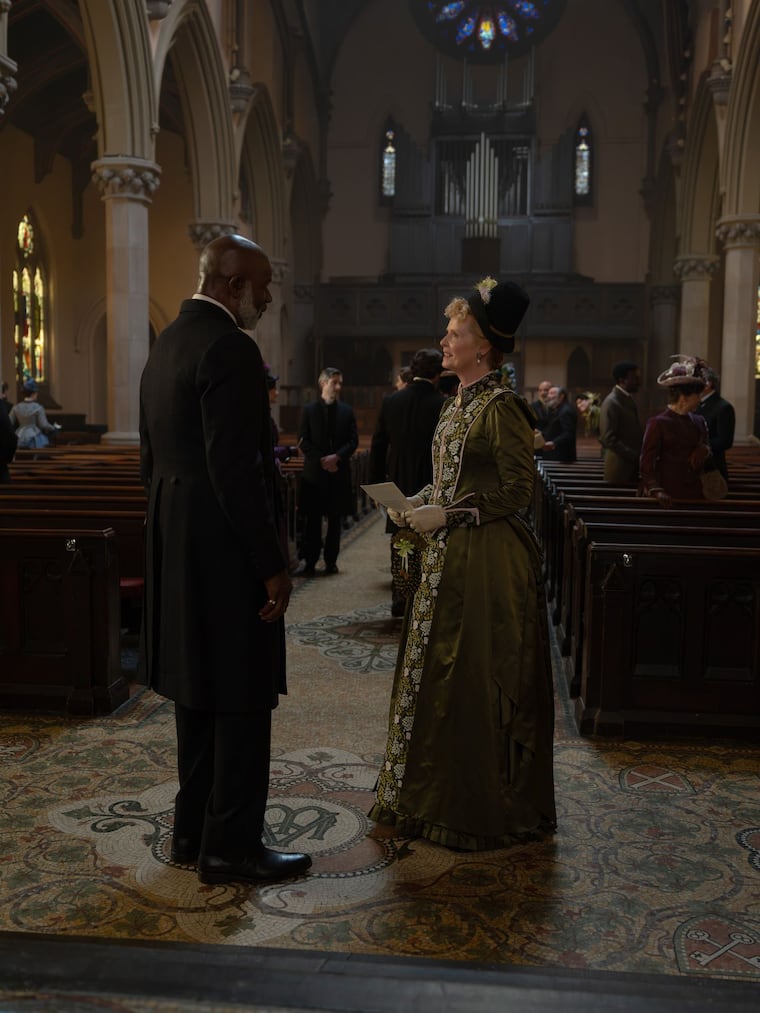
ans of HBO’s 19th century drama The Gilded Age are obsessed — and somewhat terrified — about the outcome of African American doctor Reginald Harris’ (Dennis Haysbert) budding romance with old money white socialite Ada Brook Forte (Cynthia Nixon).
During one of Ada’s trips to Harris’ office, the starry-eyed members of New York elite chatted suffrage and Forte’s financial support for the Freedman’s Hospital, the real life predecessor of Washington DC’s Howard University Hospital that cared for aging veterans.
During this exchange, Harris shares with Forte passages from Sarah Forten Purvis’ poem, “An Appeal to Women.”
Philly for another The Gilded Age win!
Purvis was an abolitionist, poet and contemporary of Frances E.W. Harper, another 19th century Black woman writer from Philadelphia featured on the show. She was the daughter of James Forten, the Revolutionary-era Black sailmaker who founded the Free African Society with Richard Allen and Absalom Jones. She married Joseph Purvis, whose brother, Robert, was founder of the American Anti-Slavery Society and the Library Company of Colored People.
Much like Peggy Scott’s (Denée Benton) family, who is also from Philadelphia, the Purvis family was a part of the Black elite. Joseph Purvis owned a 205-acre farm outside of Bensalem, a transfer station on the Underground Railroad.
Sarah Purvis was a founder of the Philadelphia Female Anti-Slavery Society. “An Appeal to Women” was published in 1834 in William Lloyd Garrison’s abolitionist newspaper the Liberator. The 25-line poem calls for white Christian women to join the abolitionist movement. It reads:
Oh, nobly dare to act a Christian’s part,
That befits a lovely wo man’s heart!
Dare to be good, as thou canst dare be great;
Despise the taunts of envy, scorn, and hate;
Our skins my differ but from thee we claim
A sister’s privilege, in a sister’s name.
Forte is smitten with Harris’ eloquent reading in the show, as would any woman trying to get close to the resident heartthrob MD.
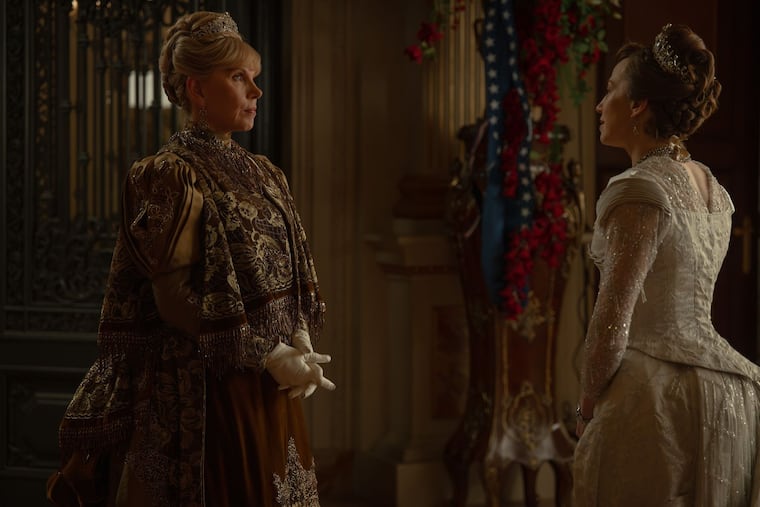
Forte’s sister Agnes Van Rhijn’s (Christine Barnanski) opportunity to host President Grover Cleveland in her grand Fifth Avenue mansion was snatched away from her after another Philly writer, Louisa Knapp Curtis wrote a scathing article about her hosting skills in the Ladies’ Home Journal.
Van Rhijn then is forced to work with her neighbor and nemesis Bertha Russel (Carrie Coon) and the only influence she has on the affair is the choice of the menu. After an elaborate tasting between Van Rhijn and Russel’s chefs, it comes down to a vote between society’s most important women. Forte votes for Russel’s menu.
Proving yet again, behind every drama on The Gilded Age is a Philadelphia backstory.
The Gilded Age airs on HBO on Sundays at 9 p.m.
— Elizabeth Wellington
The Forrest Gump to the Funk and his many Philly music stories
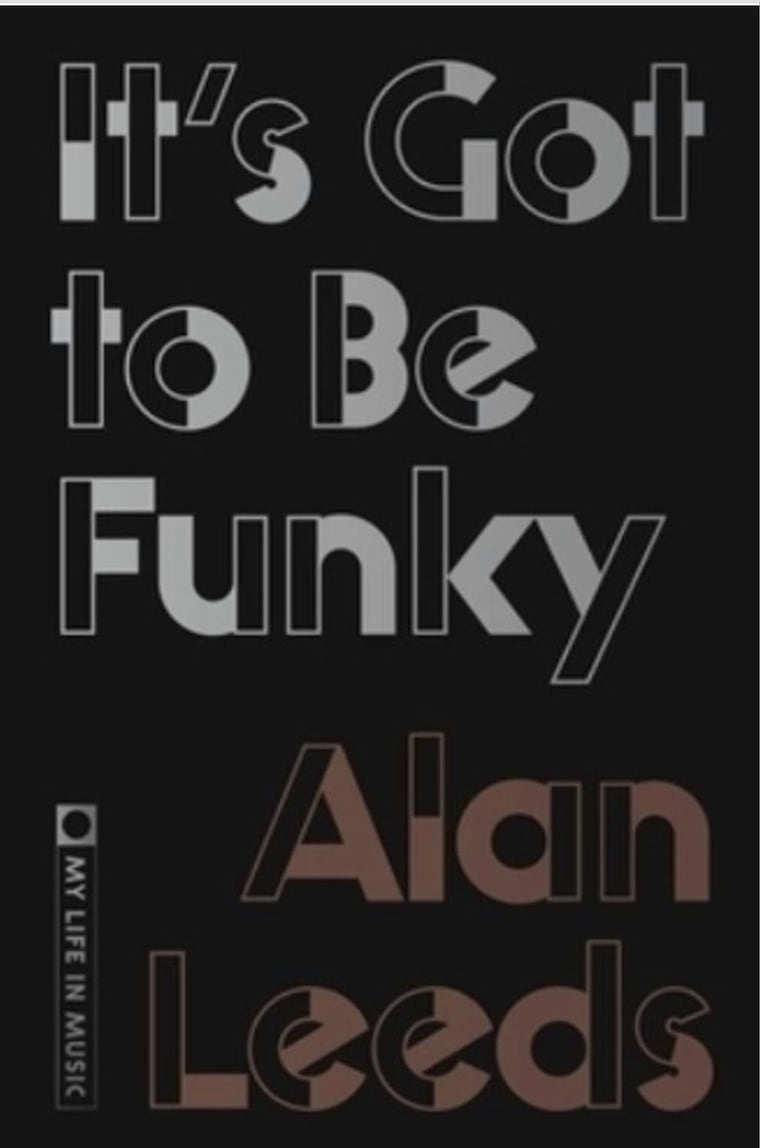
Several times in his terrifically entertaining memoir It’s Got To Be Funky: My Life In Music, Alan Leeds stops to apologize for being an incessant name dropper.
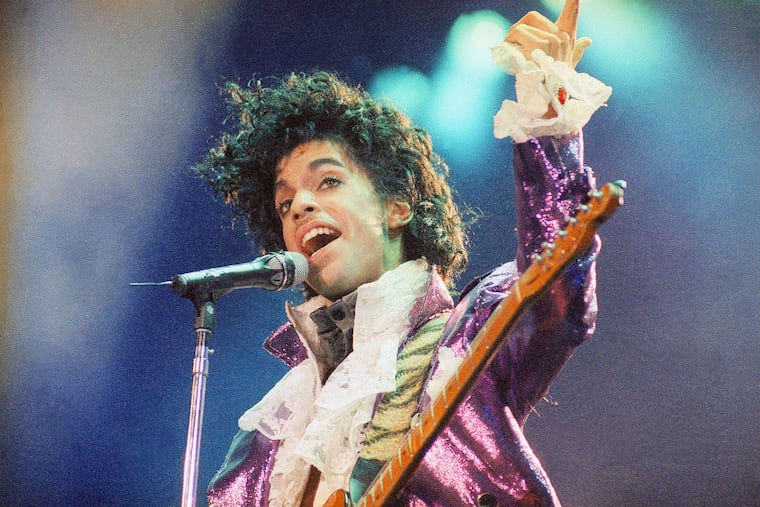
But who can blame him? The list of Black artists of significance Leeds worked closely with in a 50 year career — mostly as a tour manager — includes James Brown, Prince, Barry White, Maxwell, Cameo, Bootsy Collins, Chris Rock, Harold Melvin & the Blue Notes, Sheila E. and D’Angelo. (And oh yeah, another act of a different ilk: Kiss.)
As a white kid originally from Queens who grew up in Richmond, Va., Leeds was an unlikely witness to many momentous flashpoints in music history. It’s no idle boast when Leeds refers to himself as “Forrest Gump to the Funk.”
He was there for the birth of Brown’s “Sex Machine” and Prince’s Purple Rain movie. He was a fly on the wall at such historic occasions as the Electric Lady studio sessions that produced Erykah Badu’s Mama’s Gun, D’Angelo’s Voodoo, and the Roots’ Things Fall Apart. And less consequential ones such as Gene Simmons of Kiss berating him because his post-show fruit salad was not up to par.
It Got To Be Funky is published by Auwa, the Farrar, Strauss & Giroux imprint headed by Roots drummer Ahmir “Questlove” Thompson. Questlove is a featured player in Leeds’ stories from his years working with D’Angelo, right up his scheduled performance at the Roots Picnic in 2025, which was canceled due to the great funk-soul singer’s cancer diagnosis that led to his death later that year.
Other Philly performers who make cameos include bassist Christian McBride, who also blurbs the book, calling Leeds “a national treasure.” Leeds, who won a Grammy for his work on the 1991 Brown reissue Star Time, recalls Patti LaBelle and George Clinton hanging in his office at Prince’s Paisley Park studios in Minnesota. The Queen of Philly Soul teases Clinton about how her 1970s Afro-Futuristic band LaBelle were Black music’s “space children” before P-Funk’s Mothership took flight.
Leeds — whose saxophone playing brother Eric was a longtime Prince collaborator — begain his full immersion in funk with a conversion experience at a 1965 James Brown concert at The Mosque, a Richmond music venue, when he was 16. As a white teenage deejay at a Black radio station in the 1960s, he rubbed elbows with native Virginians who would become players in the Philly soul scene, including singer Major Harris and songwriter Joe Jefferson, who would go on to lead the early 1970s Philly Black Power funk ensemble Nat Turner Rebellion.
“It’s Got To Be Funky: My Life In Music” is published by Auwa Books and is available in virtual and physical bookstores all over. us-macmillan.com
— Dan DeLuca
A Philly revolutionary has his tale told
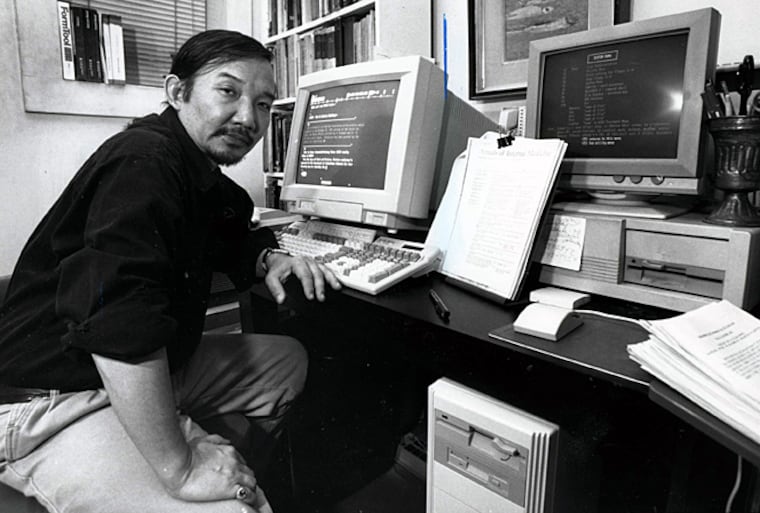
Any history nerd in Philly knows that this city’s archives run deep, with numerous institutions holding boxes upon boxes of treasured documents and materials that represent the countless stories of those who came before us. A new documentary takes advantage of this access to deliver an innovative look at a legendary revolutionary who remains somewhat under the radar: Kiyoshi Kuromiya.
A tireless, creative, and ambitious activist, Kuromiya was on the front lines of social justice movements protesting Civil Rights-era segregation, the Vietnam War, and the government’s fatal mishandling of the AIDS crisis from his home on Lombard Street. Kiyoshi, directed by West Philly-based independent filmmaker Glenn Holsten (who is married to Inquirer classical music writer Peter Dobrin.), is an expansive film that captures the beloved community organizer’s intersectional fight for equality, featuring testimonials from family and friends as well as archival footage of interviews with Kuromiya himself. Thankfully there’s rich documentation preserved about his life in the John J. Wilcox, Jr. Archives at William Way LGBT Community Center, and the film includes readings of his speeches and letters from current day activists.
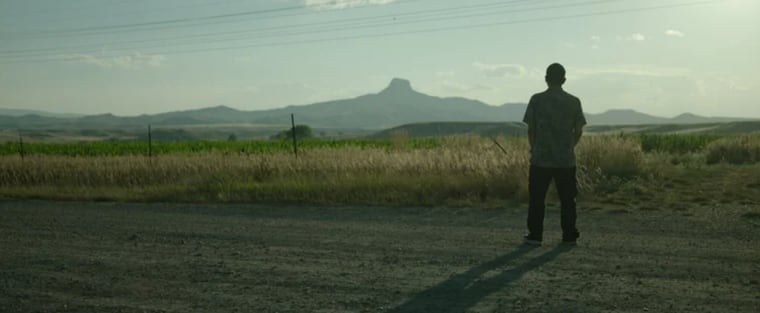
Of course Kiyoshi covers the big headlines: his sit-in at the Liberty Bell while he was a student at Penn, his organizing alongside Martin Luther King, Jr., his crucial newsletter informing AIDS patients about groundbreaking treatments. But it also brings viewers intimately close to Kuromiya’s early years as a baby born in the Japanese American concentration camp in Heart Mountain, Wyoming.
It’s strikingly powerful to see his brother, Larry Kuromiya, return to the preserved barracks where his family were forced to live in a cramped, dust-filled space surrounded by guard towers with mounted machine guns. Today, the site is a memorial to the illegal incarceration of more than 14,000 people during World War II — and there’s a brick for Kuromiya, too.
The documentary is a loving, collaborative effort to tell Kuromiya’s impressive story that leaves viewers motivated to pursue justice wherever they are. In the activist’s own words: “An army of lovers cannot lose.”
“Kiyoshi” premiered at the Philadelphia Asian American Film Festival earlier this month and further local screenings will be announced soon.
— Rosa Cartagena
A Bryn Mawr-connected show worth digging into
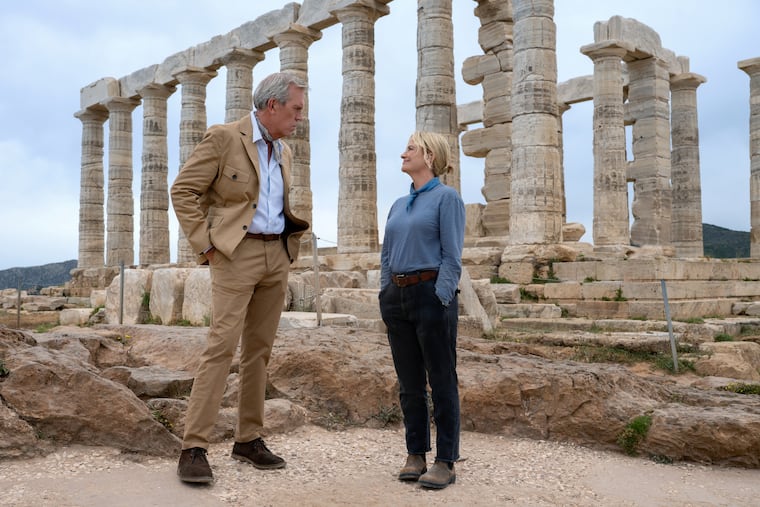
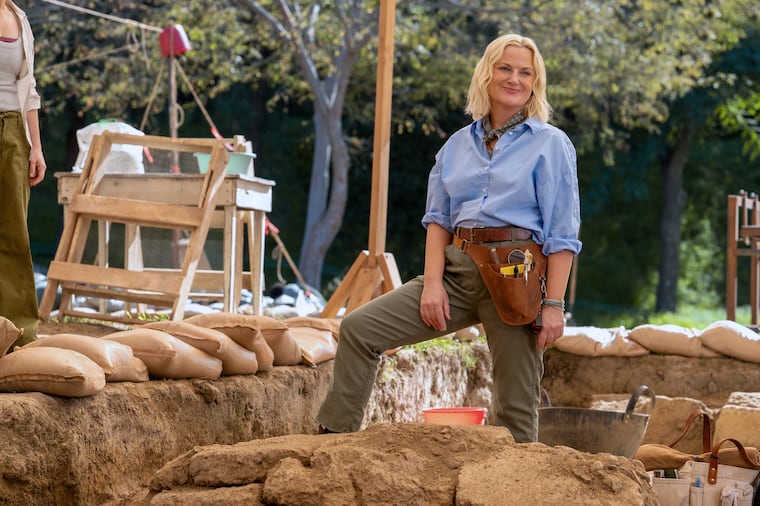
The names Amy Poehler and Michael Schur ring comedy gold. Now, after more than a decade, the Parks & Recreation creators have reunited for a new series Dig, a new Peacock comedy series set in an archaeological site in southern Greece. The show is an adaptation of the 2023 best-selling novel Excavations, written by Bryn Mawr-born and Maryland-raised Penn grad and author Kate Myers.
I watched the first two episodes of the show, which stars Poehler as lead archaeologist Elise and Hugh Laurie as her charming, self-absorbed mentor Neville. Poehler and Schur borrow heavily from the source material, but change the core character names and some other details. The show veers away from the mockumentary style of Parks & Rec, and offers sitcom gold filled with smart comedic moments and the same whirlwind of romantic spills and dramatic undercurrents from Myers’ book.
The series is a refreshing spin on an already niche concept. There aren’t many shows set in an archaeological site, and there’s even less that share the same comedic elements and production value.
As a non-archaeologist, who hasn’t traveled east of the Netherlands, I hold very little knowledge on the matter. But the set design looks like the show’s characters were plopped in the middle of an ancient coastal village, dating back to 1200 B.C. There’s dirt, shovels, brushes, trenches, and a never-ending sense of wonder.
Other cast members include Geraldine Viswanathan, Antonia Thomas, and Fina Strazza.
Their performances, led by the incomparable Laurie, evenly capture the tone of Myers’ book and strike the comedic balance Poehler and Schur have captured throughout their careers. And by my estimation, the duo’s latest undertaking is worth digging into.
‘Dig’ is streaming on Peacock.
— Earl Hopkins


