What American Water-Essentials deal critics have to say about the merger
When American Water offered to buy Essential, both stocks fell. Here’s why.
When a publicly traded company says it’s been sold, its stock typically rises because the buyer offers its shareholders a premium to the recent market price. The buyer’s stock slips — at least at first — because deals are disruptive and uncertain.
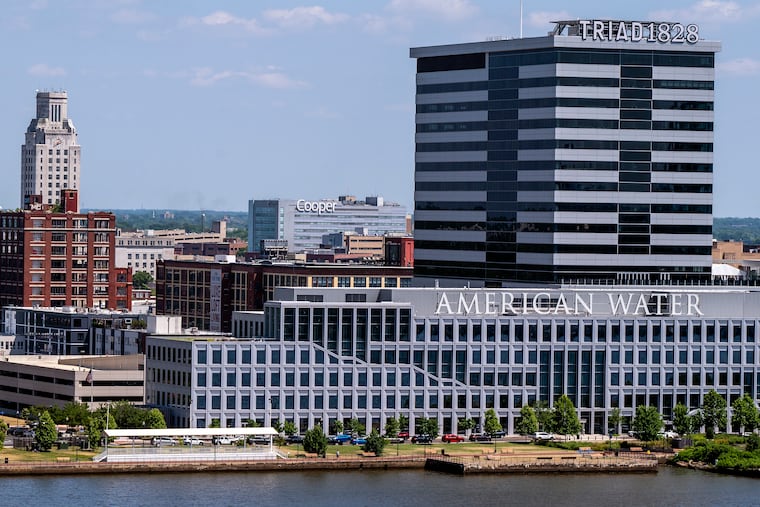
But after American Water of Camden offered this week to buy its longtime rival, Bryn Mawr-based Essential Utilities and its Aqua water companies, with its own shares, both stocks fell.
By Thursday, American Water (AWK) was down 10% from its pre-deal price, and Essential (WTRG) was off 6%.
It wasn’t a utility thing. The S&P utilities index, which includes American Water, was nearly flat, and the S&P 500 list of big company stocks was up almost 2%.
So what explains the initial reaction to this merger between the two-largest U.S.-based private water utility owners — which for more than a century have been buying and selling municipal water and wastewater systems — into a single, large company, with 5 million customers in 17 states?
The risk of the deal
American Water plus Aqua will be “a formidable force in the world of regulated water,” wrote Bensalem-based Ryan M. Connors, a veteran utilities stock analyst, in a Wednesday report to clients of Northcoast Research in Cleveland.
But investors have plenty to think about, Connors said. After adding Essentials’ Aqua Pennsylvania, American Water will be heavily dependent on Pennsylvania regulators, who haven’t always been friendly to the company.
Buying a private water company suggests a lack of “meaningful growth” prospects by their traditional means of taking over public systems, Connors added.
He questioned whether the veteran Aqua executives, who have decades of experience lobbying with fellow utilities to ease rules for Pennsylvania water operators — making the state a center for water privatization — will stick around long enough to perform similar lobbying miracles for the enlarged, still New Jersey-based American Water.
A low premium
Across its multistate network, American Water has boosted rates more than Aqua, which is why the company trades at a higher price-to-earnings multiple (23 times) than Essential does (16 times), noted Bob Costello, owner of $300 million-asset Costello Asset Management in Bucks County and a longtime small-utility stock watcher.
That higher share valuation is also why American Water is in a position to acquire Essential, not the other way around — though Costello predicted Essential CEO Chris Franklin and other top executives would collect millions for agreeing to the deal, as merged-company executives often do.
American Water is offering investors a low premium — just 10% above Essential’s recent rating price, compared to 20% or more for most corporate mergers, according to Ben Axler, a Merchantville native and former investment banker who heads short-seller Spruce Point Capital Management, whose previous targets included Oatly, the partly Philadelphia-based oat-milk maker.
American Water says it will not make big cuts to the smaller company’s operations and will keep Essentials’ corporate offices in Bryn Mawr and Pittsburgh open, even though American Water is a more efficiently managed company, Axler said.
According to Axler, a plausible reason for the deal is that American Water has “hit a wall” in buying municipal systems directly and is now buying other companies that acquired most of their systems from municipal utilities years ago.
Both American Water and Essential have relied on outside financing to fund rising dividend payments, a practice Axler expects will prove difficult to continue indefinitely.
Take it or leave it?
“Such a merger hurts everyone, except the stockholders and [lawyers and investment bankers] advising on the merger,” said Lance Haver, the former Philadelphia city consumer advocate who often attends public-service rate hearings to challenge rate-hike proposals.
“Not that it was ever a good idea to sell a municipal water [or] sewer utility, but with the merger, there will be only one company bidding,” he added.
That’s actually happening in the City of Chester, where units of Essential and American Water made rival, escalating bids to purchase the local sewage authority last year.
The Chester Water Authority is resisting a plan backed by bankrupt Chester’s financial receiver to sell that utility to finance its underfunded city pension plans. Both companies have also made offers for Chester’s sewer utility.
Francis Catania, the water authority’s lawyer, says the companies are offering less than the system is worth. Combining the water companies into one would likely make lowball offers more likely, he said.
The water authority contends that the city doesn’t have the right to sell the water system in the first place.
The proposal “is part of an alarming trend of water utility consolidation,” said Mary Grant, water program director at Food & Water Watch, a national group that advocates public ownership of water and other vital services.
She cited recent acquisitions under American Water’s current CEO, John Griffith, as well as the formation of a combined private operator, Nexus Water Group last year by two smaller utility managers, and the 2022 purchase by France’s Veolia of the rival Suez water group, both of which owned U.S. utilities. The enlarged Veolia says it wants to buy more.
“Control of our nation’s dwindling water resources is rapidly consolidating into the hands of fewer and larger profit-driven mega corporations,” Grant said.
She predicted consolidated, better-funded, less-competitive private ownership will encourage utilities to boost prices more, but public ownership would promote less expensive “water democracy.”