City pledges quick approvals for big port, warehouse, factory developers in ‘Lower South’ Philly
Mayor Cherelle L. Parker is pushing PHL Prime, a program that offers a fast track for developers creating jobs for industrial workers.
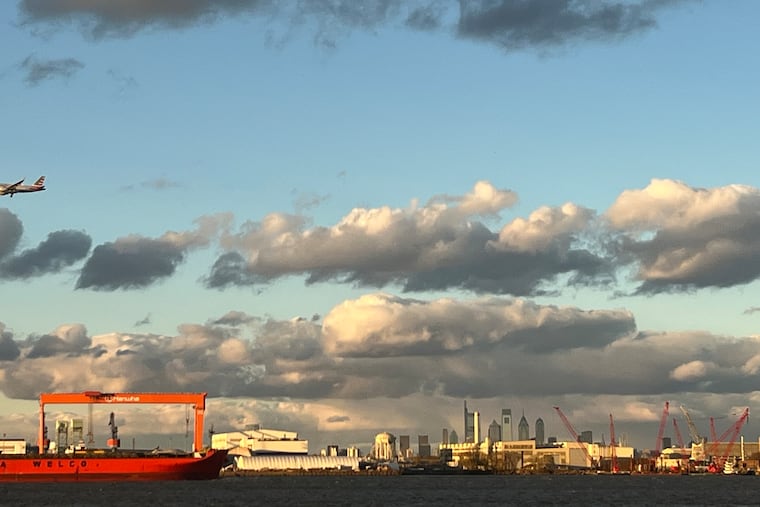
Philadelphia officials are offering to fast-track permits for big employers with complex development plans as part of a campaign to entice companies to invest in and hire workers at former industrial sites near the Schuylkill and the Delaware River.
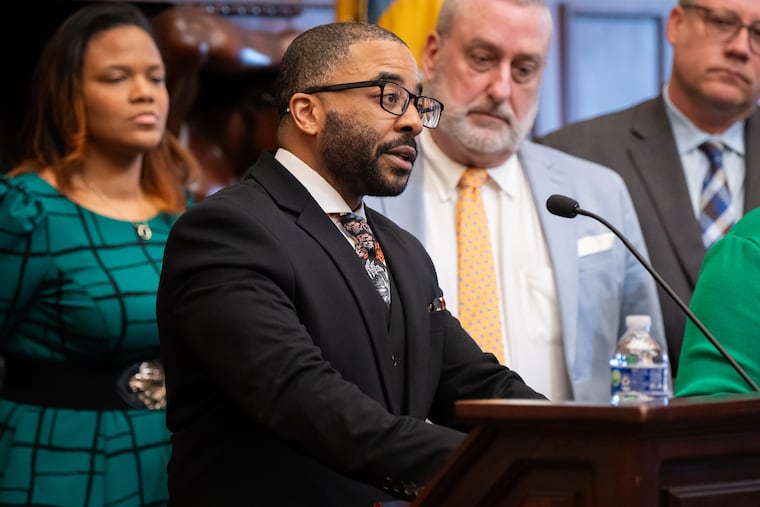
Mayor Cherelle L. Parker and City Council President Kenyatta Johnson on Wednesday convened port, shipbuilding, and real estate leaders for a tour of “Lower South” Philadelphia sites that have recently attracted significant investments.
They rolled out a program called PHL PRIME — Project Review and Infrastructure Made Easy — and a short online application to move some applicants to the head of the line.
“Our job is to make your lives easier,” Johnson told the group before a four-vehicle caravan carried city officials and company leaders to nearby sites that are the focus of new and projected private and public investment.
“Government needs to get out of the way of the private sector, so you can move at the speed of business,” Parker said.
She told the executives and company owners that Philadelphia can’t just rely on “eds and meds” — the universities and hospitals that are its leading private employers — but needs more private-sector jobs with family-sustaining wages to send those nonprofit institutions more students and patients.
The Delaware and Schuylkill waterfronts are flood-prone, with a long and often toxic industrial history that complicates redevelopment. City officials say they can speed large-scale investments while still respecting protections written into law.
In recent years, Center City has lost corporate headquarters and regional retail, leaving developers to convert office towers and department stores into apartments.
But with the Trump administration and Congress funding subsidies to rebuild U.S. basic industries, Parker and others at the meeting said port, shipbuilding, and modern industrial employers offer what Philadelphia needs: a range of well-paid skilled and unskilled jobs.
Union shipyard welders and operators, for example, start at around $50,000 a year, with pay rising to $100,000 for more experienced workers, including overtime.
Which companies could benefit?
Parker named four expanding companies that already qualify for PHL Prime:
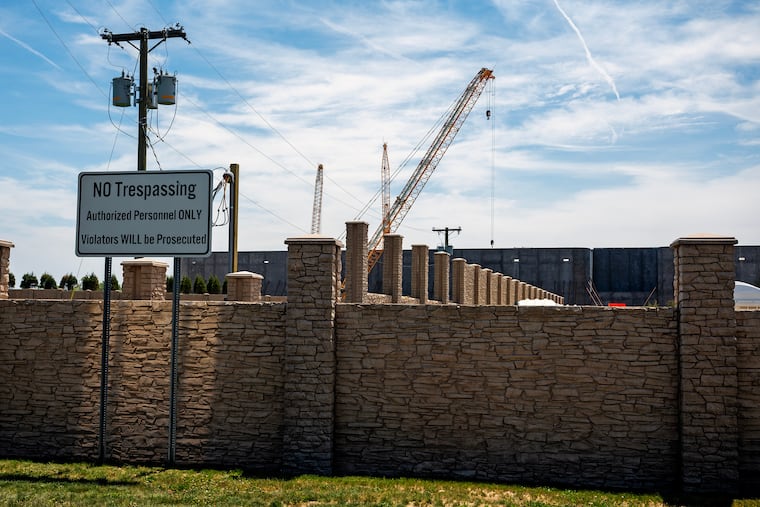
DrinkPAK, a $350 million, 1.3 million-square-foot cocktail- and soda-canning factory, whose walls started rising this week on the Hartranft Avenue extension west of South 26th Street. It’s in the two-square-mile Bellwether District of warehouses that will replace the city’s former oil refineries. DrinkPAK’s area operation expects to employ 175 by 2028.
TerraPower Isotopes, a $450 million, 250,000-square-foot cancer-fighting radioisotope manufacturer backed by Bill Gates, rising in the biotech neighborhood at the north end of the Bellwether District. It plans to employ 225 by 2029.
Hanwha Philly Shipyard, whose Korea-based owner has invested $200 million since 2024 buying and improving the commercial shipyard at the former Philadelphia Navy Yard. It has pledged up to $5 billion for new drydocks, cranes, robotics, and other improvements designed to revive U.S. commercial shipbuilding, build Navy ships, and double employment to 4,000 by 2030.
Rhoads Industries, the shipyard’s family-owned neighbor, which has raised $100 million from the Navy and private investors to build a 95,000-square-foot building to construct submarine hull sections for Navy contractor Northrop Grumman. It expects to boost its 700 workers to more than 1,000.
Bureaucratic delay kills projects and sends investors elsewhere, said Roberto Perez, CEO and cofounder of HRP Group (formerly Hilco), which bought the defunct refineries and has been planning the Bellwether development since 2020. “Speed to market is important. Permitting speed is critical.”
HRP needed permits to replace century-old utilities, demolish refinery structures, smooth earth — and to promise it could frame the hulking building by next month and open it next year — so it could land California-based DrinkPAK’s East Coast location, Perez said.
“Timing was everything. We don’t sell land. We sell strategy,” Perez said, and that includes getting buildings done faster than rival sites in other states.
When HRP started on Bellwether six years ago, “permitting was a long process,” said Blake Rowan, the company official who is overseeing DrinkPAK construction. “We have 85 workers on the job this week. It will be 110 next week [as walls go up] and then 150.”
“Our permits for this were the fastest ever,” Rowan said. “I am looking forward to PHL PRIME” to cut times for future projects.
Perez’s company plans more than a dozen more large industrial buildings, each needing multiple permits, as it finds tenants.
Projects in the pipeline
Staff supporting PHL PRIME will be busy with more applications from those initial program members.
Over the next 30 days, Hanwha will be “finalizing designs” to add automation and robotics at the shipyard and has secured the use of nearby properties controlled by the Navy and the Philadelphia Industrial Development Corp. (PIDC) to build more ship sections faster, Michael Coulter, CEO of Hanwha Defense USA, said at a briefing Thursday.
Hanwha plans to finish three civilian ships this year, up from an average of less than one a year under the yard’s former owners. Company officials have said the yard will become profitable, with costs per ship falling, if it can turn out 10 to 20 ships a year.
Hanwha also has applied to build Navy landing ships and oilers and has a backlog of orders to produce LNG-powered cargo ships when this year’s ships are completed, ensuring that its workforce of more than 2,000 stays busy, Coulter added.
Rhoads is readying plans for an additional 100,000-square-foot building, its government affairs director, Joe Welsh, told the mayor’s meeting Wednesday. “The Navy is telling us, ‘Please, do more work,’” and that means adding more permitted facilities, he added.
Kim and Welsh said their companies are recruiting contractors and suppliers to the neighborhood who will need their own facilities and permits.
Who qualifies for this special treatment? A project that stands to create at least 100 jobs is a good candidate, said Karen Fegley, the city’s acting commerce director.
City officials said they also expect new projects in the port district, which reported record cargo volume last year, and plans to expand Korean auto imports on newly acquired land. The city and port operator Holt Logistics Corp. also hope to boost container cargoes with new facilities, even as Delaware plans a rival container port at Edgemoor.
The mayor projects tens of thousands more jobs from the city’s new strategy. So far, results are incremental. DrinkPAK and Hanwha are investing big in labor-saving robots and automation. The DrinkPAK facility is larger than Amazon warehouses but will employ far fewer workers.
Hanwha officials, however, say they can double employment while adding automation to make many more ships because even robot welders will need skilled human guidance.
The city faces challenges keeping current employers in place. Minaris Advanced Therapies (formerly Altaris), successor to gene and cell therapy manufacturer WuXi AppTec, is subletting vacant space in its Navy Yard complex. Axalta, the DuPont automotive-paint spinoff with a Navy Yard headquarters and research center, was recently sold to Dutch rival AkzoNobel, though the buyer says it will keep the facility.
Jodie Harris, president of Navy Yard landlord PIDC, said other Navy Yard businesses are adding people, including Urban Outfitters, the retail group that is among the largest office employers at the yard after the Navy itself.