When does an employee’s commute become paid work time? | Expert Opinion
Hybrid work arrangements have created more questions around what travel counts as work time, Gene Marks writes.
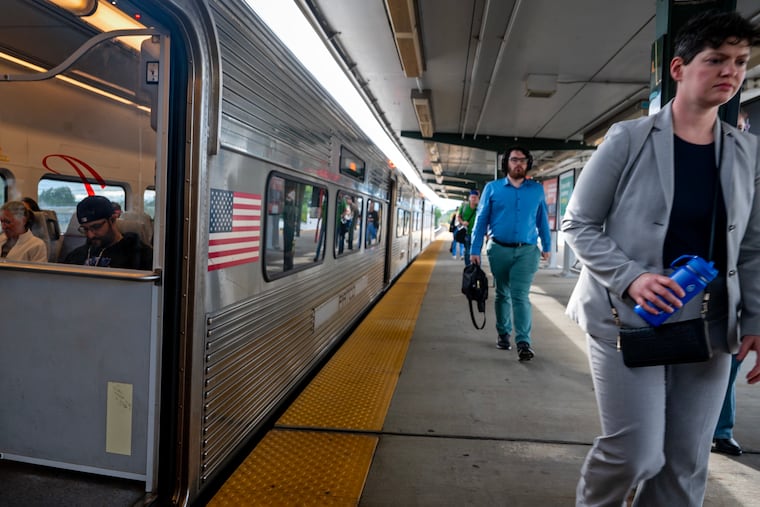
If you have hourly employees who split their time between home, the office and customer locations, you should take another look at when their workday actually begins.
The U.S. Department of Labor clarified these rules in July, and your business could be impacted.
Under the Fair Labor Standards Act (FLSA), “commute time” is the time an employee spends in ordinary travel between their home and their regular place of work. Under the FLSA, employers generally do not have to pay employees for ordinary travel between home and work. But travel undertaken as part of the job generally must be paid.
For example, travel between job sites during the workday is compensable, and so is travel for certain unusual one-day assignments away from an employee’s regular workplace.
An ordinary commute does not become compensable work even if the commute occurs in the middle of the day, said James Boudreau, an employment attorney at Reed Smith.
“For employers concerned that hybrid-work arrangements could inadvertently convert commuting time into paid work time, the opinion provides meaningful reassurance,” he said.
The Labor Department’s recent opinion letter is more of a clarification than a major change in the law, Media-based lawyer Trevor Serine said. Still, it’s important that employers understand the rules around compensation for commute time.
What’s the law say about commute time?
Employers generally do not have to pay employees for their normal commute between home and their regular workplace under the FLSA. But they do have to compensate workers for the cost of traveling beyond their normal commute — for example, a special assignment. In addition, compensation may be required if the employee is asked to perform work along their normal commute, such as picking up supplies, transporting other employees, or performing other work-related duties.
A federal law called the Portal-to-Portal Act amended the FLSA and narrowed what kinds of time employers must compensate for, Serine noted.
A real-world example of compensable travel time
The challenge is, especially in today’s workplace, coming into the office at 9 a.m. and leaving at 5 p.m. has become less common. Workers are coming and going, depending on their job.
Boudreau gives the example of a typical small plumbing company:
If a plumber leaves home and drives 20 minutes to the office, that time is not compensable. If that same plumber drives 20 minutes to a job site, that’s also not compensable. However, if the plumber drives first to the office and then to the job site, the time driving from the office to the job site (and any other job sites after that) is compensable.
The issue is what’s an “ordinary” commute. If that plumber drives 50 minutes to a job site when it would normally take 20 minutes to drive to the office, do they get paid for the additional 30 minutes? That depends on whether that trip was for a special assignment or is a recurring, ordinary commute.
What if the employee is working during the commute?
Boudreau says “it’s easy” to imagine real-world scenarios where answering a phone call or responding extensively via email during a commute would be compensable.
Employees can get paid for work during their commute if the task “is actually connected to fulfillment of the employee’s job responsibilities” and it will “primarily benefit the employer.”
But “brief interruptions … are generally deemed incidental and not compensable," he said.
With so many businesses now allowing employees to work hybrid schedules, compensating for commuting time is increasingly subject to debate.
Serine says the Labor Department’s recent opinion letter aims to end that debate. Though, Boudreau noted, opinion letters are not binding and are meant to be taken as guidance.
“Anytime you’re going from your home to a static place of employment, nine times out of 10, it’s going to be considered a commute, and it’s not payable,” Serine said. “If you’re required to leave your house and go to a job site, they’re going to say that that’s obviously part of your job, and that’s payable.”
A clear policy
The rules can be confusing and are always subject to change. So both Boudreau and Serine recommend having a written travel and work-time policy that’s consistent with federal and state wage-and-hour laws.
Clear policies and documented training are “key” to educating both managers and employees as to what time is compensable, Boudreau said.
He says employers “need to establish clear guidelines and expectations for managers” such as not sending emails or soliciting responses after standard work hours “unless absolutely necessary.” And, Boudreau said, employees similarly need to understand that they are not expected to work outside the normal work day.
It’s important to communicate clearly where your employees are expected to report, define what counts as work during travel, require all compensable time to be recorded, and put those rules in writing.