Before the World Cup, a beautiful game for U.S. Ivorians | Will Bunch Newsletter
Plus, LA’s clown candidate threatens U.S. democracy.
This should be a moment for sports fans to be insanely happy. The finals are underway in both the NHL and NBA, and the matchups and the games so far have never been more compelling. Soccer’s World Cup — always the greatest show on earth — starts Thursday (see below). Yet, something seems off. If you wanted to attend Monday night’s Knicks-Spurs Game 3 at Madison Square Garden, it would have cost about $4,500 — not courtside, but in the last row. Equally insane and opaque ticket pricing has ruined the World Cup for many fans. Sports are supposed to be an escape from life’s problems, not a PowerPoint demonstration of them.
If someone forwarded you this email, sign up for free here.
Orange-clad Ivorians bring soccer joy to a World Cup tune-up in Chester
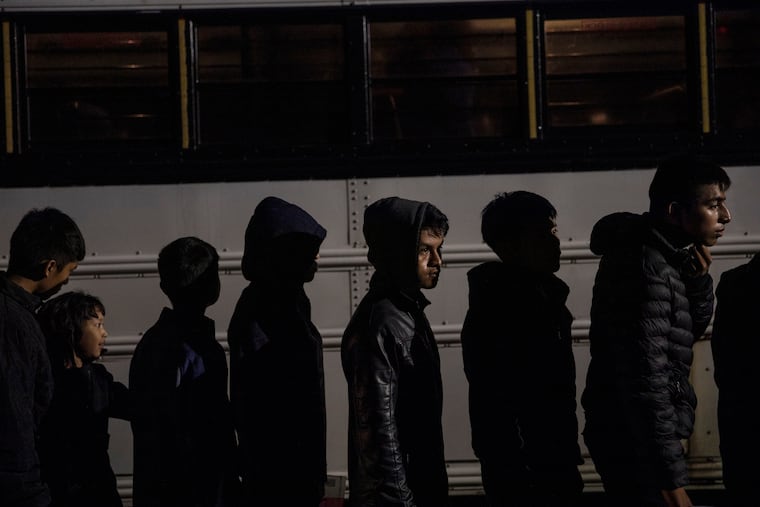
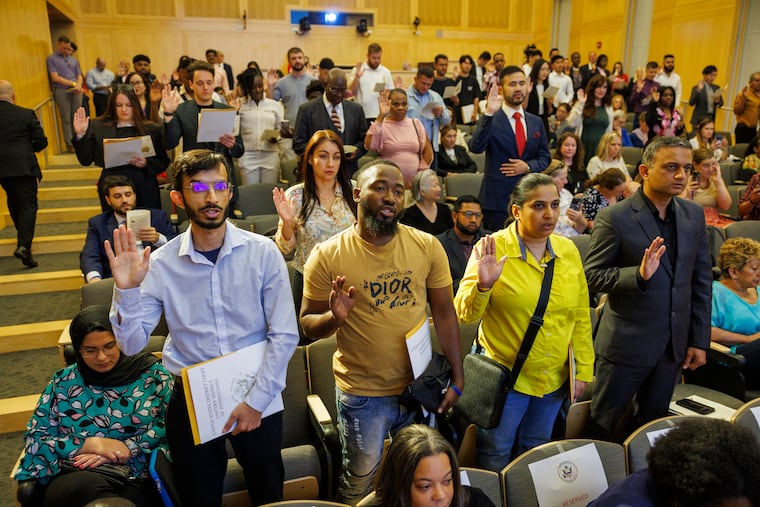
The cosmic vibes were not great Monday night. On the car radio, the news brought a new cycle of bombs dropping across the Middle East, and yet another onscreen meltdown from an American president who is stumbling toward his 80th birthday in confused anger. Reports from the eve of the much-anticipated return of soccer’s World Cup to North America were less about the game and more about U.S. immigration outrages, including a Somali referee turned away at the airport.
Then at about 6:59 p.m., I walked through a long tunnel in suburban Chester and into an undulating orange sea of pure joy.
On the green soccer pitch of Subaru Park, the national team from Côte d’Ivoire lined up in rapt attention as “L’Abidjanaise,” the national anthem of the West African nation, blared from a loudspeaker. But in the stands, fans wearing their native country’s iconic orange jerseys could not sit still, laughing and waving their cell phones, confirming with videos that their heroes were actually here, on U.S. soil.
For a you-can’t-beat-it ticket price of zero dollars, in a year of maximum sports greed, members of an African diaspora scattered along the Eastern Seaboard had driven up or down I-95 for hours to watch Côte d’Ivoire — also known by the anglicized Ivory Coast — easily win its World Cup tune-up match against the young American prospects of the Philadelphia Union II, 2-0.
Fatim Toure, 27, in her Côte d’Ivoire jersey, and her 26-year-old sister, Ferima, wearing her headwrap like many female fans at the stadium, had driven down from North Jersey to see the match, and were now beaming as they watched the kickoff from the tunnel as the sun set on a crisp, perfect June evening.
Fatim said the sisters “were filled with nationalism and pride, so we’re excited to see how it goes.”
The cheerfulness of the Côte d’Ivoire faithful who turned the 18,500-seat stadium bright orange — drowning out scattered dots of Philadelphians in the Union blue of the regular home squad — was infectious. It was truly what the world needs now.
Soccer fans like me have been waiting since 1994 with patience, then anticipation, and finally something bordering on dread for the World Cup — Planet Earth’s ultimate sporting event — to finally return to U.S. grass. With the opener in Mexico City (75% of the matches are in the United States, with the rest in Canada and Mexico) slated for Thursday, news about the World Cup and soccer’s corrupt, authoritarian-loving governing body, FIFA, has been dominated by grim headlines.
Formerly hopeful fans turned disillusioned by astronomical and often inscrutable ticket prices. Local tourism officials are dismayed at empty hotel rooms, as the expected international fans either balked at the cost, feared airport encounters with hostile U.S. immigration agents, or felt general revulsion at America’s autocratic turn under Donald Trump.
Indeed, the political rise of Trump — the stuff of cartoon satire not long after the first World Cup matches were played here 32 years ago — and his hostile border regime have sparked the greatest angst, and on the eve of the kickoff, these fears are coming true.
Top soccer referee Omar Artan from the African nation of Somalia was turned away at Miami International Airport on Saturday, denied the pinnacle of his profession by U.S. Customs and Border Protection agents for reasons still unknown. The star striker for the Swiss national squad was also initially denied entry (since reversed), while a star player from Iraq was interrogated for hours.
Players from Iran — the nation Trump decided to bomb back in late February and is still engaged in a murky war — are going ahead with matches in Los Angeles and Seattle, but U.S. officials are forcing them to immediately return to their base camp over the Mexican border in Tijuana and not stay here overnight.
Côte d’Ivoire, an ethnic melting pot of 32 million people on Africa’s Atlantic coast where French is the official language, hasn’t been immune to the xenophobic U.S. turn on immigration. The nation is one of several under a restrictive travel ban by the Trump regime, and efforts to allow visas for some soccer fans have been plagued by confusion, including a $15,000 bond that was announced, then canceled.
While Monday’s free friendly match was a gleeful coming-out party for a diaspora that’s rooted in East Coast urban neighborhoods such as Southwest Philadelphia, most acknowledged that fans back in their native Côte d’Ivoire, where soccer is the national obsession, could never afford the cost of coming here — or the risk.
“The ICE situation has killed the entire momentum of the World Cup,” a Liberian-born woman from Southwest Philly, who said she came out to support her African neighbors, told me. “America could have used this to boost the economy and generate income, but because of the whole ICE situation, a lot of people are afraid to come.”
No World Cup squad will be more deeply tied to Philadelphia than Côte d’Ivoire, which plays two of its three matches at the temporarily unbranded Lincoln Financial Field, starting against Ecuador on Sunday night. The team is training in Chester at the Union’s facilities and staying in Delaware. But with the cheapest tickets on StubHub for that Ecuador showdown starting at $836, few whom I spoke with will be attending the matches that actually count for Côte d’Ivoire’s long-shot dream of becoming the first African nation to win the World Cup.
“I wish, but I couldn’t get any tickets, unfortunately — it was too expensive,” Audrey Yao, a 32-year-old Ivorian American researcher from the University of North Carolina who was visiting Philly from Chapel Hill, told me. “So the opportunity to see the team today — that’s why I’m here.“
For many Ivorians, Monday’s free friendly was essentially their World Cup, and they partied accordingly — swaying and gyrating to piped-in African Zouglou music between breaks, and celebrating wildly as keeper Alban Lafont stopped a penalty kick for Les Éléphants against rising young Union star Cavan Sullivan.
As a die-hard — emphasis on the word die — Union supporter for their 16-year tortured history, I’ve seen some great matches in Chester, but I’ve never had so much fun.
Monday night wasn’t just how the World Cup should have, could have been. It was very much the way America is supposed to be — with people who were proud and happy to be here, with one foot still planted in their bright-orange African heritage as they lived and breathed that Philadelphia freedom, with no masked goon squads there to hassle them.
By the setting-sunlit banks of the Delaware River, there was no U.S. Immigration and Customs Enforcement, no need to raid the ATM, no bad news from outside the stadium walls. Just 90 minutes of the Beautiful Game.
Yo, do this!
Don’t expect a lot of high-class book or film reviews this month, as my waking nonwork hours are devoted to watching the World Cup. Three games to circle this week are Thursday afternoon’s opening match in Mexico City between Mexico and South Africa (3 p.m., Fox); the first U.S. match against Paraguay in Los Angeles Friday night (9 p.m., Fox); and Philadelphia’s first contest between Côte d’Ivoire and Ecuador Sunday night at 7 p.m. on FS1, or in person at “Philadelphia Stadium” if you can spare the cash.
What if the biggest story of our time isn’t Trump’s outbursts, or even the World Cup — but the growing inability of our young people to sit down and read a book from cover to cover? The latest installment in this genre comes from university professor Tyler Jagt in a searing essay for the Chronicle of Higher Education: “My Students Can’t Read.” Is the culprit the smartphone and now AI, or the lost COVID-19 years, or the teach-to-the-test dictates of the Common Core curriculum? There’s a strong case for “All of the Above.”
Ask me anything
Question: You recently wrote about data centers. Have there been any groups who have successfully gotten data center plans aborted? What do you think are the most effective ways for communities to fight back? — @silvermoonfafo.bsky.social via Bluesky
Answer: There are already signs that the backlash against these massive, noisy, energy-and-water-sucking data centers powering the artificial intelligence revolution is becoming one of the most successful grassroots movements in American history. I wrote this spring about how everyday folks in rural Montour County, Pa., successfully blocked an Amazon-backed site that started with a lot of support from elected officials. How’d they do it? I wish there was some big secret, but basically it was: showing up. They organized petitions and got big crowds to speak at county commission and zoning board meetings, and the politicians had little choice but to listen. They have money, but we have people. Never forget that.
What you’re saying about …
Well, you won’t know it from today’s soccer-heavy newsletter, but not all readers share my deep passion for the Beautiful Game. Most questions that aren’t some variation on how much do you hate Donald Trump, or John Fetterman, or the media get low responses, but my World Cup question about a favorite team besides the U.S. set a record for reader nonparticipation. Andrew Ross is rooting for Portugal because he moved there from Philly three years ago (and we are all jealous). Weekly correspondent Mary Ann Petro isn’t rooting for anyone and hopes the Yanks “go down in flames.” I’m rooting for the U.S. and Côte d’Ivoire, but you knew this.
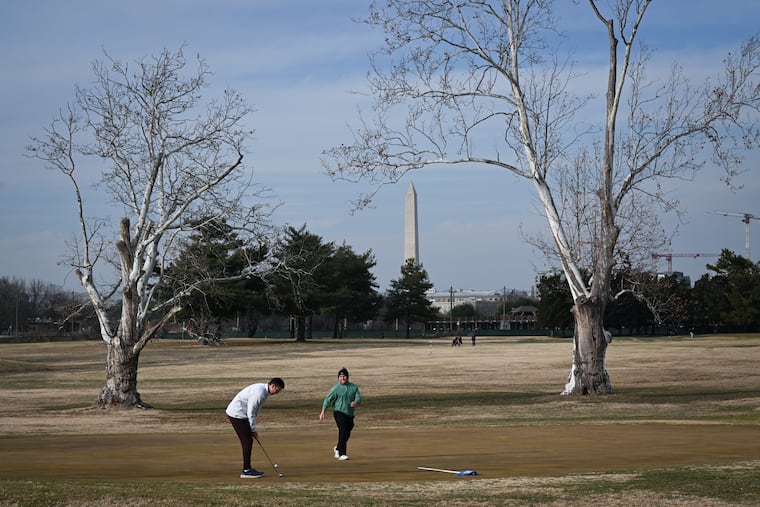
📮 This week’s question: Few things are more outrageous these days than Donald Trump’s expensive desecration of Washington, starting with that $1 billion-or-whatever proposed ballroom at the White House. So what happens to the ballroom when the good guys retake power? Tear the whole thing down, or blow it up on national television? Or repurpose it as a community health center or midnight basketball court, or something else? Please email me your answer, and please put “Ballroom future” in the subject line.
Backstory on how an LA mayor’s race could blow up America
Everything about the doomed bid of a B-list reality-TV star, Spencer Pratt, to become a Republican mayor in the ultra-liberal enclave of Los Angeles has been utterly predictable. That includes his campaign that was big on the kind of social media stunts that an entertainment-oriented LA media loved, and short on substantive ideas for a city with big problems that are both chronic (its incurable homelessness) and acute (violent immigration raids, the 2025 wildfires). It also includes the fact that Pratt wasn’t likely to get more than the roughly 27% his highest-profile fan, Donald Trump, received in 2024 from America’s second-largest city.
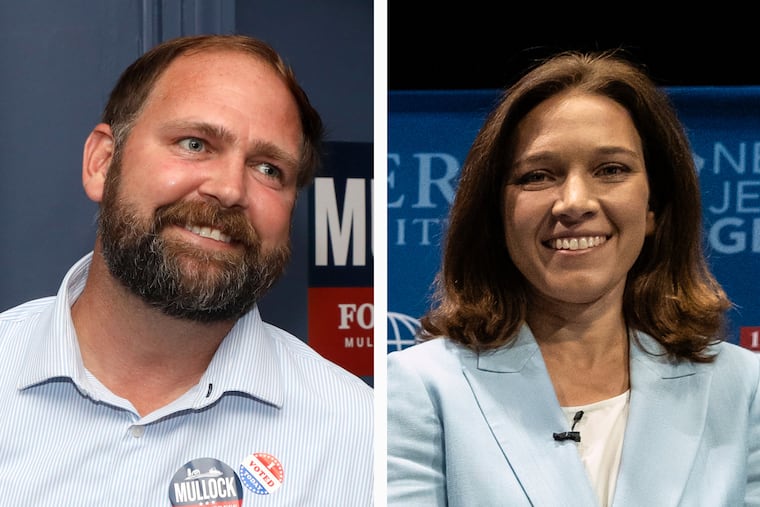
And now the least surprising thing of all: The right-wing conspiracy theories that Pratt’s apparent defeat by two Democratic women of color — incumbent Mayor Karen Bass and progressive upstart Nithya Raman — is their long-sought proof of massive voter fraud, after Pratt had started the lengthy vote counting in second place.
It’s not just the usual loudmouths on X. Trump is taking the lead role, again, in spreading election lies, telling Kristen Welker of NBC’s Meet the Press in their now-notorious Wisconsin interview that the California voting was rife with fraud, and, when asked for any proof, blurted angrily: “No, they’re crooked … Just like you’re crooked.” When House Speaker Mike Johnson was asked about these lies on Capitol Hill, he only amplified them, stating that “everybody knows instinctively that something is wrong.” No proof, just “instincts.” Trump’s handpicked and apparently incompetent top prosecutor for Southern California is now threatening an investigation.
Here’s the thing. California’s elections are among the most democratic and inclusive in America. There is extensive opportunity for the convenience of mail-in voting, and voters are allowed to send these ballots right up until Election Day. Local officials then have up to 30 days to meticulously count all the votes. That means a) it takes longer to declare a winner in California than anywhere else, and b) it unexpectedly turns out there are significant differences between who votes by mail instead of in-person, and the shape of the race can change dramatically from election night to the end of the lengthy counting. To today’s GOP, any fair and measured vote-counting must be a conspiracy.
Why does it matter? Pratt loses and — according to some reports — moves out of LA. End of story, right? Not exactly. We don’t know yet what ridiculous claims California’s train wreck federal prosecutor will make about supposed election fraud, but it’s almost guaranteed that the Trump regime is looking to make California the bogus argument for extreme measures to influence the general election in November.
Sending in troops? Seizing election machines? Invalidating results? It will all be on the table for Team MAGA in November, and the fact that the former bad boy from MTV’s The Hills couldn’t get elected mayor of one of the nation’s most diverse and liberal cities will be cited as a reason. Spencer Pratt has landed a starring role in the worst reality show ever.
What I wrote on this date in 2023
Even though it was only three short years ago, memories of this week in early June back in 2023 are a little foggy — because the skies here in Philadelphia and around the Eastern Seaboard were filled with suffocating, thick smoky haze from wildfires up in Canada. Before digging up my column, I’d forgotten that a Phillies game at Citizens Bank Park was canceled because of the horrendous air quality. I wrote: “In a perfect world, [President Joe] Biden would have donned an N-95 mask Wednesday and spoken in front of the orange blur of the Statue of Liberty to declare unconditional war on fossil fuels.”
Read the rest: “America sleepwalks through a climate crisis. Will this smoke alarm wake us up?”
Recommended Inquirer reading
I’ve never had so many column ideas swirling around in my head as this chaotic start to the summer of 2026. Last week’s Sunday column looked at the openly fascist coming-out party for the former U.S. chief immigration raider Greg Bovino, who attended a European white supremacist conference. I said it matters a lot that he is now screaming the not-that-quiet part about U.S. xenophobia out loud. I shifted gears over the weekend and wrote about the growing panic of U.S. elites over grassroots opposition to data centers, which has sparked bizarre accusations of Chinese influence, as well as spying on activists by some police agencies. The 1 Percent can’t admit it’s really the noise pollution and higher electric bills.
Wrapping up this week’s theme in a bow, I have to say I’ve been blown away both by the quality and the quantity of The Inquirer’s coverage of the World Cup, which has truly matched, if not surpassed, some of the national outlets. Lead writer Jonathan Tannenwald, with a well-deserved reputation as one of the nation’s top soccer journalists, has been following the U.S. team in its Georgia training and at its warmup matches, profiling key American players like its star Christian Pulisic, and filing other human interest stories like a Penn soccer standout who’ll be taking the pitch for Haiti. Other Inquirer writers have contributed with in-depth features about everything from the role the late Tug McGraw’s widow played in bringing soccer to Philadelphia, to the storied history of the cinder (ouch!) pitch in Fishtown that brought Philly “attytood” to the sport’s slow rise here. That’s not to mention the comprehensive guide we published earlier this year. You won’t be able to read all this without a subscription, so now is the time to finally sign up. And let the games begin.
By submitting your written, visual, and/or audio contributions, you agree to The Inquirer’s Terms of Use, including the grant of rights in Section 10.

Sign up for the Will Bunch Newsletter