Philly detectives are solving homicides at the highest rate in 40 years as violence plummets and tech improves
Still, nearly 800 killings between 2021 and 2023 have yet to result in an arrest, according to an Inquirer analysis.
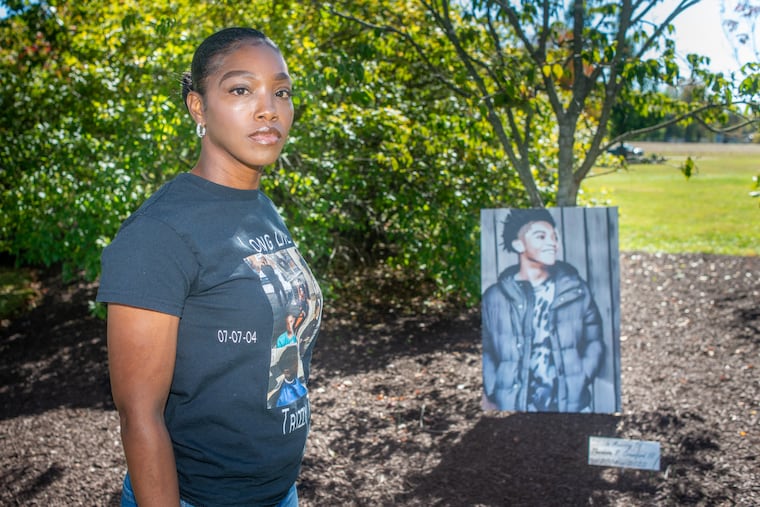
Philadelphia police are solving homicides at the highest rate in recent memory, arresting suspected killers at a pace not seen since the early 1980s as violence in the city plummets to near-historic lows and as the technology used to solve crimes improves.
The homicide clearance rate this year has hovered between 86% and 91% — the highest since 1984, when the department recorded a 95% clearance rate.
The change is a dramatic shift from just a few years ago, when from 2015 to 2022 the rate of solved homicide cases was around 50% or less. In 2021, amid an unprecedented spike in shootings, it dropped to 41.8% — the lowest on record, according to police department data.
Put simply, for many years in Philadelphia, killers regularly got away with murder.
Now, more are going to jail.
To understand the phenomenon and what’s driving it, The Inquirer interviewed top police department officials, homicide detectives, and prosecutors, and analyzed data and hundreds of pages of court records.
The interviews and analysis showed that chief among the factors driving the improvement is that as violence in the city drops to its lowest point in the last half-century, detectives have more time to work their cases — old and new.
During the pandemic, for example, detectives were handling 10 to 15 cases each year, more than twice the workload recommended by the U.S. Department of Justice. This year, it’s half that.
At the same time, officials said, investigative tools — high-definition surveillance cameras, license plate readers, social media, and cell phone location analysis — have expanded dramatically in the last two years, giving detectives not only more evidence, but also quicker access to it.
The police department has more than doubled the number of “real-time crime” cameras — the 360-degree cameras with ultra-high-resolution video systems that can capture details as small as the fine lines of a tattoo — on Philadelphia’s streets in just the last year.
In 2024, the department said it had 3,625 of those cameras across the city. This year, it has 7,309 — and that doesn’t include the thousands of other surveillance systems available through SEPTA, businesses, and private residences.
“The video, it’s unbelievable,” said Deputy Police Commissioner Frank Vanore, who oversees investigations in the department. “We have the officers wearing cameras. We’ve got cameras in the cars. We have thousands of cameras on the streets that we put up … that really catch everything.”
And while it’s impossible to know how often video footage helped solve cases, detectives are making arrests faster. Through August, police arrested a suspect within a week in about 31% of cases — up from just 15% three years ago.
This, in turn, makes Philadelphia safer, said Philip Cook, a Duke University professor who studies the effects of gun violence at the University of Chicago Crime Lab.
“Anything like 90% is extraordinary,” he said of the clearance rate. “It’s an increase in safety that is being recorded today by this huge reduction in homicides.”
Arresting shooters, he said, prevents them from committing more violence or from ending up as victims of retaliation, deters others by sending a message of accountability, and can improve the relationship between police and the community.
Still, a higher arrest rate doesn’t account for whether the defendant is convicted at trial. And the apparent improvement partly comes down to simple math: With fewer killings overall, even fewer total arrests can boost the clearance rate.
And today’s success doesn’t make up for the struggles of the past. Nearly 800 killings during the surge in gun violence between 2021 and 2023 have yet to result in an arrest, according to an Inquirer analysis — a number that has left thousands of grieving Philadelphians longing for answers and accountability.
Among them is the family of 15-year-old Simone-Monea Rogers, who was fatally shot by a stray bullet while playing basketball at Jerome Brown Playground in August 2021. Her mother, Lendale Rogers, said investigators told her they identified four suspects, but couldn’t secure enough evidence to charge them.
“There’s hundreds of other Simones,” Rogers said. “I’m just praying for closure, for justice for her.”
But as time passes, the odds of that happening grow slimmer.
Time is a luxury
Philadelphia police, like most law enforcement agencies, calculate the homicide clearance rate by dividing the number of homicide cases solved in a given year — regardless of when the crime occurred — by the number of homicides that occurred in that same year.
Cases are also considered “cleared” if a warrant has been issued for a suspect’s arrest — even if the person is not yet in custody or is no longer alive. These instances typically make up a small portion of cases. For example, last year, nine cases were cleared with suspects in fugitive status, and five involved suspects who had died, police said.
Time has always been critical to solving cases, and the sharp drop in homicides over the last two years has given detectives more of it.
As killings surged during the pandemic, an Inquirer analysis of monthly arrest data shows, police hit a limit on how many they could solve. In 2021, the city saw 50 or more homicides in six different months — but detectives never made more than 29 arrests in any one month. Their clearance rate plummeted to new lows and hovered around 45% as they struggled to manage the pace.
And while the likelihood of an arrest drops sharply as time passes, detectives this year have had the time to reinvestigate older cases, too. Just under a third of the 129 homicide arrests police made through August were for killings that happened before 2025, according to the analysis.
The shooting death of Theodore “Trae” Crawford is one of them.
Crawford, 17, was shot and killed during a gun sale gone wrong at Abbottsford Homes in East Falls in April 2022. For nearly three years, his killing went unsolved.
The teen’s mother, Cherisse Pearson, said she regularly reached out to the assigned detective on the case, but rarely heard back. She couldn’t tell if he was overworked and overwhelmed, she said — or indifferent.
Pearson, a nurse who lives in Lansdale, said she refused to let her son fall among the nearly 300 people whose killings in 2022 remain unsolved.
“My son was murdered,” she said. “I am his mother. I am not accepting silence as an answer. That will not happen until the death of me.”
She demanded meetings with supervisors and wrote letters to department leadership, and eventually, last fall, her son’s case was assigned to a new detective: Joseph Cremen.
“And in less than a year,” she said, “my son’s case was solved.”
Cremen, she said, was like a breath of fresh air. He communicated with her regularly, looked into her theories, and seemed to have — and make — the time for her son’s case.
He pored over tens of thousands of pages of Instagram records and messages, she said.
Those records led prosecutors to charge three men with Crawford’s murder in April. They are now awaiting trial.
Cremen helped restore some of her faith in the justice system, Pearson said, but she thinks often of other families with loved ones killed at the height of the shooting crisis who still await justice.
And there are many. Like the parents of Ojanae Thompson, a 19-year-old basketball player who was shot multiple times in a grocery store parking lot in 2021.
Or the mother of Quenzell Bradley-Brown, shot and killed in 2022 on his way home from picking up groceries for his family. Taneesha Brodie still regularly visits the corner of 63rd and Lebanon Streets, where he was killed, to hang fliers and search for witnesses.
Her hope is fleeting.
Vanore acknowledged the stack of unsolved cases, but said police are committed to investigating them and pointed to the approximately 40 homicides from earlier years that were solved in 2025. He anticipated that, once the city’s new forensic lab gets up and running, they’ll be able to work through old cases more efficiently.
New technology
The city’s approximately 80 homicide detectives have grown more skilled at collecting and analyzing digital evidence in recent years, Vanore said, especially as a younger class moves up the ranks.
He’s seen how this has helped detectives who investigate nonfatal shootings, too. That unit has a 39% clearance rate this year, he said — the highest since 2008 and nearly double the rate recorded between 2017 and 2021, according to department data.
In the past, he said, detectives were forced to rely almost exclusively on shoddy video and witnesses — who can be unreliable or fearful to testify — to piece together a case. Now, he said, there are often so many other forms of evidence — from high-definition video to partial DNA analysis to cell phone location data — that witnesses are less vital.
Digital evidence, unlike a witness, “never goes away” and doesn’t lie, he said.
In the last year, Vanore said, the department installed 650 automatic license plate readers in every patrol vehicle and 125 more on poles across the city. Police also bought access to software that taps into a broader network of plate readers — on tow trucks, in parking garages, and even at businesses like Home Depot.
Detectives can now quickly locate cars used in crimes and trace their movements before and after a killing by searching a license plate number, or even just a vehicle’s make and model. They can also set alerts to be notified whenever a car or plate is spotted among the millions of scans recorded across the region.
Accessing a suspect’s phone or social media accounts can also help investigators uncover the story behind a killing or a criminal network.
Assistant District Attorney Bill Fritze, who leads the Gun Violence Task Force, said his unit — which often works alongside homicide and nonfatal shooting detectives on gang-related cases — has greatly expanded its phone and social media analysis technology over the last two years.
Before 2023, the task force had just three cell phone extraction devices, often forcing investigators to drive suspects’ phones to a facility in Ardmore or even hours away for a process that could take months.
But a $20 million grant in 2023 allowed Fritze to buy 14 more devices, cutting processing times to days, along with a suite of new software systems to track and investigate suspected gangs.
Last year alone, he said, the unit processed more than 1,000 phones. The homicide unit has four of its own cell phone extraction devices, and cracked 955 more.
“It gets better every day,” Vanore said of technology. “Everything gets updated. Everything gets better, and we’re getting better at deciphering that technology.”
Improved morale
Morale within the homicide unit — and department wide — has also improved, according to multiple detectives, who asked not to be identified to speak frankly about their work.
During the pandemic, as shootings surged, interpersonal conflicts within the homicide unit festered and went unaddressed, the detectives said. And conditions inside the Roundhouse, the old department headquarters at Eighth and Race Streets, were grim. The office was crowded, dirty, and teeming with vermin. Detectives didn’t have their own desks, and were forced to share 15 computers among nearly 100 investigators, which slowed productivity, they said.
“It was chaos,” Vanore acknowledged.
The unit is also working to overcome past allegations of misconduct within its ranks.
In June, former homicide detective Donald Suchinsky was sentenced to up to 13 years in prison for sexually assaulting the mother of one homicide victim and the sister of another after meeting them while they were seeking information about their relatives’ cases.
Former Detective James Pitts was sentenced to at least 2½ years behind bars earlier this year for fabricating evidence in a 2010 murder investigation and then lying about it on the witness stand.
And three years ago, Philip Nordo, once a star of the homicide unit, was sentenced to up to 49 years in prison for sexually assaulting witnesses and informants in murder cases.
Today, police interrogation rooms are monitored by cameras. And the department’s new space at 400 N. Broad St., which most officers moved into at the start of 2022, provides each detective in the homicide and nonfatal shooting units with their own desk and computer.
Staff Inspector Ernest Ransom, who took over as homicide commander in early 2023, has provided more structure and accountability, the detectives said.
It’s a healthier, more productive environment, they said.
And that environment — for police who sacrifice holidays and weekends away from their families, and can clock 24 work hours in a day to finish a case — is critical.
Staff writer Chris Palmer contributed to this article.