Cups of Coffee: Quarterback Marty Horn remembers his single NFL game... when he suited up for the Eagles
A former star at Lehigh, Horn was a replacement player who recalls a positive experience amid the controversy of the 1987 strike.
Inspired by Pro Football Reference’s “Cups of Coffee” database, The Inquirer identified more than two-dozen living players who appeared in just one NFL game — and played that game as an Eagle. We’re seeking to tell some of those stories in our semi-regular Cups of Coffee series.
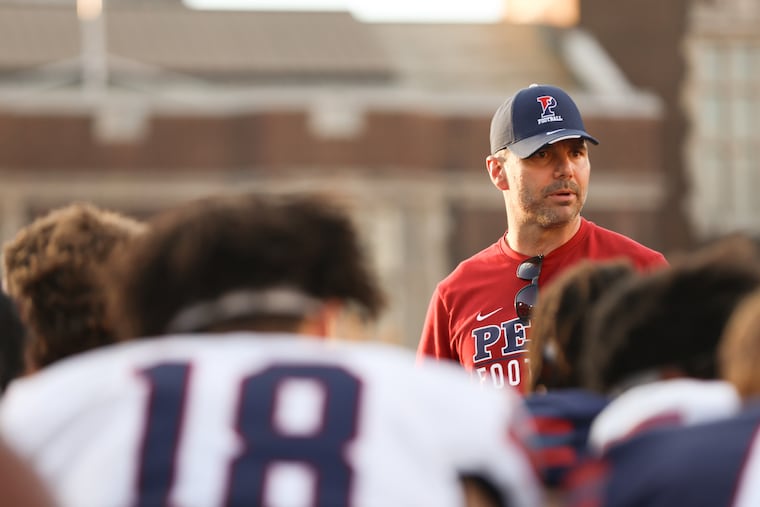
Marty Horn stayed ready.
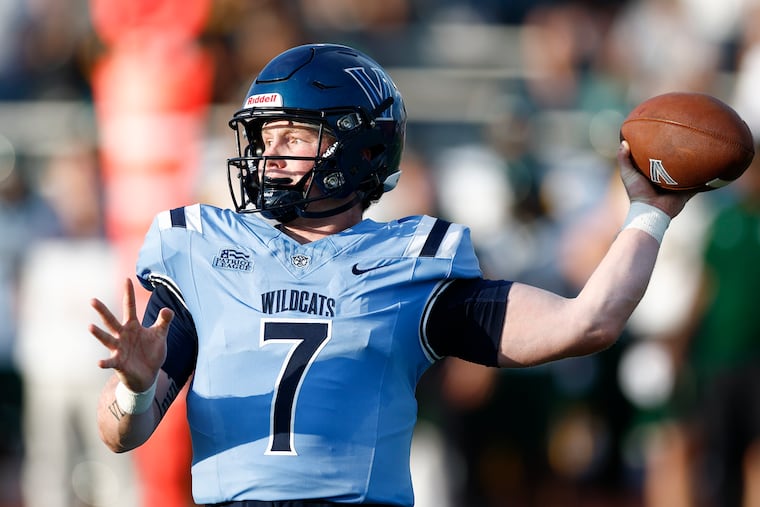
After four record-setting seasons as Lehigh’s quarterback, Horn had his sights set on the NFL. The North Jersey native was brought to training camp twice by his hometown New York Jets, but didn’t make the roster in 1986 or 1987.
Horn kept training, hoping for another opportunity in the NFL, which was essentially the only game in town. The USFL had just folded, leaving a massive void in secondary football leagues until NFL Europe debuted three years later in 1989.
“No one really had anywhere to go,” Horn remembers.
Soon after, the league’s largest-ever labor dispute gave him his big break. The NFL Players’ Association (NFLPA) went on strike after Week 2 of the 1987 NFL season, protesting the absence of free agency for players. Five years prior, the union went on strike for improved revenue sharing, and seven games were wiped out. This time, team owners played hardball. As rumblings of a potential strike grew louder, it became clear that the NFL’s full slate of games would be played, regardless of who was playing in them.
It was against that backdrop that Horn’s phone rang. On the other end was Eagles general manager Harry Gamble, who was familiar with Horn because of his time coaching Lafayette, Lehigh’s bitter rival. It all happened in an instant. Days after Week 2’s conclusion, hundreds of retired NFLers, ex-training camp signees, CFL players, and former college standouts had jobs in the league. Just over a week later, they took the field.
The roster turnover the league experienced was completely unprecedented. Approximately 15% of the union’s players decided to suit up through the strike. Two teams didn’t have any players cross the picket line — one of which was the Eagles.
On Horn’s first day on the job in South Philadelphia, he entered a locker room with 44 players just as new to the team as he was.
“It was kind of fun getting to know all of these guys,” said Horn. “There were all different walks of football life. It was pretty cool.”
But what Horn remembers most from his first day is the presence of head coach Buddy Ryan... or rather the lack thereof.
“He didn’t even coach us for the first two weeks. He said, ‘We’re not going to play a game; you guys aren’t going to play a game,’ so he didn’t coach us. And then when we got to game week and the team said we’re going to play the game, he was like, ‘Oh, you know what, we better start coaching these guys.’”
Across the Eagles’ three “replacement” games, only their first, a matchup with the Mike Ditka-led Chicago Bears, took place in Philadelphia. To describe the level of fan excitement as apathetic would be generous. While nearly every team saw a dip in attendance, nowhere saw one more dramatic than Philadelphia. The NFL averaged over 17,000 fans during week one of the strike games, but just over 4,000 fans entered the Veterans Stadium gates to see the Bears dominate the replacement Eagles 35-3. Horn believes that the biggest factor in the low attendance was Philadelphia’s identity as a union town, which he got a good look at when observing the scene outside of Veterans Stadium on gameday.
“It was crazy, you know. They circled the stadium with truckers’ unions and all that, and made it really difficult for people to get in,” said Horn. “We had to switch hotels in the middle of the night because they were going to block the buses from going in.”
As Horn arrived to practice the day following the loss, he noticed a shift in Ryan’s attitude toward the team. As the players gathered in the locker room, they realized that none of them had received their game checks. Once Ryan caught wind of the situation, he issued the team stern instructions.
“He was like, ”Don’t set foot on that field until you get your paychecks.’”
Once Ryan told management why practice had yet to begin, the paychecks suddenly materialized.
“It was funny because Buddy Ryan was such a players’ guy, and once he realized we had to play the games, [his] player-coach mentality took over.”
Regardless of how hard the Eagles practiced, their next game against Dallas would be an extreme challenge. The difference between the two weeks was night and day; Dallas had 21 players cross the picket line, including four Pro Bowlers. In Irving, things were business as usual, and over 40,000 fans made their way to Texas Stadium to see the Cowboys play the Eagles.
As expected, the Cowboys cruised to a relatively stress-free win. But the lopsided 41-22 score provided Horn the opportunity to make his NFL debut. With 6:51 left in the fourth quarter, it was the North Jersey native jogging in from the sideline, which signaled an informal concession by the Eagles. Dallas didn’t get the memo and kept all of their starters in.
“I found that a couple of years ago … there is a picture of me getting sacked by Too Tall Jones. That was my claim to fame,” joked Horn, who was featured on the front page of The Inquirer’s Monday sports section.
Jones, who stood 6 foot 9, made three Pro Bowl teams and totaled 106 sacks across a 15-year career.
Besides getting to play against Dallas, one of Horn’s favorite memories from his month as an Eagle was practicing with the non-replacement team. The league and the NFLPA came to an agreement before the next scheduled game against the Green Bay Packers, but the replacement players were kept around as it was too late for the union’s players to get into game shape and play that Sunday.
As the “real Eagles” began to arrive back to the facility, their biggest objective was to help their replacements win a game that held the same importance as any other.
The Birds ended up losing that game in overtime, 16-10, and it spelled the end of the road for Horn and nearly 1,000 other replacement players across the NFL. Looking back on his experience, Horn couldn’t have enjoyed the five weeks more.
“They bused us into practice every day, and you know, we just partied at night and hung out with the guys, and people didn’t really care,” Horn said. “We were just young football players having a good time.”
His biggest regret? Not taking his jersey.
“At the end of the game, you all throw your dirty uniforms in a pile… and the equipment guy came in, and he was like, ‘If anyone steals their jersey, if it’s not in this pile, we’re gonna dock your paycheck $350 bucks,’" Horn recalled. “I should’ve kept my jersey, but I didn’t.”
Following his playing career, the former Eagle picked up work in a variety of fields. Primarily, he returned to his family’s restaurant business in North Jersey, eventually owning the two properties alongside his brothers Don, Peter, and Jimmy.
On the NFL side, Horn has remained a fan of the Eagles long past his playing days. In addition to playing for the Birds, Marty’s son, Shane, attended Alabama, and he enjoys rooting for Jalen Hurts, DeVonta Smith, and the team’s other ‘Bama alums.
Horn also had a reunion with his alma mater, Lehigh, serving as the football color commentator for 20 years. But the broadcast side wasn’t the only connection the Millburn High School alum maintained to football. Horn worked as an assistant coach at Madison High School for 20 years before stepping away after the 2025 season. Horn always enjoyed seeing the reactions of his players who found out he made it to the league.
“Every once in a while they’d come in when they do a Google search on [my] name, and they were like, ‘Coach, I didn’t realize you played in the NFL.’ And I said, ‘Well, you know, I played during the strike. I never made an active roster,’” recalled Horn. “But they got a kick out of that. It gives me a little more street cred.”