What we learned about the Eagles at the 2026 NFL trade deadline
There was no fire sale, but the Eagles trade deadline was impactful all the same.

In the end, the Eagles didn’t have a fire sale. They moved just one player before Tuesday’s 4 p.m. deadline — Jordan Davis on Monday — and a second trade that would have sent Arnold Ebiketie to Cincinnati fell through after the Bengals pulled out of the deal before it became official.
The 2-7 Eagles are on their bye week, and while the Davis trade came as a bit of a surprise, the team will return to the Jefferson Health Training Complex next week looking pretty similar to the way it did during its seventh consecutive loss on Sunday.
So, what did we learn?
Here are a five takeaways from what happened over the last two days:
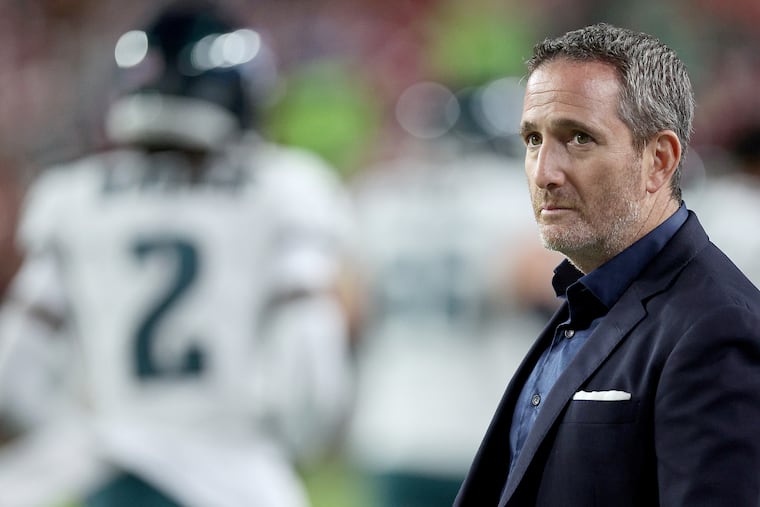
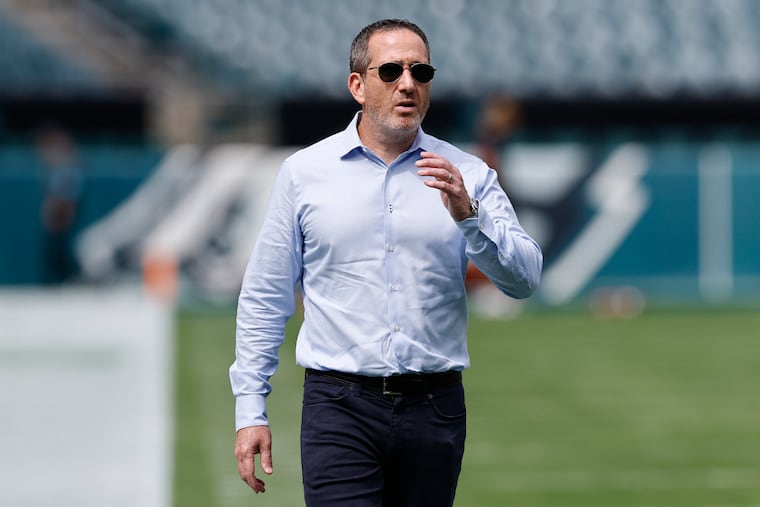
Howie Roseman still knows how to maximize value
The Eagles general manager did not have his best offseason. The Eagles are where they are in part because there hasn’t been enough talent in the building to overcome a rash of injuries and win games, and they haven’t yet gotten enough from the top end of the last two draft classes to help mitigate absences from key players.
But the haul the Eagles got in return for Davis, adding to what they received last month from Baltimore in exchange for Cam Jurgens, shows Roseman can still maximize resources with the best of them.
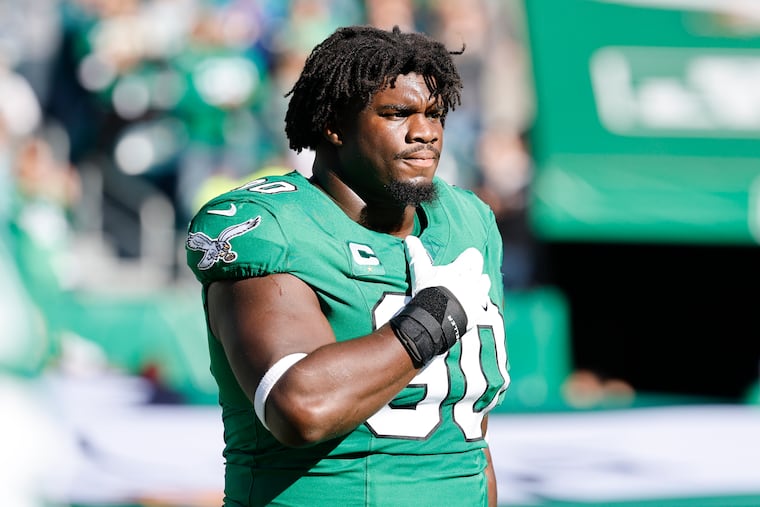
The Eagles drafted Davis 13th overall in 2022 and followed that selection by making Jurgens their second pick of the draft at No. 51. The two became key players. Davis, after a slow start, blossomed into a reliable run-stuffer. He broke out in 2025 and became a team leader.
Jurgens, meanwhile, started at guard while he waited for Jason Kelce to retire, then he slid over to his natural spot in 2024 and helped the Eagles win the Super Bowl.
Roseman signed both players to extensions to keep them here, but after Jurgens’ play declined, Roseman dealt him in October for a package that included a 2028 second-round pick.
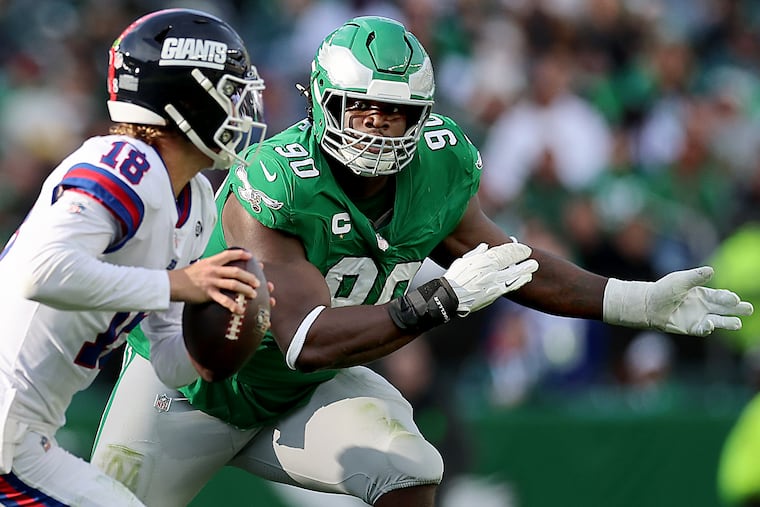
Davis, who has not been the 2025 version of himself, was then traded on Monday for a 2027 first-round pick and a 2029 second-round pick. It’s never easy to trade a team captain, but Roseman couldn’t pass that kind of value up.
The Eagles got a Super Bowl out of those 2022 top picks. Then they used them to get back a first-round pick and two second-round picks. That’s pretty good business.
» READ MORE: Hayes: Howie Roseman hits a home run with Jordan Davis trade, netting the Eagles a first and a second
The rebuild can be a quick one
There are plenty of holes on the roster right now and there will be a few after the season, too.
But the number of top picks the Eagles now have — they have 10 picks in the first two rounds over the next three drafts and are projected to have 27 total picks over that time — gives them enough assets to work with to fill those holes quickly. They can use those two first-round picks in 2027 to draft two young players. They could draft once in that round and use the other pick to acquire a proven talent. They could trade both of them to make a splash — maybe even for a new quarterback, if they want to — and retool the roster that way.
You get the point. They have more options today than they had two days ago and two months ago.
The Eagles could be preparing for scheme change
There aren’t many scenarios where Roseman could have said no to what Jacksonville offered for Davis, but his exit also suggests the Eagles know a defensive scheme change could be in their future.
Defensive coordinator Vic Fangio contemplated retirement last offseason and perhaps could call it a career after the 2026 campaign.
Davis was an important run defending nose tackle in Fangio’s 3-4 scheme. If the Eagles end up transitioning out of that to deploy a 4-3 front, they would be moving to a scheme that Davis might be out of place in.
Roseman was dead-cap conscious
The dead cap is in part why Dallas Goedert remains on the team after the deadline. The Eagles could lead the league in dead cap money next season, and trading Goedert would’ve increased that number.
If he had been traded before the deadline, his dead cap number would have about doubled to $18.2 million.
Roseman would’ve needed to be blown away by an offer for Goedert in order to make a trade, and obviously he wasn’t.
Perhaps the biggest surprise, then, is Riq Woolen remaining on the roster. With the way Woolen’s one-year contract is structured, his dead cap hit of $8.6 million in 2027 would have been unchanged by a trade.
The Bengals bungled
Did a cap analyst’s post on X blow the Ebiketie deal up? And did the Bengals have a worse understanding of their compensatory pick chart than said analyst? It sure seems like it.
Nick Korte, a contributor at Over the Cap, pointed out after the trade was reported that because Ebiketie was a compensatory free agent signing by the Eagles, trading for him would give the Bengals three compensatory free agents gained after three lost in the offseason.
To receive compensatory picks, a team must lose more qualifying free agents than it signs.
So the real cost of trading for Ebiketie would be a sixth-round pick and a third-round comp pick.
The Bengals need pass rush help, but not at that cost for that player. They also, apparently, need to study the comp pick formula a little harder.

A crucial crossroads is here. The Eagles have reached the bye and, as timing would also have it, the NFL trade deadline, mired in their worst stretch of the Nick Sirianni era. There’s no doubt the franchise needs to course correct, but how? With who? Will players be on the move? Could coaches’ jobs be on the line? The Inquirer’s Jeff McLane and Olivia Reiner conduct an autopsy of the Eagles after their seventh straight loss — a 19-11 defeat to the New York Giants — and look at the big picture of an organization that has swiftly fallen far from its Super Bowl glory two years ago. Listen here.
Listen to all episodes here or wherever you get your podcasts.