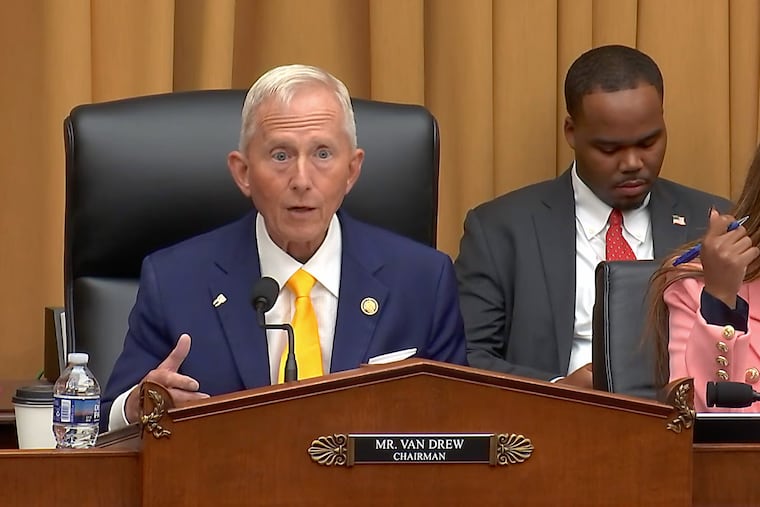
GOP-led House committee accuses Philly schools of teaching students to ‘hate Israel,’ and ‘embrace radical’ ideas
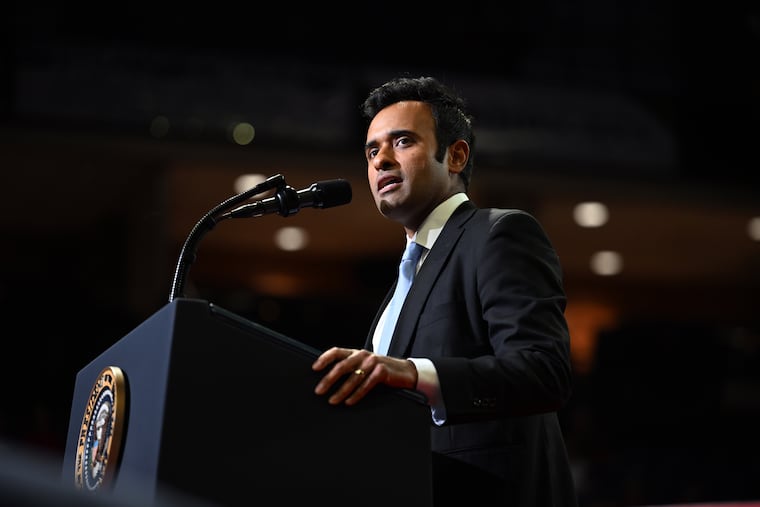
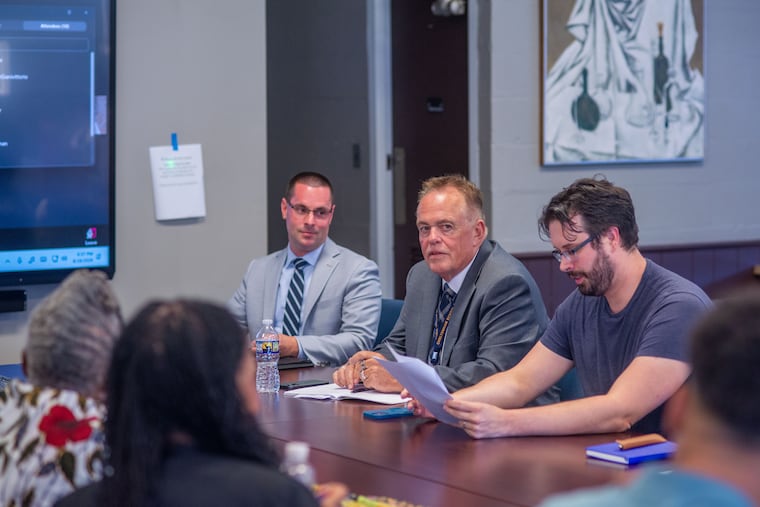
Superintendent Tony B. Watlington Sr. testified before the committee in September after reports of antisemitism surfaced.
Some Philadelphia School District employees promote antisemitism, and the school system indoctrinates students with radical ideas as young as second grade, a Republican-led congressional committee concluded in a report released Wednesday and challenged by district officials.
The House Education and Workforce Committee reached its determinations after poring through hundreds of pages of records, including social media belonging to individual teachers, and interviewing Superintendent Tony B. Watlington Sr. on Capitol Hill last month.
“Parents send their children to school to learn reading, writing and math — not to be taught to hate Israel or embrace radical political causes,” U.S. Rep. U.S. Rep. Tim Walberg (R., Mich.) said in a statement. “Yet that’s exactly the kind of material our investigation uncovered.”
Monique Braxton, a district spokesperson, said the district cooperated extensively with the committee “and objects to the blatantly partisan framing of the district, days before Election Day.” The report, Braxton said Wednesday night, “distorts and mischaracterizes our record.
» READ MORE: A House committee is investigating allegations of antisemitism in Philadelphia schools
Walberg ordered the investigation last fall after receiving reports of harassment against Jewish students in Philadelphia, Berkeley Unified School District in California, and elsewhere. The committee has investigated claims against multiple districts since 2023, but Wednesday’s report only dealt with Philadelphia, Berkeley and the National Education Association, a teacher’s union.
Braxton said officials “take concerns about antisemitic harassment or discrimination very seriously, just as we do not condone or tolerate Islamophobia, racism, or discrimination against any ethnic, racial or religious group.”
School board president Reginald Streater said in a statement the board “does not agree with the findings in the committee’s report.”
Under Watlington, Streater said, the district has “taken significant steps to fight antisemitism and other forms of hate. We thank Dr. Watlington for his leadership and will continue to support his important work.”
The school system in 2024 entered into a voluntary settlement with the U.S. Department of Education addressing claims of antisemitism. It vowed better record keeping and training for staff and students on anti-discrimination policies.
Philadelphia is the nation’s ninth largest school system, with about 200,000 students in traditional public and charter schools.
What did the investigation find?
The investigation found that “district curricula promote ideology justifying violent resistance and legitimize radical groups that incite antisemitism.“
Congressional staff pointed to a Philadelphia world history curriculum unit focused on resistance movements where “students are directed to ‘honor’ a resistance movement of their choice, with the Great March of Return — a Hamas campaign that featured deadly clashes — listed as one option.”
The House committee also found that “SDP curricula train students to be far-left activists as early as second grade,” noting that second graders learn about environmental justice and “the impact of bias, injustice and privilege on a global scale.”
Officials also cited a high school economics unit that presented the U.S. economy as having the most skewed distribution of wealth in the world, and a book deemed appropriate for third graders that introduced the pronouns “ey/em” and “ze/zir.”
What did Watlington tell Congress?
When asked by a committee staffer if he felt it was appropriate to “compare Zionists to white supremacist spectators cheering for public lynchings of Black people,” Watlington said he did not.
“I don’t like it. I wouldn’t use that language,” Watlington said. “I strongly disagree. As superintendent, it’s not my role to make determinations about what people can or cannot say, offensive or otherwise. That would be someone else’s determination to make based on whether or not it fits their First Amendment right to free speech.”
Watlington said he believed the district’s directives were very clear: “teachers may not, shall not, and should not promote any political or personal perspectives in the classroom, and our job is to teach children how to think and not what to think.”
Watlington, a former history teacher himself, said he believed the social studies curriculum does not indoctrinate Philadelphia students.
“There’s a lot of bad stuff in human history,” Watlington said. “A lot of bad stuff in American history, in the history of Israel, in the history of Palestine, in the history of Europe, Asia, Africa, across the globe. And it’s a matter of how we take all those complex, controversial issues — that have a place in the curriculum, all of them — and present it in a manner that’s age appropriate” and does not impart “our own political or personal biases.”
Changes to the social studies curriculum are coming
Watlington told the committee the district is in the process of standardizing its social studies curriculum and will no longer allow staff to write district social studies curricula.
The committee, in a statement issued Wednesday, suggested the changes were the result of public pressure.
But Watlington emphasized the social studies curriculum changes follow the standardization of English, math and science curricula. He also said he gave Michael Farrell, his new chief academic officer, the charge to review social studies curricula “top to bottom” when Farrell started that job July 1.
Watlington also said he had personally ordered the district’s human resources department to conduct a “lookback” at some district staff’s personal social media posts that may have violated policies around harassment and discrimination.
That includes posts from Hannah Gann, the district teacher who drew international scrutiny for pretending to be Black and Palestinian. Gann, a vocal member of the group Philly Educators for Palestine, recently admitted to being white and Jewish. Gann’s deception caused that group to disband, and led another group she was a member of, the Racial Justice Organizing Committee, to go on hiatus.