After a move to postpone school-closing votes, Philly’s school board gets an earful
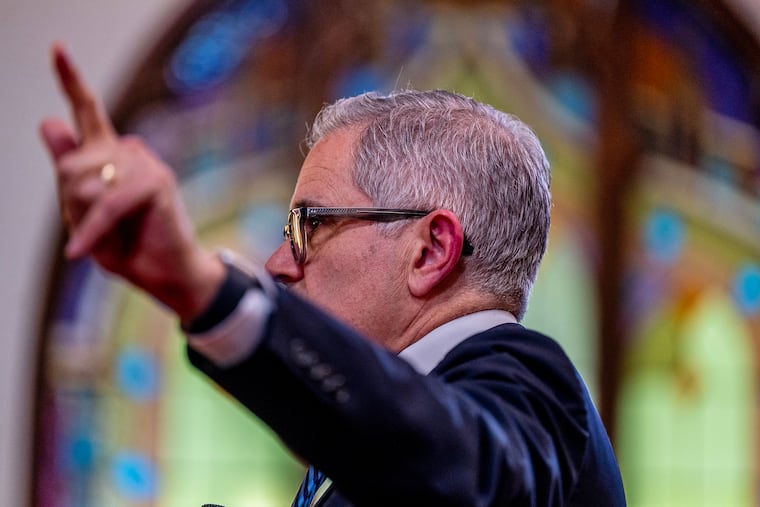
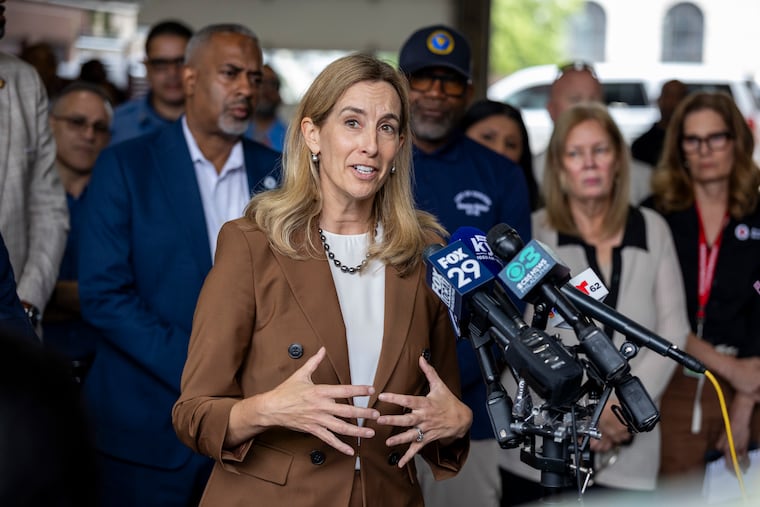
“It is clear that the board has a lot to weigh,” school board president Reginald Streater said. The board is now scheduled to vote on its facilities plan, and school closings, on April 30.
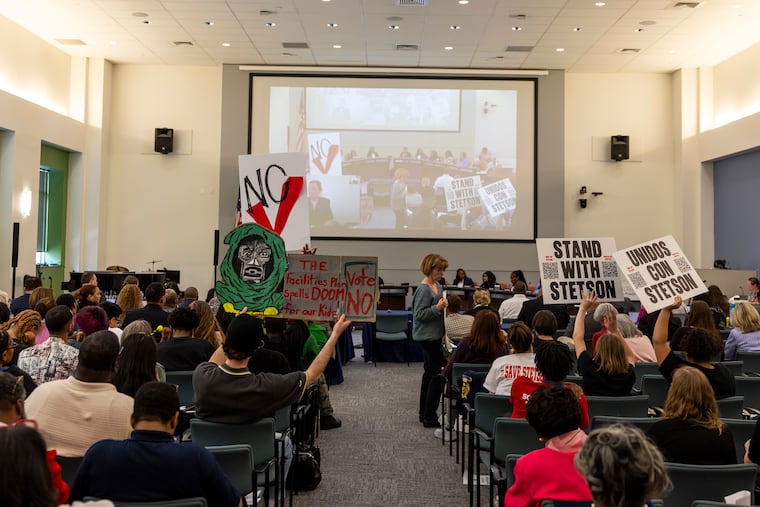
Granted an extra week to make their feelings known before a vote on Superintendent Tony B. Watlington Sr.’s facilities plan, Philadelphia politicians, parents, teachers, and students on Thursday begged officials to halt school closings.
“I am mad because Stetson [Middle School] is still on your list,” said Alejandro Alvarado, a student at the Kensington 5-8 school. “Every time I come here, I hear you talk about equity, but in Kensington, equity should mean fixing our school, which has been neglected for years, not closing it down.”
The board was scheduled to vote Thursday on Watlington’s $3 billion plan, which includes 17 school closings and 169 modernizations. But the vote was delayed a week after intense political pressure, including threats from City Council and state officials that future funding requests would be jeopardized if a vote happened immediately.
Board president Reginald Streater said he pushed the vote because he wanted to ensure “the highest level of collaboration. In the spirit of partnership, we are taking this time to ensure our stakeholders understand the proposal before the board votes.”
Watlington and Streater have said school closings are necessary to drive academic improvement and better manage the district’s scarce resources. The school system, the nation’s eighth-largest, has 70,000 empty seats and 300 aging buildings.
‘Will you ignore all these voices?’
Outside district headquarters on North Broad Street, about 60 people stood in a single-file row before the meeting, protesting closures.
Among the crowd were many supporters of Lankenau High, whose community, bolstered by political supporters, has mounted a fierce save-our-school campaign. Students and staff wore matching T-shirts and chanted “our schools, our city” before marching into the building.
Emma Cartwright, who works for a college career readiness nonprofit embedded at Lankenau, said the school’s focus on environmental education allows the students to experience learning in a way that feels applicable to the real world.
They learn about angles in math class by getting outside and measuring the gaps in trees. Teachers raise mussels, fish, and turtles in the classroom, said Cartwright.
“If something is working, why is the solution to close it? Why not, ‘OK, this school is working. We need to figure out a way to get more kids here.’” she said.
At the meeting, Rodrigo Fernández, a teacher at Parkway Northwest High School, looked at the packed auditorium and said he was frustrated that the district faces a $300 million structural deficit, but Watlington has proposed a $3 billion facilities plan.
(The budget gap is a structural deficit in the district’s operating funds caused primarily by rising salary, benefit, and charter-school costs, combined with the district’s inability to raise its own revenue and decades of underfunding. The facilities plan will be paid for with capital funds and, if obtained, state and philanthropic support specifically for building projects, though nothing is assured.)
“Will you ignore all these voices and vote yes?” Fernández asked. “You can be on the right side of Philadelphia’s history. Closing schools is not part of the solution. Your name will be remembered — be on the right side.”
Elizabeth Tracy works at Penn Treaty, a 5-12 school the district is proposing for closure — one of many targeted schools whose community members say they’ve been neglected for years, and now victimized.
Tracy has also worked at schools in New York, Wyoming, and England — some of which have closed. But, she said, “I have been never been witness to a such a lack of vision, such a lack of innovation, or such a lack of foresight in my career.”
Olney speaks out
The board heard mostly from speakers on school closings.
But there was also a strong contingent of students and staff from Olney High School, a neighborhood school that’s not slated for closure — but is in line to absorb 13 teacher and counselor cuts because of the district’s budget gap.
» READ MORE: Olney High could lose more than a dozen teachers amid a $300m budget gap
Olney will lose all but one of its advanced placement teachers, and virtually all of the staff from a new college-prep program. The school has been targeted by the district’s changing initiatives throughout the years: split into two small schools, given to a charter to run, taken back when the charter company failed to meet academic and organizational standards and, four years ago, taken back into the district fold.
“School district leaders say you want strong neighborhood schools to serve all students equitably, but you are stripping us of the ability to offer Olney students the type of opportunities that are taken for granted at schools like Masterman and Central,” Olney teacher Margaret Myers Atac told the board. “If you truly believe in the power of public education to change lives and shape the future, if you are honest when you talk about your desire for successful comprehensive neighborhood high schools, you need to prove it at Olney. Give us back our full staff.”
When speakers had finished saying their piece, Streater noted the Olney issue and school closings were connected.
“It is clear that the board has a lot to weigh,” said Streater. “Large schools vs. small schools. AP classes for all versus AP classes for some.”
The board voted unanimously to resume the meeting — and vote on the facilities plan — next Thursday at 4 p.m.