Philly school board delays plan to vote on school-closing plan, bowing to City Council pressure
“We recognize that the future of our school facilities is a matter of significant interest that requires the highest level of collaboration,” board president Reginald Streater said in a statement.
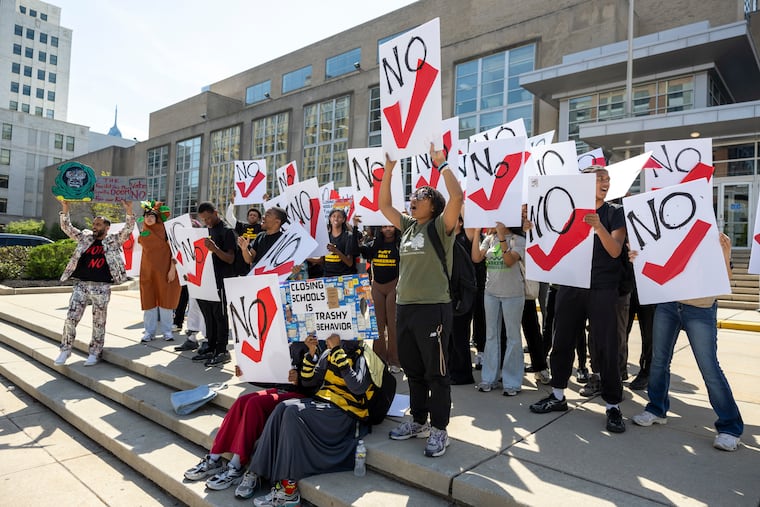
Philadelphia’s school board will not vote Thursday on a controversial facilities plan that would close 17 schools, after all.
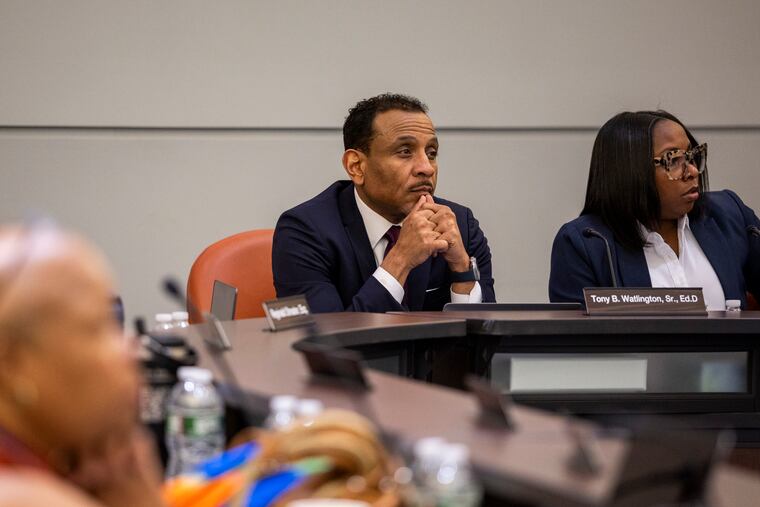
A few hours before the board was set to meet to consider Superintendent Tony B. Watlington Sr.’s plan, officials sent notice that they would hold that vote off a week.
The news came during a politically charged week, after City Council told district and board officials in no uncertain terms they would look askance at future funding requests if the board voted on the plan on Thursday.
“We recognize that the future of our school facilities is a matter of significant interest that requires the highest level of collaboration,” board president Reginald Streater said in a statement. “In the spirit of partnership, we are taking this time to ensure our stakeholders understand the proposal before the board votes.”

Wholesale changes are coming to the Philadelphia School District, with the school board passing a $3 billion facilties plan that aims to close 17 schools permanently, and renovate 169.
Superintendent Tony B. Watlington Sr. presented the plan to the school board Feb. 26 and it immediately faced strong opposition. After some amendments, the board passed the plan April 30. Here's what we do and don't know about it.
And to see the proposed list school closures and check how your school could be impacted, use our interactive charts.
Each of the schools proposed for closure has its own story. Find them all here.
The vote on the sweeping $3 billion facilities plan — which would also modernize 169 schools — is now scheduled for April 30.
Mayor Cherelle L. Parker, who spoke before City Council about schools for more than an hour Wednesday, said she supported the delay.
“I am confident that under board president Reginald Streater’s strong leadership, when the board considers the plan on April 30, it will do everything in its power to help our students build on the progress that is already underway,” Parker said in a statement. “As we work together as a united city, we can and will continue building a school district for the future, with sufficient resources, that we can all be proud of.”
The board will still meet Thursday to consider other business.
A City Council member threatens to pull support for board members
Before the delay, City Councilmember Isaiah Thomas sent Streater a letter expressing his “deep concern” that the vote had been scheduled for Thursday.
He said he and others were furious that Watlington made his “final final” plan public only on Monday morning and Streater wanted to push a vote just three days later.
“Voting to approve this plan at the next action meeting will only serve to sow public distrust in our school system, further traumatize children and families, and would leave legislators at all levels of government tasked with finding funding solutions to the district’s deficit with less confidence than before this plan was announced.”
Thomas then went a step further.
“If the plan moves forward right now, in its current form, without the appropriate community engagement and collaboration with this legislative body, I cannot in good conscience support the reappointment of any board members who vote to approve this plan at this time,” Thomas wrote.
After Streater postponed the vote, Thomas said he was gratified.
“City Council remains committed to ensuring commonsense adjustments to this plan are made and that it reaches a place where families can truly understand how their school communities will be affected by the time a vote is taken,” Thomas said. “I appreciate and thank board president Streater for hearing our pleas and delaying this vote for the time being.”
Opposition to the facilities plan still strong
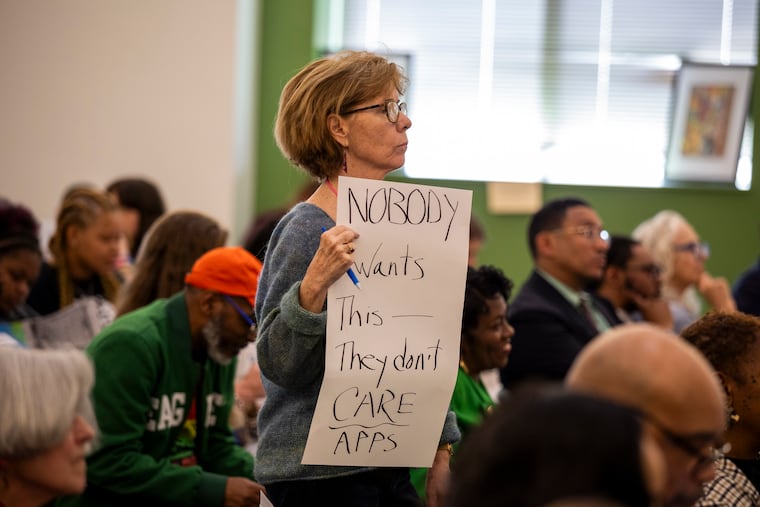
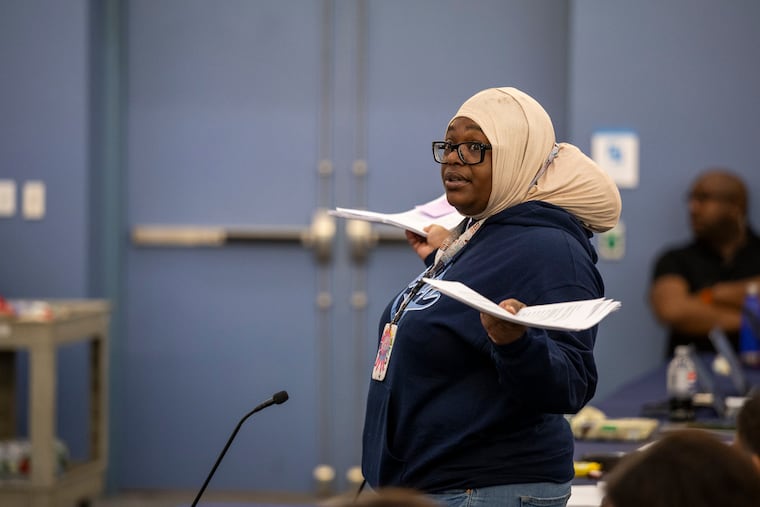
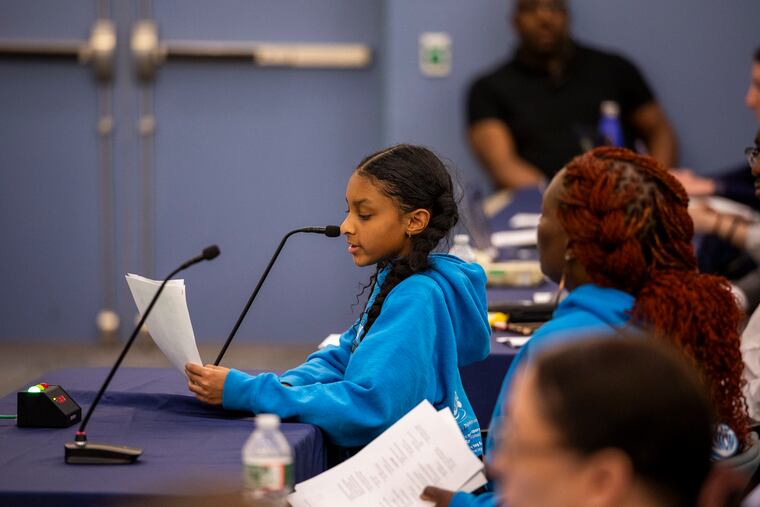
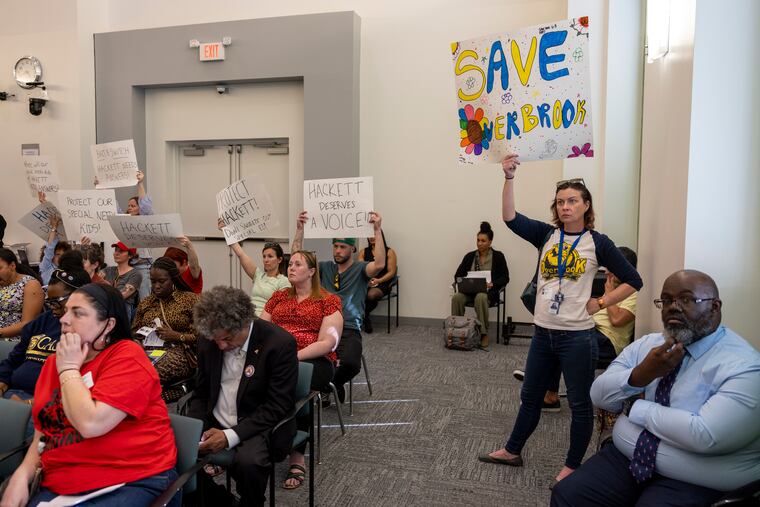
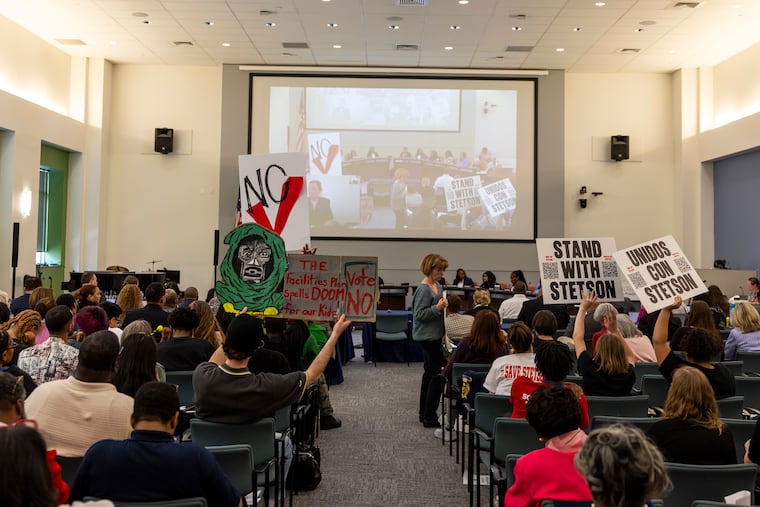
The delay, however, did not deter many who oppose the plan from voicing their opposition — loudly.
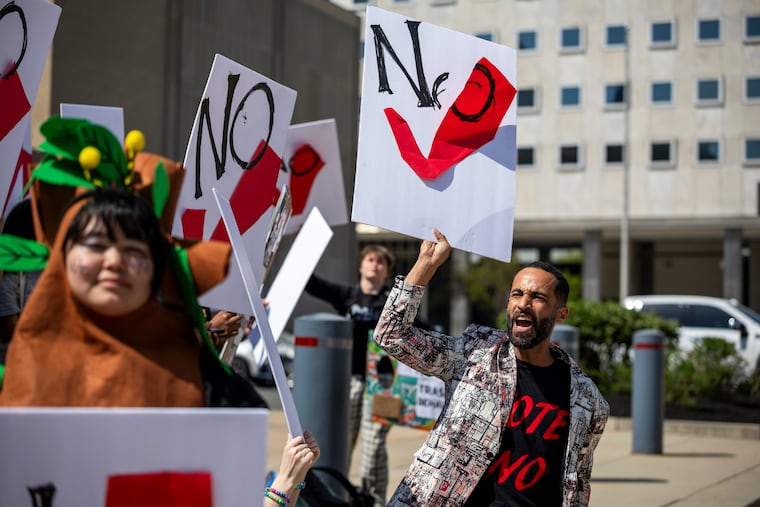
Outside district headquarters on North Broad Street, students from Lankenau High School — which has been slated for closure — chanted and waved signs prior to the meeting.
“Don’t fix what works!” they shouted.
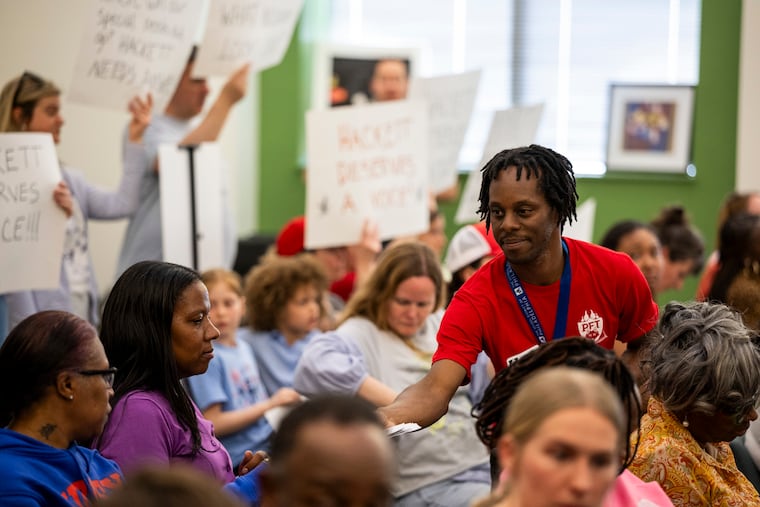
And at Hackett Elementary, in Kensington, at least one parent chained herself to the school fence to protest a last-minute change to the facilities plan that would make Hackett a K-8 school.
Watlington’s original plan called for Moffet, in South Kensington, to merge catchments with Hackett, with Hackett becoming a K-4 school and Moffet a middle school.
But the Moffet community fought back hard against that plan. On Monday, Watlington announced that Moffet would become a K-4, with its middle school students going to Ludlow Elementary, which had been slated to close but is now off the chopping block.
Hackett parents were stunned by the change and had no information about how it would work. In recent months, they have been told that there is no room in their building for a K-8 unless special-education students and prekindergartners are moved out, moves they oppose.
“We just want a chance to be heard,” said Cimone Berman, the parent who chained herself to the fence.