Villanova U. spent more than $100 million on renovations of the former Cabrini campus. Students will begin living and learning there this fall.
Villanova spent more than $100 million on upgrades to the former Cabrini University campus where half of its sophomores will live this fall and more than 2,000 students will take classes.
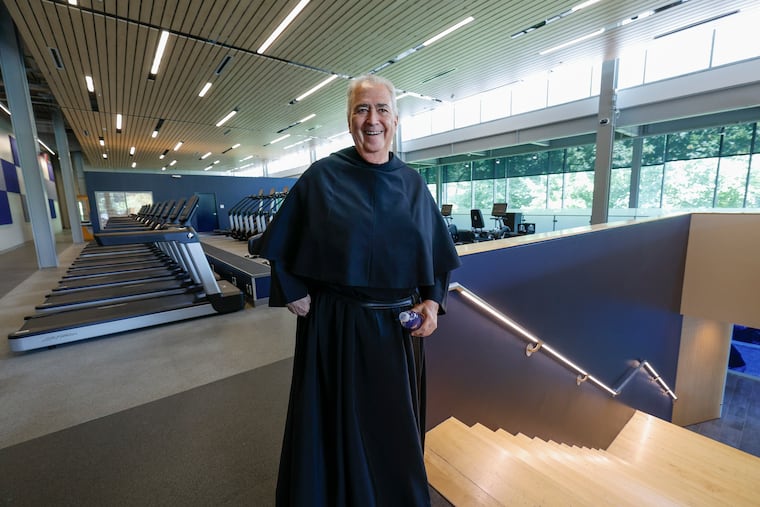
The former Cabrini University campus has undergone a more than $100 million, Villanova-fueled rebirth, and students will begin attending classes and living there this month.
Large signature blue and white V’s for Villanova University are everywhere. “Ignite Change. Go Nova,” says a wall in the student recreation center. Beds in the residence halls now have navy blue sheets, and many of the buildings have been renamed to honor Villanova’s Augustinian heritage.
The Radnor campus once in dire need of maintenance sports a fresh look, including new light poles, landscaping, painting, furniture, boilers, roof repairs, a running fountain, pickleball courts, and restored architectural flourishes, in addition to upgraded educational technology for classrooms.
» READ MORE: At Cabrini University, there will be no next year: A chronicling of its final semester
The university removed dead trees, installed firepits on the campus green, and connected the two campuses’ phone and internet systems.
It is all part of Villanova’s effort to make the 112-acre campus that it acquired from the shuttered Cabrini look and feel decidedly Villanovan. The campus has been closed for the last two years as the planning and upgrades took place.
“It’s always been a beautiful campus, but it looks very Villanova now,” said Kelly Tuzio, assistant director of Villanova’s graduate nursing program, who worked at Cabrini from 2005 to 2011.
“You can feel the change,” she said, helping to ready the Iadarola Center, the building she works in, for the opening. “Everything is just done to perfection.”
» READ MORE: Villanova has tentative agreement to buy Cabrini University campus; Cabrini will close in 2024
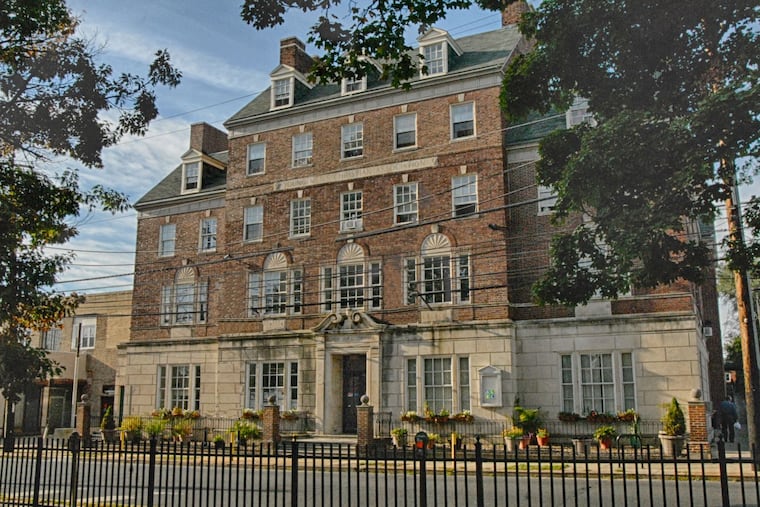
Some things remain largely untouched, like the signature statue of Mother Cabrini on the green and the Mansion, Cabrini’s former administrative building, which is on the National Historic Register. It was renamed Montefalco Hall. Masses will continue to be celebrated in the chapel: Cabrini was a Catholic university, as is Villanova.
And signs at the entrance to campus say: Villanova University, Cabrini Campus — a nod to Villanova’s larger promise to retain Cabrini’s legacy.
A new era of growth
The acquisition of the campus, which officially opens for fall classes Aug. 24, marks an era of new growth for Villanova.
As many other colleges have lost enrollment in recent years, Villanova plans to grow its undergraduate student body, now at about 7,000, to 8,000 over the next four years, said the Rev. Peter M. Donohue, Villanova’s president. That growth started this year with about 250 additional freshmen. And the school plans to maintain its selectivity; it admitted just 29% of applicants for this fall’s class and saw more than a 10% surge in applications over the last year.
» READ MORE: As Mother Cabrini movie debuts in theaters, the only university her order founded prepares to close
Villanova, which has a 260-acre main campus, will expand 43% in size with the addition of Cabrini. The university’s acquisition of Rosemont College — which will be complete in 2028 — will add 58 acres, increasing Villanova’s total to 430 acres.
The Cabrini campus will house five academic departments: psychological and brain sciences, graduate nursing, education and counseling, ethics, and part of communication. About 75 faculty — 10% of the total — will be based there.
About 900 sophomores — roughly half of those enrolled at Villanova — will live on the campus, expanding the percentage of undergraduates who live on Villanova’s campuses to more than 80%.
In addition, more than 2,000 undergraduate and graduate students — about a fifth of Villanova’s overall student population — will take classes at the Cabrini campus in the fall, said Timothy Hoffman, vice provost for finance and administration.
“I’m just excited to see life again on the campus,” said Michelle Filling-Brown, formerly dean of academic affairs at Cabrini and now associate vice provost for the integrated student experience at Villanova.
She has been designing themed living and learning communities for the new Cabrini campus.
Started in 1957, Cabrini was the only college founded by Sister Francesca Cabrini’s Missionary Sisters of the Sacred Heart. The university announced in 2023 it would shut the next year and Villanova would take it over, giving students and employees a year to find a new runway. The decision came as enrollment plummeted, finances tightened, and deferred campus maintenance mounted.
» READ MORE: Villanova finalizes agreement to acquire Cabrini University campus
In spring 2024, the 67-year-old school marked a series of lasts, including its final commencement.
Cabrini became one of a growing number of shuttered colleges in the region whose campuses have been acquired by others. St. Joseph’s University bought the University of the Sciences campus, Thomas Jefferson University the former Philadelphia University campus, Drexel the former Salus University, and Lackawanna College the former Peirce College. Various entities, including Temple University, bought pieces of the former University of the Arts. Plans for the soon-to-close University of Valley Forge have not been announced.
Donohue said Villanova has not yet made specific plans for Rosemont.
Before beginning renovations, Villanova invited Cabrini alumni to collect memorabilia, Donohue said. The school also donated truckloads of old furniture and materials that it did not plan to use to nonprofits.
A $170 million-plus investment
The university has invested more than $170 million into the Cabrini purchase, including the $70 million it paid to close out Cabrini’s debt and acquire its land, buildings, and assets, and more than $100 million on renovations. Donohue said it will take just four years for the school to recover that money through the operation of the campus.
The university was able to keep $15 million of Cabrini’s $42 million endowment, the school said.
Though the campus has not officially opened yet, a few students have begun to move in. Last Tuesday, a group of young staff members huddled in a room, planning grand-opening activities. Others unpacked and organized nursing equipment.
Curtis Wesley, 26, an incoming graduate student in the nurse anesthesia program, strolled out of the building where his classes will be.
“I just wanted to come and check it out,” said Wesley, who is from Kansas. “I was excited to see all the new technology.”
One of the buildings that received the most renovation was the former Grace Hall, now Cascia Hall, home to the student center. The building used to be a stable house for the Woodcrest Mansion. Over the years, Cabrini put up drywall and turned much of it into office space.
Villanova knocked those walls down and uncovered architectural flourishes including gargoyle-like stone carvings and a cavernous, stone-walled turret with a wooden-framed doorway, leading to what will be a Villanova apparel shop.
The Dixon Center will remain an athletic facility, but now the basketball court has a large V in the center and the smoothie bar will offer treats such as the Brunson, named after Villanova Wildcats basketball star-turned-New York Knicks standout Jalen Brunson, and the Father Peter Power, honoring the university president.
Donohue couldn’t name the ingredients in his new signature drink.
“I didn’t know it existed,” he said.
The facility, which also got new cardio equipment and reupholstered weight benches, will be used for non-varsity sports recreation.
“Our intramural basketball activity goes into the wee hours because we’re limited in our number of courts, so we are delighted to have this space,” Hoffman said.
The Iadarola Center, Cabrini’s former science building, includes a new nursing simulation facility that Cabrini had recently finished. But Villanova added upgrades, including a vivarium for psychology department research and more space for the brain science program. The former Cabrini library has been converted into student study space.
‘Many more dorm options’
Seven residence halls will house students, including two that had been closed amid Cabrini’s enrollment decline. One of them had a malfunctioning boiler — not anymore.
Sophomores were given the choice of living at Cabrini. Villanova ran tours of the campus for students last academic year. Those who chose Cabrini said they were attracted to the renovated dorms and larger room configurations that allow them to live with several roommates and share a bathroom. Options on main campus for sophomores are largely limited to doubles with a large bathroom shared by an entire floor or wing.
“With Cabrini, there are so many more dorm options,” said Molly Dunphy-Culp, 19, a sophomore who was born in Boston and grew up in Abington.
She will be sharing an apartment in Lecceto Hall with three classmates.
She acknowledged that she will have to take the shuttle to main campus for classes, but said the short ride will be worth it. Dunphy-Culp also has a job on Cabrini as a recreation center supervisor — another plus for living there.
About half the students on campus will be allowed to have cars. Sophomores do not have that option on main campus.
“Two of my close friends are both going to have cars on campus,” said Ella Hayman, 19, a sophomore from just outside Boston. “This will give us a little more freedom we didn’t have last year. That was a big motivation.”
Thirteen shuttle buses will transport students between the two campuses, which are 1.9 miles apart — a seven- to 12-minute ride, Hoffman said. A team of Villanova employees over the last couple of years visited five universities with multiple campuses, including Lehigh and George Washington, to learn how best to integrate them. They looked closely at models for a shuttle system that would keep students informed of where and when buses would be arriving and departing, Hoffman said.
Among new dining options on the campus is the restaurant-style Table 1842, named for Villanova’s founding year, where students can order off a menu. It is located in the former Founder’s Hall, now Bellesini Hall, which also was heavily renovated, including the installation of a new entrance that leads directly into dining facilities so people do not have to climb as many steps.
Bellesini has become the third-largest classroom building at Villanova. Some of the nearly 30 classrooms on the Cabrini campus had to be expanded to accommodate slightly larger class sizes, Hoffman said. Cabrini’s classes were 12 to 14, and Villanova starts at 16, Hoffman said.
Some improvements are still to come, including renovations to the former Mansion, which will be costly, and a nature trail, Donohue said.
Villanova named Francesca and Xavier Halls for Mother Cabrini and is continuing Cabrini’s Center for Immigration; Villanova converted it to the Mother Cabrini Institute on Immigration. Villanova also launched an elementary education major in honor of Cabrini’s former program.
Preserving a legacy
“They had a strong desire to make sure some of their legacy lasted, and we wanted to protect that,” Donohue said.
Coincidentally, there is a stained glass window of St. Augustine — namesake of Villanova’s founding order — in Cabrini’s chapel and a stained glass window of Mother Cabrini in Villanova’s Corr Hall chapel.
Filling-Brown, the former Cabrini administrator now at Villanova, said it seems meant to be.
“It’s beyond my wildest dreams for the campus,” Filling-Brown said. “It’s the best outcome to see Catholic higher education continue on that campus.”