This once-booming West Oak Lane middle school is now facing closure
The pressures of competition from charter and other schools and decades of dwindling resources have had a significant effect on Wagner, which is one of 18 proposed Philadelphia closures.
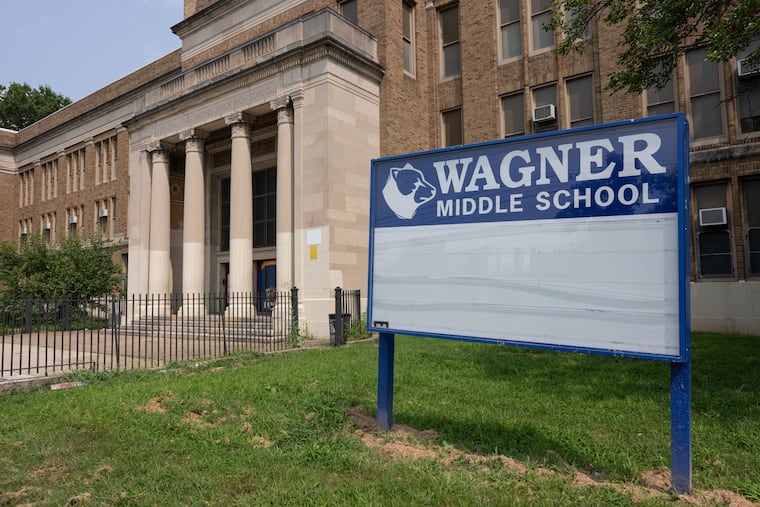
At one point, Wagner Middle School in West Oak Lane educated 1,000 students in its grand columned building.
Now, it’s down to 300, in a building that’s considered “unsatisfactory” by Philadelphia School District standards.
The pressures of competition from charter and other schools and decades of dwindling resources have had a significant effect on Wagner, which the district is proposing to close.
» READ MORE: The story behind each of the 18 Philly schools slated for closure
The district would phase the school out by 2028-29 under the current plan, which also includes closing 17 other schools, colocating six more schools, and renovating 159.
Wagner, if the school board approves the $2.8 billion plan, would be given to the city to use as affordable housing or for job creation.
The proposed closure comes as the district is moving away from middle schools in favor of the K-8 model; officials have said five elementary schools would grow to K-8s to accommodate Wagner students. But Wagner’s supporters said they’re disappointed that resources have shifted away from the school, and that it still offers special opportunities with a focus on future careers, like a culinary program.
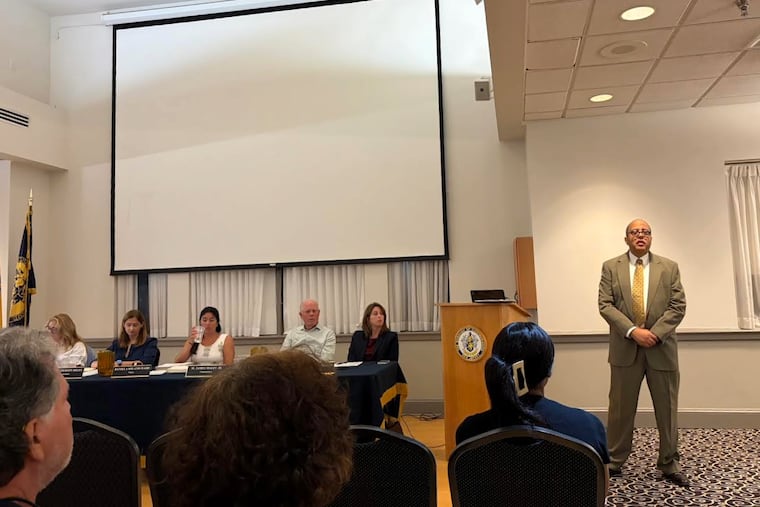
Wagner used to be a “best-kept secret in West Oak Lane” — robust and thriving, said Claire Andrews, a longtime Wagner teacher.
“We had opportunities for our children and as the years have gone on, they have just disappeared,” Andrews said at a February meeting about the proposed closure. “We had an incredibly strong staff, and because of leveling and everything, it has just disappeared.”
A move away from middle schools
Five of the 18 schools on the district’s chopping block are middle schools. (A sixth, Conwell Middle School, a magnet, was spared after intense community outcry and the intervention of several politicians.)
“Our research does not say that traditional middle school children in Philadelphia perform better academically than K-8 students,” Superintendent Tony B. Watlington Sr. said when he introduced the facilities plan in January. “Nationally, and in Philadelphia, there’s a mixed bag.”
» READ MORE: Philly’s school closure plan targets middle schools. Here’s why the district is moving away from them.
But Wagner teachers and community members said the district was glossing over the school’s unique career exploration opportunities, including the culinary suite and monthly workshops in other trades.
Watlington has said the school system seeks to improve academics and extracurricular opportunities across the district with the facilities plan. The cash-strapped district can no longer afford to stretch to pay for more than 200 schools when some, like Wagner, have more empty seats than students enrolled.

Wholesale changes are coming to the Philadelphia School District, with the school board passing a $3 billion facilties plan that aims to close 17 schools permanently, and renovate 169.
Superintendent Tony B. Watlington Sr. presented the plan to the school board Feb. 26 and it immediately faced strong opposition. After some amendments, the board passed the plan April 30. Here's what we do and don't know about it.
And to see the proposed list school closures and check how your school could be impacted, use our interactive charts.
Each of the schools proposed for closure has its own story. Find them all here.
Citywide, there are 70,000 unfilled seats in district buildings, and the school system’s facilities needs are enormous — one estimate put an $8 billion price tag on the bill to fix everything that’s wrong with the district’s mostly old buildings.
Kim Newman, a district associate superintendent, said the aim with closing underused schools like Wagner is to be able to offer things like career-focused learning to more middle schoolers.
“That is something we will be looking at — ways to offer programming in all of the schools,” Newman said at a meeting this winter at Wagner. “The wonderful culinary program is a point of pride.”
Some members of the Wagner community expressed reservations about keeping students in a single building until eighth grade. Under the district’s plan, Prince Hall, Howe, Pennell, Rowen, and Ellwood elementary schools would become K-8s and accommodate Wagner students.
“We don’t want the young children with the older children,“ one community member said. ”They’re transporting these middle grade school children into an elementary school. They’re elementary schools and they call them elementary slash middle, but they’re elementary schools.”
Newman promised the district would spend real time and effort working with schools and communities to plan meaningful transitions.
“In the past, what we’ve done is said, ‘Let’s just add some furniture and books, great,’ grow a grade each year, and that’s really not what children need,” said Newman.
If Wagner is closed, the district will use the years before the closure to plan how to successfully grow grades at the surrounding elementary schools, Newman said.
What can Wagner do?
While the communities of several school tagged for closure have launched robust campaigns to try to spare them, Wagner voices have been mostly quiet in the larger public sphere.
But Oz Hill, deputy superintendent for operations, said at the February meeting that the district would not abandon the school as it closed, if the school board ultimately votes to do so.
And he acknowledged that Wagner had been left to languish for a long time.
“We understand that this has not been done well by the district in the past,” Hill said. “That is not the school’s fault. That is my fault.”
Andrews, the veteran Wagner teacher, expressed frustration that the district isn’t seeking to close schools in the Northeast, which has been a center of population growth for the city in recent years. Its schools are mostly overcrowded.
Often, West Oak Lane children are choosing options other than Wagner, because of resources and reputation, Andrews said.
“They’re being attracted by schools up the street, schools that can offer children more than the district is paying for,” she said.
Andrews said she would continue showing up and loving her students, but she wished the district would do better.
“What can we do to keep [Wagner] open?” Andrews said. “What can we do by September?”
No answer to her question was offered.