Jesse and Matt Ito’s Big Japan adventure
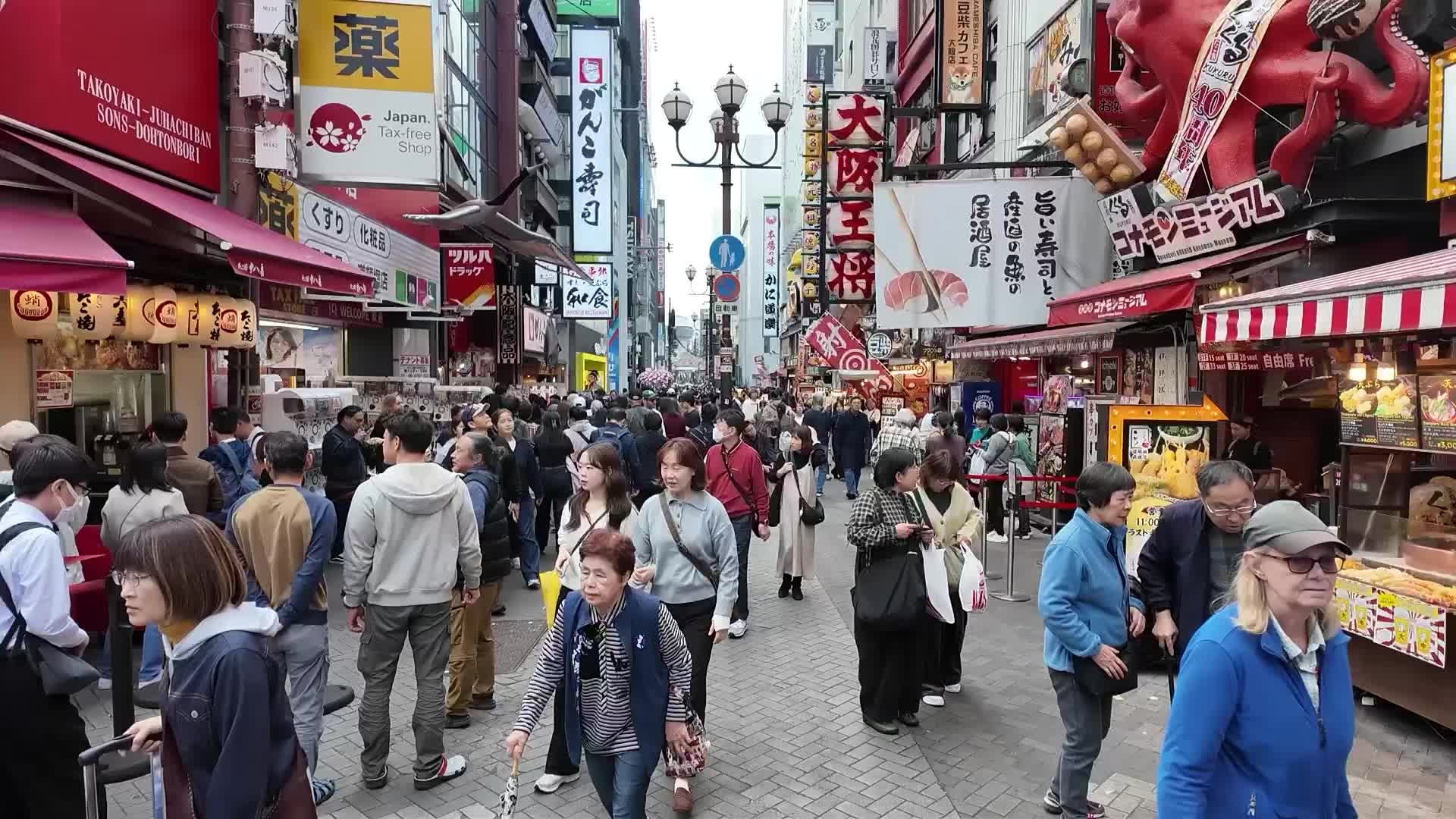
TOKYO — You have to wake up early in the morning to catch the world’s largest fish market at its peak. You also need to keep your head on a swivel.
“Careful here! These drivers can be crazy!” said our market escort, yanking me back from a warehouse lane wet with fish blood and water as several electric forklifts zoomed past. Piled high with styrofoam boxes bearing some of the most coveted seafood on the planet, these silent-but-speedy carts were designed for Toyosu Fish Market, a state-of-the-art facility built in 2018 on reclaimed land in Tokyo Bay.
The massive refrigerated halls were already humming with activity before dawn on a November morning as Philadelphia chefs Jesse Ito and his father, Masaharu “Matt” Ito, walked through vast aisles of whole fish on ice toward the live-seafood hall, where an acre of ocean creatures bobbed in gurgling tanks flanked by an ike jime station. Thrashing madai red snappers there were deftly dispatched with two strokes of a knife and a wire spike to the brain — a swift death considered both humane and, from a culinary perspective, optimal.
“It instantly disables the nervous system from producing chemicals that degrade the fish and keeps the meat fresh,” said Jesse, of Royal Sushi & Izakaya, whose industry contacts had lent us official hats and white rubber boots to accompany them to areas of this seafood paradise where tourists are not permitted.
At 5:30 a.m. sharp, the hand bells began to chime: Tokyo’s famous tuna auction was underway! We turned into a frigid hall where hundreds of tunas, some as big as couches, were laid atop the jade-green floor. Prospective buyers pried their bellies open with pikes to inspect the fatty pink flesh inside. Auctioneers from five different houses simultaneously launched into a rapid-fire sing-song patter met with the cries of replying bidders, the chaotic burst of noise transforming into a haunting, rhythmic chant that resonated in our chests.
“It sounds almost tribal — and you feel it,” said Jesse, 36, who buzzed with excitement from the auction floor. “Japan is so futuristic, and there’s probably a much more efficient way to do this. But this is about culture and preserving tradition. This is part of what it means to be Japanese.”
One of the most respected sushi chefs in the U.S., Jesse was not buying tuna on this day in November, but taking in this time-honored ritual alongside his father.
“I’m so glad we got a chance to experience that together,” Jesse said.
Matt, 72 and Japanese-born, taught a teenage Jesse the fundamentals of making sushi at Fuji, the family’s long-running restaurant in South Jersey. He and Jesse sold it before opening Royal Sushi & Izakaya in Queen Village together with partners in 2016, when Jesse was 26.
Jesse grew up in Cherry Hill and worked at Fuji from childhood. Before age 27, he’d never flown on an airplane, let alone travelled to Japan — a curiosity for a talent who’s risen to national acclaim as an eight-time finalist for the James Beard award, a Michelin-recognized chef, and the face of the 32nd best restaurant in North America as ranked by World’s 50 Best. He finally made it to Japan in 2024 on a research trip for his new restaurant, dancerobot, with business partner and chef Justin Bacharach. This second visit, in late 2025, would also be full of nonstop eating in search of inspiration, found at street stalls, yakitori grills, sushi counters, and world-renowned kaisekis.
But this journey was especially personal: We were boarding a plane later that morning to the southernmost Japanese island of Kyushu, to visit the village where Matt was born.
Matt, who lives alone in Pennsauken with his two macaws, Sakura and Ichiro, had not been back to Japan in 25 years and, before last year, had no imminent plans to return. Jesse thought it important for his father to go while he was still physically able, and paid Matt’s way.
“I never thought I’d get a chance to go to Japan with him,” Jesse said.
The prospect of a father-son jaunt was hardly a given. The last time they took a family vacation? “Jesse was 3 years old,” said Matt, recalling a trip to Florida before his world got “caught up in work, work, work … I regret that.”
There were other complications. Matt’s visa needed to be updated. Jesse had also been reluctant in previous years to relinquish two weeks of revenue from his omakase, an expensive experience for 16 diners each night (almost entirely regulars) that’s one of the toughest reservations in America.
Even more daunting was the prospect of so much time together. Despite working in the same restaurants every day for the past 22 years, the two rarely interact. There’s been challenging history between them: Jesse watching his parents’ divorce as a teen, financial struggles at Fuji, and a shifting power dynamic in the kitchen at Royal as Jesse took the lead and became a star — all while publicly grappling with alcoholism.
With Jesse now five years sober, the air between them has been cleared. “I had a sit-down with my dad and there were a lot of raw emotions,” Jesse said. “I apologized, and he spoke, too. We’ve made amends. We’re on good terms now.”
For Matt, the chance to journey to his homeland for the first time in a quarter-century with his son was an unexpected gift: “This is the first time I’ve spent this much time alone with Jesse since he was in junior high.”
After leaving the tuna auction, Jesse hustled to introduce himself to several suppliers that handle prime ingredients he wanted to bolster his menus.
“Next time I order,” he said as we walked to lunch, “they’ll know who I am and give me the good stuff. ‘That’s Jesse-san, send him the best!’”
Matt trailed behind, reveling in the beauty of all that gorgeous seafood, including live snapping turtles that gave him flashbacks to his teenage years as a fish-market butcher: “Be careful or you’ll lose one of these!” he said, wiggling his fingers.
We were famished by the time we arrived at Iwasa, a small restaurant in the market serving sushi for breakfast. We devoured the freshest pink toro, tender abalone, blood clams carved into snappy pompoms, and the sweetest shrimp over nubs of warm rice. It was just 6 a.m. We still had a late-morning plane to catch. The longest day of Matt and Jesse Ito’s big adventure had only begun.
An inauspicious beginning
Matt Ito arrived in Philadelphia almost exactly 50 years ago, just as an epic snowstorm in February 1976 froze the Schuylkill River solid. The 21-year-old chef was having regrets. The sandwich on the plane — roast beef on dry rye bread — was shocking. “I’d never seen such terrible food,” he said. When the owners of Sagami picked him up at JFK airport, he gazed out the windows of their Datsun with dismay as the wintry New Jersey Turnpike rolled by with “no mountains, just flat land, ice, and snow.”
He’d been recruited through a friend in Kyushu to this still-fledgling restaurant in Collingswood, where he lived upstairs for the first two weeks. He was in charge of making sushi at a moment in American culture when tuna rolls, raw salmon, and even tempura-fried shrimp were still novelties. “A lot of people had never seen this before. I had to teach people how to eat it,” Matt said.
But owners Chizuko and Shigeru Fukuyoshi were wonderful, he said, and Sagami was a fortuitous landing spot. That’s where he met Jesse’s mother, Korean-born Yeonghui Choi, who was a server. When he decided to open Fuji in 1979, she joined him there, building the business while his English was still limited.
Despite its out-of-the-way location in a Cinnaminson strip mall, Fuji became a cult favorite of gourmet societies like La Chaîne de Rotisseurs thanks to Matt’s lyrical kaiseki. By the time I first encountered it in 1999 — writing a rave review about the tuna-wrapped foie gras, curry-spiced squab, and bundles of lobster crisped inside translucent tempura crusts — I could not fathom how such a talent had remained largely unknown to Philadelphia’s wider public for nearly two decades. When the Itos were forced through eminent domain to move their restaurant to Haddonfield in 2007, Matt’s cooking was better than ever. But the restaurant remained under the radar.
Jesse worked his way up from dishwasher to head sushi chef at Fuji by 2008, getting more involved in the business. He graduated Rutgers-Camden with a business marketing degree in 2011. The decision to sell the restaurant after 37 years in 2016 came down to the unforgiving limitations of a family-run BYOB. “It’s not like we were failing. But we worked so hard for so little return, and there was no way for my parents to stop working,” Jesse said.
They leveraged the sale of Fuji to allow his mother to retire, and to build something bigger. He and Matt partnered with restaurateurs Stephen Simons and David Frank — who own Royal Tavern and Cantina Los Caballitos, among several others — to open Royal Sushi & Izakaya.
“I wanted to take care of my parents financially and also do something for myself,” Jesse said. “It’s a classic immigrant story: The first generation works hard and lays the groundwork, the second generation either takes it to the next level or goes a different route to become a doctor or go into finance. I grew up in that struggle, and as a teenager, life was not always nice.”
Jesse has clearly taken it to the next level. Half a century after Matt helped usher in the dawn of sushi for Philadelphians, his son is now redefining the genre’s boundaries with his ever-evolving omakase. Bridging and building that legacy is no small feat considering there are now over 17,000 sushi restaurants in America, according to Nobu Yamanashi, of Yama Seafood in Jersey City, which distributes fish to over 800 restaurants around the country, including Royal Sushi.
“All the iconic Japanese chefs with global reach are in their 70s,” says Yamanashi. “The next Nobu [Matsuhisa] or Morimoto doesn’t exist yet. It’s up for grabs. But there are a handful of Japanese chefs right now that have a chance to lay that claim. Jesse has the ability.”
The potential for such recognition was already evident on Matt and Jesse’s trip. In Tokyo, at Den, a renowned kaiseki destination (No. 32 on World’s 50 Best Restaurants), Jesse took pride in signing the wall at the restaurant’s invitation, joining the names of famous chefs who’d visited from around the world. Jesse was also caught completely off-guard at Yohaku in Osaka when chef Yoji Arakawa asked him for a picture after our meal. “I was nervous when you walked in because I follow you on Instagram,” Arakawa told him.
That his growing social media profile had somehow reached halfway around the world both stunned and delighted Jesse: “That was super-validating,” he admitted.
Jesse denies he has ambitions of global renown. But he’s certainly embraced the trappings of superstar chefdom. He has flown to London half a dozen times over the past few years to tattoo his arms with sleeves of colorful peonies and jetted to Los Angeles to tattoo his chest with a coiling dragon. On our field trip to Tokyo’s Kappabashi kitchen-supply district (“It’s Toys ‘R’ Us for chefs!”), he splurged on $1,000 worth of hand-blown sakeware for Royal’s omakase. A visit to the famed Nenohi knife store in Tsukiji Market bolstered his collection of high-end knives, including a gleaming broad blade with an emerald-lacquered scabbard that ran him a cool $2,700.
“The omakase is a performance, so it’s nice to have a great knife,” he said as lights danced across his face from the sword-like curve of another sujihiki slicer he was considering.
His father was quietly shaking his head in the corner. Matt, who’s so thrifty he brought his own onigiri rice balls from South Jersey to snack on while in Japan, said he could not relate his son’s knife obsession.
“If a knife cuts well, that’s all I need,” he said. “And don’t tell his mother he spent so much on a knife. She hates this.”
A detour, and then a discovery
We arrived at Oita Hello Kitty Airport around 1 p.m., and when we stepped outside, Matt took a deep breath of the ocean air hugging the rocky coast of Kyushu Island.
“It’s a homecoming!” he said. “I can smell it!”
We’d come to visit Miemachi, Matt’s hometown on the outskirts of Oita. And Jesse was visibly concerned. He’s accustomed to being in control of every logistical detail, both at his restaurants and for the itinerary of this trip, and our time in Kyushu was the only leg of the journey he’d delegated to his father. But he grimaced when he saw his father’s gameplan for transit between the airport and Miemachi. Matt’s legal pad was scrawled with a series of connecting trains and buses that would get us there in three hours if all went smoothly.
“Do we really need to go there?” asked Jesse, clearly drained after waking at 3:30 a.m. for our tour of Toyosu and then rushing to board a flight. “Nothing’s going to be open. What are we even going to see?”
I insisted we follow through: This was one of the main goals of our trip! Matt, sensing Jesse’s unease, surprised his son by hiring a cab to take us there directly.
Ninety minutes later, we rolled through the small town of Bungo-Ōno and up into the sparsely populated hills of Miemachi, an agricultural patchwork of rice paddies framed by the jagged triple peaks of Mount Katamuki. The cab moved slowly toward a cluster of houses, then drifted to a stop on Matt’s cue. Jesse was certain we were lost.
“Dad, what’s the plan to get back? They don’t have Uber here.”
Matt did not reply. Instead, he exited the car and walked down the road until he disappeared around the bend. The cab driver got out and smoked a cigarette against the car hood. Minutes ticked by and Jesse began to panic.
“This is why I can’t let my dad plan things. Let’s be proactive, rally my dad and get out of here!” he said, suddenly shaking his phone. “I can’t get a signal. There’s no internet. I can’t use Google Translate to communicate with the driver!”
At that moment, Inquirer photographer Monica Herndon, who had followed Matt, came jogging back to the cab: “He found it!”
Just over the rise, we found Matt at a low-slung house happily chatting with Fukiko Ito, 84, a cousin he’d not seen in decades who answered the door by pure luck. She was living in the house Matt’s father, Hideo, had built for his grandfather in 1967.
“Wow! Wow! Wow!” Matt said, proudly introducing Fukiko to his son. We followed her into the backyard and discovered another surprise: a granite altar with blooming yellow flowers that marked the family grave.
“My mother and father are buried here,” Matt told Jesse, whose anxious edge had instantly softened into one of quiet awe. “Your great-grandparents are buried here.”
As a falcon circled overhead, Jesse quietly gazed at the monument and spotted his family crest etched into granite. It was the same patterned quince flower, descended from a branch of the Ito samurai clan, that he’d used for Royal’s logo. He now realized that he’d transcribed it incompletely.
“I’m missing the house that goes around the outside of the flower,” he said, noting it for correction.
Matt had been giddily wandering the yard’s garden, picking fragrant sudachi citrus and orange persimmons off the trees. He caught Jesse’s eye and then — “here, catch!” — tossed him a piece of the family fruit.
Days later, Jesse would regard this as one of most powerful episodes of the trip, a direct connection to a heritage that rooted him to ancestral land that, since he was young, had felt like a distant concept not only as an American who’d never traveled, but as the product of a mixed-culture marriage who was constantly confronting impostor syndrome.
“For most of my life I felt that way, like a misfit — an American-Japanese-Korean kid who was not accepted by either group,” Jesse said.
He took heart in the pure delight that bloomed across his father’s face, an unfamiliar expression: “I’ve never seen him so happy — maybe ever.”
In the moment, though, Jesse later said, when he saw that persimmon arc across the yard, he thought of his childhood in Cherry Hill, a lonely latchkey-kid existence with his parents always at the restaurant. He’d microwave himself a dinner of buttered rice and seaweed. His dad was never around to actually play catch.
Letting Jesse run the show
A flood of parallel emotions was soon to overwhelm Matt, too.
As he and I sat alone together on the commuter train to the nearby spa town of Beppu following the unplanned family reunion, he recalled his own childhood. He was an indifferent student who spent time farming at age 14 to help care for the family when his father, a Japanese calligraphy teacher and former Army cook, fell ill. His father only gave Matt his blessing to become a chef on his deathbed one year later: “Under one condition: Just be the best.”
Fifteen-year-old Matt started his career in a fish market, butchering the local delicacy of fugu blowfish, learning to massage the deadly poison out of its liver underwater. His mother found him a kitchen job at the New Tsaruta Hotel, a resort where, in fact, we were staying that night. It was there Matt learned the art of kaiseki, a multi-course tribute to the seasons that employs different cooking techniques with every course. Matt also befriended a mentor there who gave him words to live by: “You have to make your own life. There are opportunities floating by you in the air. You just have to grab them!”
After two more years training in Osaka, the same mentor presented him with his big shot: the position at Sagami.
“I figured I’d go to America for two years,” Matt said. But he kept grasping at the opportunities. A wife. Their own restaurant. Two children — Jesse and his older sister, Naomi. Devoted customers and a lifetime of work. Too much work.
I wanted to take care of my parents financially and also do something for myself. It’s a classic immigrant story: The first generation works hard and lays the groundwork, the second generation either takes it to the next level or goes a different route to become a doctor or go into finance. I grew up in that struggle, and as a teenager, life was not always nice."
“I had a plan until I was 45, but then I messed up after that,” Matt said as the train rattled towards Oita. “I should have been a better father. I should have been a better man at the house. Instead I was always working, and as a result I lost my wife. I still feel bad about it, but we’re still friends and I talk to her every day. And every day before this trip, she’s so worried and tells me: ‘Don’t let Jesse eat fugu!’”
Matt’s still a partner at Royal Sushi & Izakaya, but he’s content to watch Jesse run the show, admiring his son’s creativity (“sometimes I think he’s a genius”). He comes in for a couple hours early each day to make the tamagoyaki, the delicate, lightly sweetened rolled omelet customers often order to finish their meal.
“[The cooks] just know me as the grumpy old man there making rolls. I’m Ito-san, that’s all. A funny old man.”
But he’s also observed closely as Jesse pours himself into the restaurant with a determination and focus he recognizes all too well.
“He works too hard, and I worry about him. I want him to have a life, too. I hope he finds someone to get married to, like any parent would.”
Is he worried his own story is repeating itself with his son?
Matt nods as the train pulls into Beppu station. Finally, 16 hours after rising to watch the morning tuna auction in Tokyo, we shuffled like zombies into the lobby of the New Tsaruta Hotel.
The aging tower overlooking Beppu Bay — known for sixth-floor open-air baths fed by the town’s famous hot springs — had lost some of its grandeur over the past half-century, Matt conceded. But when an exhausted Jesse opened the door to his room, he was not prepared for the culture shock of the spare traditional Japanese accommodations, with little more than a tatami mat visible. “There’s no bed!” he thought to himself, unaware of the futon in the closet. He turned around and, not wanting to offend his father, quietly left New Tsaruta and checked himself into a cushy new hotel nearby.
Small improvements every day
“I’m sorry if I was cranky last night,” apologized Jesse the next morning as we boarded an early train to Fukuoka. A soft mattress had helped him recover his good spirits. Our previous day had been special. “I saw how happy my dad was and I felt like I’d done my duty as his son,” he said.
But today brought another adventure on Kyushu that we’d all been looking forward to: nori day!
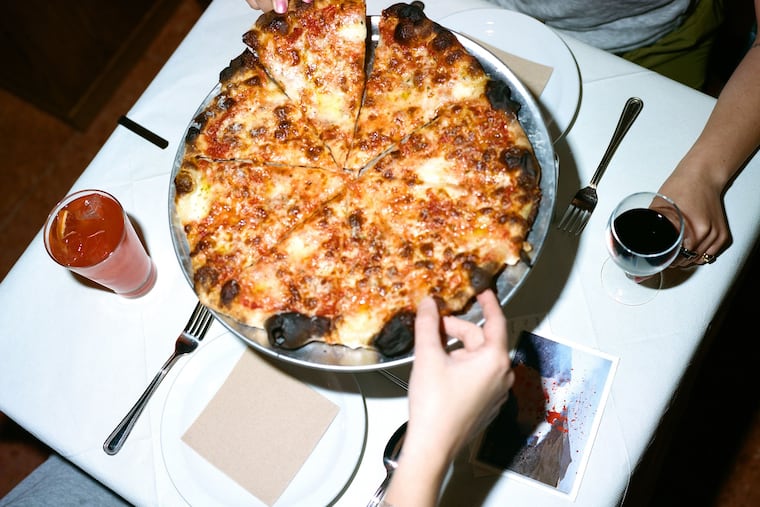
We had come to Japan to eat, of course, and our nine days were filled with extraordinary flavors. We devoured luscious king crab legs for breakfast at Tsukiji Market, soulful curry-drenched pork katsu worth the 90-minute wait in Osaka, and the legendary Pizza Y topped with bluefin tuna and wasabi at Savoy Tomato & Cheese in Tokyo. We marveled at the poetic wonders of the modern kaiseki at Den, where chef Zaiyu Hasegawa’s food married culinary mastery with a sense of humor that resonated with Jesse as a model for his own restaurants.
But Jesse had also come to Japan on a quest to further his pursuit of kaizen, the Japanese philosophy of making small improvements every day. And our field trip for day two in Kyushu — a visit to an artisan nori producer — had the potential to tangibly elevate his food. Quality fish takes center stage at any great sushi restaurant. But the difference between “good” and “extraordinary” can often come down to unsung supporting ingredients like nori and vinegar, whose varying qualities dramatically impact the final bite.
That’s why we found ourselves standing atop the seawall in Yanagawa, peering out at the breezy Ariake Sea, where 50% of Japan’s nori is farmed. The seaweed grows in-season there like moss-green netting between poles that punctuate the water all the way to Nagasaki across the bay, whose tidal rhythms undulate between the wash of ocean water and the warmth of drying sun, fostering a coveted flavor that’s deep and complex.
Maruho — the manufacturer that hosted our tour — arguably makes the best, according to Nobu Yamanashi, the Jersey City seafood distributor. Jesse was clearly impressed as we tasted myriad varieties, crunching through piles of crispy seaweed snacks speckled with spicy pollock roe (mentaiko), then nibbling through ascending grades of plain nori — the kind commonly used to wrap maki, temaki hand rolls, and onigiri — until he finally landed on the coveted No. 1.
“This is so good!” said Jesse, holding a deep green sheet to the light, its denser weave pressed with flecks of aonori, another seaweed variety known for its color and fragrance. Its flavor was deeply oceanic. Its texture so crisp, it snapped cleanly when Jesse folded it in half, already imagining its effect wrapped around a fatty tuna handroll or a morsel of mackerel pressed over cubes of warm rice back in Philadelphia. “It’s like a cracker ... I just hope I can afford it.”
This is the most expensive nori on the market. At $3.50 per sheet wholesale, it was twice the cost of the already top-market seaweed Jesse was currently using, and exponentially more than common sushi-bar nori. If Yamanashi had his way as Maruho’s exclusive importer, Jesse was about to become the first sushi chef in America to use it — “He’s a top-10 customer and he pays his bills.”
Success becomes a balancing act
Indeed, Jesse’s omakase — already one of the priciest dining experiences in Philly at $300 per person as of last October — had been scheduled to rise to $355 by the time we returned home in November, to accommodate all the new treasures he’d found. The top-shelf uni he’d begun buying from Toyosu was $350 a tray. The creamy lobes of plump monkfish liver from Hokkaido he planned to marinate in shoyu before gently steaming them into a silky pâté cost 10 times more than the ankimo he’d previously used. The Maruho nori, he’d later report, “has been a real game-changer. That stuff is amazing.”
As we walked briskly through Fukuoka’s Nagahama Market, a calmer scene than Toyosu but still the second-largest fish market Japan, Jesse gave his Kyushu-based fish buyer, Takahiro Hirota, a wish list. Luminous pink madai sea breams. Silvery shima aji jacks. Translucent yare ika, or spear-tipped squid.
“This is hard to find, can I get one for next week?” he said, gesturing at the squid, which becomes silky-soft and sweet when sliced just right.
The omakase — and Jesse himself — have come a long way since Royal Sushi & Izakaya first earned four bells from The Inquirer in 2018, when Jesse’s tasting menu was (just!) $130.
The omakase’s ingredients, place settings, and techniques have continuously leveled up. And the storytelling its 18 courses now convey — including the extraordinary bibimbap with uni and toro that’s inspired by Jesse’s Seoul-born mother and composed over buttered seaweed rice (a childhood throwback, albeit now truffled) — has transformed the meal into something deeper than just a luxury splurge. Even as its fee rises, it remains hundreds of dollars less than similar experiences in New York and beyond.
“After eating at multiple sushi omakases in Tokyo and Kyoto, from multiple Michelin stars to none, the best sushi omakase I have ever eaten is from Jesse Ito right here in Philadelphia,” says Marc Vetri, the Spruce Street pasta maestro who also owns a restaurant in Kyoto.
All the iconic Japanese chefs with global reach are in their 70s. The next Nobu [Matsuhisa] or Morimoto doesn’t exist yet. It’s up for grabs. But there are a handful of Japanese chefs right now that have a chance to lay that claim. Jesse has the ability."
Much of Jesse’s restaurant world is, in fact, accessible and relatively affordable to the wider public, both at dancerobot, where live jazz and karaoke nights keep it lively, as well as the izakaya portion of Royal, a walk-in experience Michelin noted with a Bib Gourmand as a “good value.” But it’s little wonder regulars guard their standing reservations to the omakase like courtside tickets for a Sixers game, ahead of a 1,000-person Resy waitlist that occasionally shakes a couple seats loose for newcomers. The seemingly impossible scrum shows no signs of abating.
Jesse sympathizes with the notion of trying to make the omakase more accessible, but he simply doesn’t know how to achieve that without sacrificing the valuable personal relationships he’s forged over a decade to the murky forces of the anonymous internet, where valued seats risk becoming little more than a resale-market commodity.
“If I was dumb enough to get rid of all my regulars, people with access to bots would just buy up everything and resell them,” he said.
As with so much in Jesse’s life, his keen sense of how to navigate the challenges of success has been shaped by periods of struggle, alongside his parents and on his own.
The pandemic presented an existential threat to Royal’s business and halted the omakase for over a year while the izakaya kept the lights on with takeout and a la carte. On the brink of losing his house, Jesse was also compelled by the crisis to finally confront his relationship with alcohol, which he’d long relied on to numb his anxieties and fears.
He became sober on Dec. 1, 2020, a status he’s maintained since, regularly attending support groups and talking publicly about his recovery. The shift reshaped his workplace, paring Royal’s hours back to five nights a week, closing at 11 p.m. for a more sustainable environment. Sobriety has helped him cope with setbacks. (“Part of losing the Beard award eight times ... you come away with the ability to enjoy the moment,” he said.) It has also given him the clarity to build healthier relationships, “to be a better partner, a better friend, and a better son.”
Jesse still gets a rush from the performance of slicing pristine fish and the intimacy of entertaining a handful of customers from behind his counter.
“I’m going to keep it this way for as long as I can because it’s a moment in time when I get to do this,” he said. “It’s like a show every night.”
Over the course of our time in Japan, however, Jesse succeeded in making his biggest impression on an audience of one: his father.
“This was the best trip I’ve ever had and I’m really appreciative,” said Matt, who’s now planning a return trip on his own to travel to Miemachi with his Tokyo-based sister.
Matt could typically be found lingering several paces behind us on our fast-paced visit, soaking in the sights, sounds, and flavors of the land he’d left 50 years ago. But he was also looking forward, enjoying the rare opportunity to observe his son out in the world as he forged new business relationships and soaked in inspiration at every turn: “I’m so proud of the mature person he’s become. He’s made his own life.”
Matt also relished this opportunity to simply be with Jesse, even if conversation between the two was often sparse.
“It’s funny because I don’t have to say more than one word,” Matt said. “I know he understands.”

- Wawa has expanded far beyond Philly. But hometown fans still fuel the chain’s success
- The great Philly chicken-bone invasion | Weekly report card
- Has Wawa’s food changed too much?
- The best things we ate this week
- How to have a Perfect Philly Day, according to Revolution Museum chief R. Scott Stephenson
- Spring blossoms, biscuits, and Blue Ridge views in Charlottesville, Va. | Field Trip
- Citywide Quest: Do you know where in Philly these Lunar New Year-themed photos were taken?
- Documenting the President’s House saga