Dancerobot is still evolving — but where it’s headed is promising
The second act from Jesse Ito and Justin Bacharach is a great bar and it serves excellent brunch.
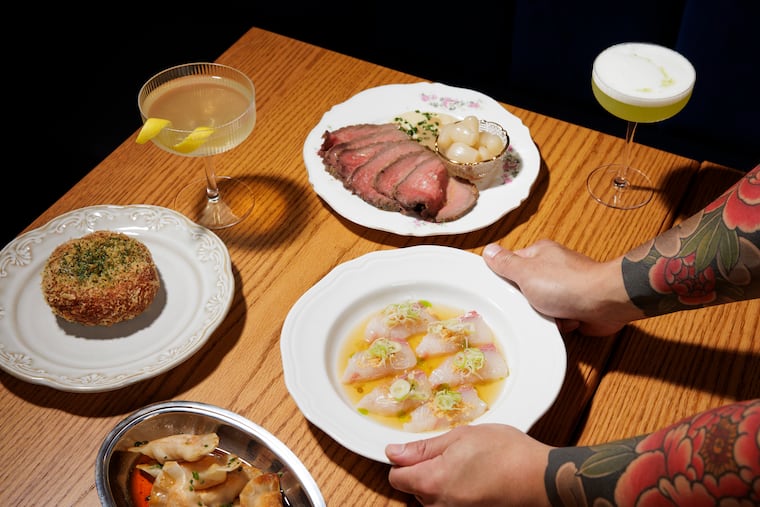
Craig LaBan recused himself from the formal full-length review of dancerobot because of the reporting trip he took to Japan with Jesse and Matt Ito in November. Kiki Aranita reviewed it in his stead, following similar critical practices — for instance, eating multiple meals over a period of time and making reservations under aliases to avoid detection. The Inquirer pays for the meals eaten by its journalists.
Jesse Ito works every single omakase service at Royal Sushi and Izakaya. Ito, who has been nominated for a James Beard Foundation award eight times, has racked up as much acclaim as frustration. The omakases are notoriously difficult to get into, with waiting lists hovering around 1,000 people per night. The waiting list is so brutal, that insiders speculated Ito had no chance at a Michelin star because even the inspectors could not get in.
So when he announced another restaurant, dancerobot, it quickly became one of the most eagerly anticipated openings of fall 2025.
Dancerobot Rittenhouse shares numerous menu items with Royal Izakaya, along with design features. The restaurant looks like the Izakaya front half of Royal Sushi and Izakaya, but larger, roomier, and slicker, complete with gilded mirrors and Studio Ghibli anime projected onto brick walls.
The menu features nasu dengaku, the same reliably satisfying, sweet and savory miso eggplant dish that Masaharu “Matt” Ito, Jesse’s father, has been making since the 1970s, when he and his wife operated the restaurant Fuji in Cinnaminson and where Jesse was trained.
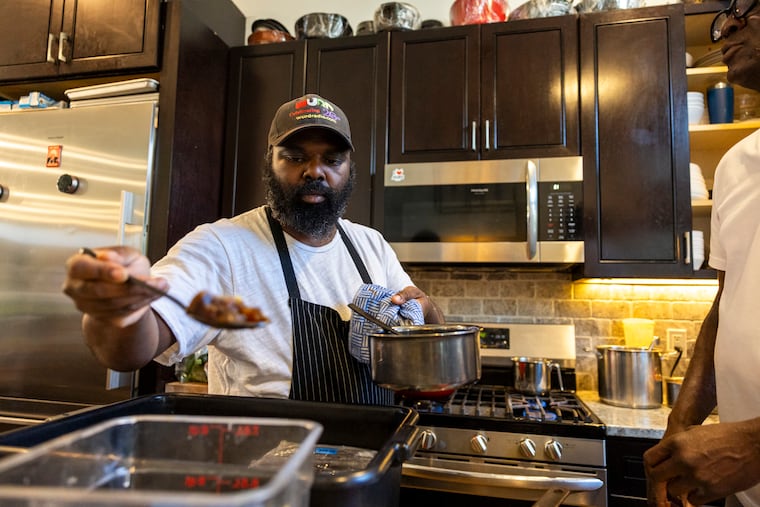
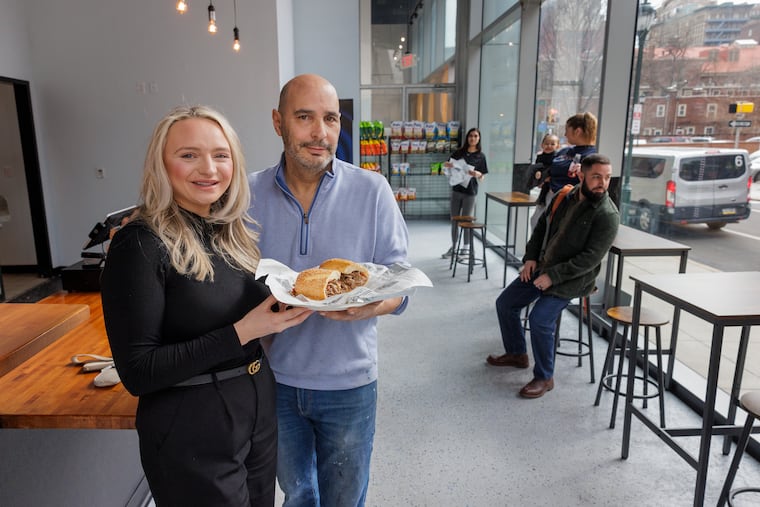
Because Ito is tied to the Royal Sushi counter, the restaurant is helmed by co-owner and executive chef Justin Bacharach, who previously oversaw Royal Izakaya’s back-of-house operations. At dancerobot, which opened at the end of September, Ito and Bacharach are co-chefs and partners.
Dining over the last few months, I had good meals and terrible ones at dancerobot. Dinners were shaky, especially as the kitchen found its footing. It seemingly struggled with a fastidious adherence to replicating classic yoshoku, which translates to “Western cuisine,” but refers to a now-codified array of omelets, mentaiko spaghetti, curry rice, and hamburg steak dishes served at kissatens (Japanese cafes) and snacks from konbini (Japanese convenience stores like 7-Eleven, Lawson, and FamilyMart).
What Bacharach is doing, reverse engineering the often highly processed replications of Western food served in Japanese cafes and at its convenience stores with much higher quality ingredients, is commendable, but does not always produce delicious results.
Yoshoku is a challenging cuisine to work with. It’s marked by artificial ingredients like brown gravy, ketchup, white bread. Thus, most items on the menu are bound or topped by either thick brown sauce or thick orange sauce, brown gravies and curries or mentaiko cream or mayo.
At dancerobot, there are also clear departures from both yoshoku and konbini food, like a fantastic interpretation of takoyaki (octopus fritters, typically a street food), delightfully twisted with the typical toppings of agedashi tofu, katsuobushi, and a caramelly soy sauce. It’s the items that are clones of kissaten classics that make me question why they are doing this.
At dinner, the cheesy mentaiko omelet ($15) is a technical marvel that unfurls into beautiful tendrils of deliciously creamy curds when you slice it. Developing it took months of cracking through “dozens upon dozens of [American-raised jidori] eggs,” lamented Bacharach, who had been the chef at Cheu Noodle Bar before he started working at Royal during the pandemic. The omelet really needs rice, and perhaps even the soupy mentaiko cream pasta ($20) does, as its thick fusilli insufficiently sops up the exceedingly generous serving of sauce.
Like yoshoku cuisine, konbini food is highly processed and its joy is situational: the charm of famichiki (the large chicken nugget served at FamilyMart) involves getting it in a little paper envelope from a hot display case in a convenience store that also sells great socks and smoothies that you can blend yourself.
If success is defined by technique, then dancerobot is firing on all cylinders. But there are limits to that approach. Imagine a Wawa hoagie made from scratch with finer ingredients, but still tasting exactly like a Wawa hoagie, no better, no worse, and served to you at a buzzy restaurant rather than a quick-stop counter. That’s the Philly equivalent of what dancerobot is doing with Japanese comfort foods at dinner.
Dancerobot’s brunch service, currently only on Sunday, is an example of how Bacharach succeeds when he veers slightly off the path of faithful imitation, a celebration of all the kitchen can do with dough (whether baking it for shokupan, or milk bread, or teasing it into pancakes and cinnamon buns).
The honey butter toast ($8) has the exterior of a sugar-coated crouton that gives way to a soft, croissant-like flaky and buttery interior. The sourdough pancake ($16) is a puffy cloud, hot and quivering when it hits your table. The spicy avocado toast ($14) is an innovative take on a bagel with lox: toasted shokupan is spread with cream cheese seasoned with nori and scallions, mashed avocado spiked with a spicy yuzu kosho condiment, and topped with salty globes of ikura. It’s one of the best brunches I’ve had in Philly.
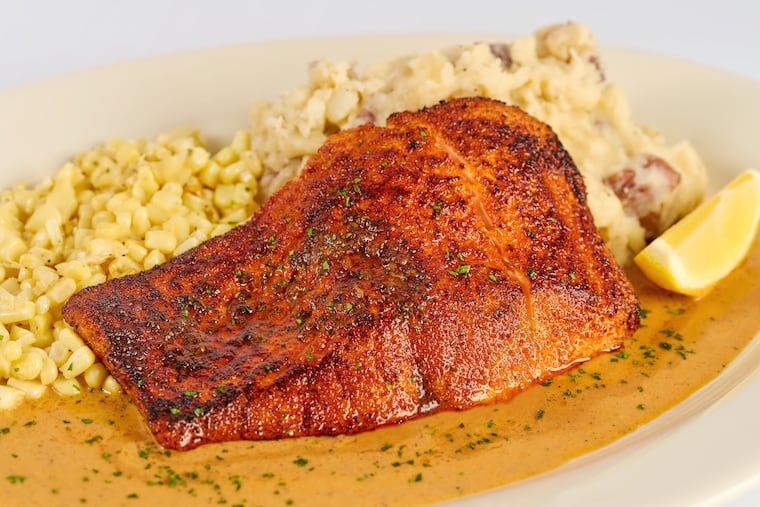
As is the teishoku breakfast ($36), a set I look forward to ordering again and again, served on a textured wooden tray, with precious little ceramic dishes containing a variety of pickled vegetables, miso soup, and a perfectly grilled fish fillet on fragrant, steamed rice (I chose salmon).
The bacon, egg, and cheese onirigi ($12) is delightfully weird, consisting of two triangular rice balls fried until crispy and topped with Cheese Whiz. It’s inspired by konbini onigiri, but not at all faithful to it, a dish excellent in its own right. And at brunch, that omelet is actually served with rice, refashioned into omurice for which you can choose demi glace or mentaiko cream to pour over the top.
As dancerobot has evolved since its opening, the dishes have markedly improved. Divisive, early dinner dishes like the pizza toast (which arrived cold both times I had it) and a Japanese take on French onion soup that lacked any hint of crusty cheese have now fallen off the menu. They, and other kissaten dishes, were largely informed by the first trip Bacharach, a Bucks County native, and Ito took to Japan, in February 2025, when Ito mistakenly booked the wrong hotel (it had a similar name to a centrally located one they intended to stay at).
Bacharach and Ito wound up staying in the neighborhood Ikebukuro, nearly an hour away from the meals they were planning on having. “It ended up being a blessing in disguise,” said Bacharach, as they then had the opportunity to frequent locals-only establishments.
That trip to Japan, coupled with Ito’s memories of pilgrimages to Japanese superstore Mitsuwa in Edgewater as a child for katsu curry and kare pan, shaped dancerobot’s origins. The timing solidified the concept. “I’m so happy that finally we can open a place like this without ramen and sushi — that is so paramount,” said Ito. “It has been a long time coming. The market is ready to accept this.”
Everything at dancerobot is valiantly, painstakingly made from scratch. The large, heaping tray of curry, to which you may add tonkatsu Iberico pork loin, konbini-style fried chicken, or vegetable tonkatsu may take its inspiration from the iconic boxed Golden Curry.
It did indeed remind me exactly of Golden Curry.
“But Jesse and I wanted to make something unique and special, bringing in modern culinary technique and more umami,” said Bacharach. He makes a vegan curry roux of roasted mushrooms, caramelized onions, and shallots, thickens it with rice flour, and seasons it with sake, mirin, and tamari. Its spice comes from kanzuri, a Japanese chili paste made from togarashi peppers, kojii, salt, and yuzu.
The versions I tasted over the last few months seemed to increase in spice level, and relax in terms of gloopiness, improving with each iteration.
But the from-scratch approach doesn’t always triumph. Bacharach developed the hamburg steak, which he called “meat loaf, with a ketchup glaze, dressed up in a tuxedo,” with painstaking care.
He makes demi-glace “the old-fashioned way — starting out with a case of veal bones that takes two days to thaw, which we split into two pots.”
It’s simmered with aromatics, kombu, and vegetable scraps and in total, cooked for 20 hours. The stock is blended with Japanese ketchup, Worcestershire sauce, and shio dashi.
Hamburg steak at its beefy finest may glisten with fat, coating steaming hot rice grains and the roof of your mouth with its golden richness, as you inhale its charcoal singe and imagine a pampered cow died rightfully for this transformation. This does not yet exist in Philadelphia.
Dancerobot’s hamburg steak, for all its pedigree, tastes like an ordinary meatball.
Dancerobot really succeeds when it, too, leans into the particulars of its situation. It fulfills a need in Rittenhouse that was simply never met: a bar with a sake-centric list that hits all the right notes, from premium to easy drinking with a long, ample bar that feels both divey and clean, that’s dark enough that can make you feel a little anonymous if you’re on a first date and lets you be a little bit loud if you’re crammed into one of their booths like sardines with a six-person friend crew. The din encourages one to add to the loudness, which can be another essential quality in what makes a bar great.
The late night menu, served from 11 p.m. to 2 a.m. on Friday night and Saturday nights is an absolute blessing. As Center City revelers trip down Sansom Street looking for food that will stick to their ribs and soak up the booze, dancerobot is right there, luring them in with a wonderful, spicy fried famichiki-esque chicken cutlet, served in a paper envelope.
Sansom Street, where dancerobot resides, is also home to the similarly nostalgic (albeit through an Americana not a Japanese lens) Wine Dive from Happy Monday Hospitality, where the iceberg salad is crisp and cold without a hint of wilt, and there are also potatoes and chicken cutlets to scratch that late-night itch. Texas-based Uchi, with its sushi and Japanese fusion food, has set up shop mere steps away from dancerobot.
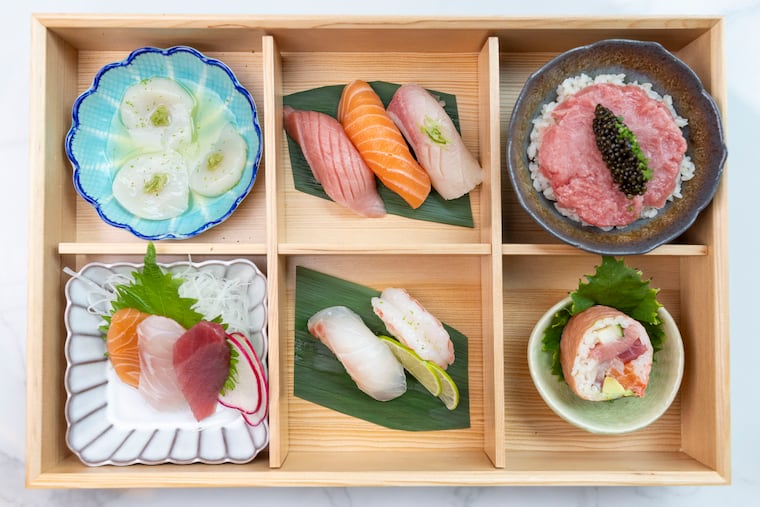
Philly is experiencing an omakase and fancy sushi boom, evident in the wave of upscale sushi joints that have opened recently, like Kissho House in Center City and Javelin in Fairmount. It also has a lot more competition in the high-end omakase space, including Ogawa’s high-end experiences and Kevin Yanaga’s 637 Sushi Club.
And now, Japanese food is being reinvented in Philadelphia again, as Ito and Bacharach retool childhood flavors for a city that has evolved in the past decade. Dancerobot’s brunch heralds a new era for Japanese-inflected food in Philly, and the restaurant has great potential, once they fully lean into their creative impulses.
dancerobot
1710 Sansom St., 215-419-5202, dancerobotphl.com
Dinner
Tuesday to Thursday, 4 to 10 p.m.; Friday and Saturday, 4 to 11 p.m.
Late Night
Friday and Saturday, 11 p.m. to 2 a.m.
Brunch: Sunday, 10:30 am to 3 p.m.
Entrees $25-$35
Menu highlights: kare pan, age takoyaki, kanpachi, everything on the brunch menu
Drinks: There’s an excellent selection of easy-drinking sakes, served with little fanfare but a lot of knowledge. There are cocktails including frozen ones and a few N/A options.