I’m a food reporter who’s fasting for Ramadan. Here’s my guide to observing and celebrating in Philadelphia
From all-night food crawls to hosting iftars, here's everything you need to know to observe or celebrate Ramadan with friends and family.
Every year, Ramadan seems to catch me by surprise. Maybe it’s because the month-long holiday’s start date fluctuates 10 to 12 days following the lunar calendar. Or maybe it’s my disbelief that another year has come and gone. No matter the reason, Ramadan always comes back around when I need it the most.
For many Muslims, the holy month is one of spiritual renewal. It’s a month where we get to practice patience, abstinence, gratitude, and charity. This year, the month of observance runs from the evening of Feb. 17 to March 19, which means no food and drink — yes, even water — for about 12 to 14 hours for 30 days.
The key is good food and community before and after fasting. And in Philadelphia, that’s easy to find.
Here’s my guide to observing and celebrating Ramadan in the city I call home.
What does it mean to fast for Ramadan?
My day begins at 4 a.m. with suhoor, the meal that begins the fast. Typically, I roll out of bed and grab the first thing I can eat (a bowl of Cinnamon Toast Crunch, most days) and chug half a liter of water. Once the athan, or call to prayer, chimes on my phone close to 5:40 a.m., I abstain from eating and drinking until after the sun goes down.
After sunset, I break my fast with a date — a spiritual tradition rooted in teaching by the Prophet Muhammed — then dinner and lots of water.
Growing up, this end-of-fast meal, iftar, started with a quick snack that was followed by prayer and dinner. Now as an adult, I’m making my own traditions and breaking my fast all in one go, then praying afterward.
Where can you celebrate in community in Philadelphia?
This year, I’m meal-prepping to save money, making jars of oatmeal and smoothies to start my fast and keep me full and stocking frozen marinated meats to pull out and cook before the athan signals the end of the fast.
But there are days when walking into the kitchen, let alone cooking, feels impossible. Thankfully, Philadelphia has a range of halal dining options I can rely on — I’m ordering hot chicken sandwiches or falafels for a quick solution.
Philly’s Muslim-owned restaurants are also celebrating with holiday buffets — think chicken mandi and maqluba at Alamodak or chicken briyani and goat korma at Wah Gi Wah — and special additions, like soups, samosas, and dates.
There are 24-hour establishments to gather with friends for suhoor — consider Plov House in the Northeast for fried meaty turnovers and sweet crepes or Liberty Bell Diner for pancakes, omelets, and waffles around the clock.
But they are not the only ones offering spreads of delicious foods to break fast in community.
When I moved to Philadelphia, iftars hosted by mosques were my North Star for finding community. I discovered a blend of Philly natives and immigrants from the city’s Muslim diaspora, from Afghanistan to Uzbekistan, breaking fast together at mosques, kitchen tables, and 24-hour diners across the city. Ramadan isn’t complete without a mosque iftar.
You could also shake things up and embark on an all-night food crawl — a ritual that’s been a highlight of my Ramadan calendar for four years now. Each year, my friends and I travel to New York City for one night during the holiday month, exploring the city’s late-night food scene from iftar to suhoor.
Last year, I realized that it was possible to crawl in Philadelphia, too, even if Philly has only a few establishments open past midnight and a handful of 24-hour diners left. But, as we found out, Ramadan brings a different kind of energy to the night.
What to do if you get invited to an iftar?
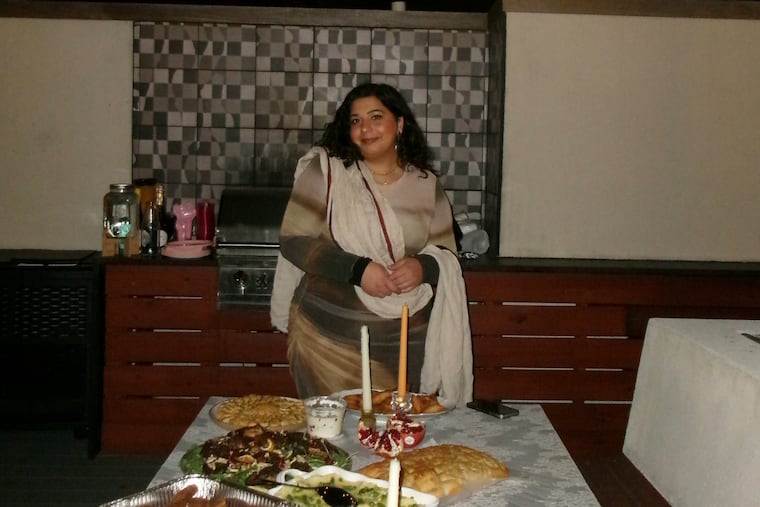
I’m a social butterfly, so hosting iftars is something I’m quite good at. I love gathering my community to yap and munch. (Pro-tip: Take it easy and host a potluck — unless you’re insanely talented like my mom, who can still whip up a spread of perfect dishes for over 30 people while fasting.)
One question I hear from my lovely non-Muslim guests: What do I do if I get invited to an iftar? The answer is simple. Eat, a lot. The joy of Ramadan hosting is spending time with loved ones over good food. Seeing my guests enjoy food and company makes the day’s fast worth it.
If it’s a potluck, bring a dish you love to share. That’s what my very cool friend Kelsey McKinney did for an iftar I hosted last year. (Yes, I was fangirling that Philly’s very own gossip queen came to my potluck!) A competitor on The Not-So-Great Defector Bake Off, McKinney baked a spiral pastry that looked like the sun and tasted like herby olives in buttery, flaky puff pastry.
“I could have rolled up with like a bag of delicious pistachios, and it would have been fine,” McKinney wrote. “But the bar for myself is so high! I wanted to bring something celebratory to the Hot Girl Iftar!”
Just remember: Don’t bring alcohol, and use halal ingredients.
And for any kitchen-shy non-cooks, you can’t go wrong ordering a platter of viral crispy shawarma sandwiches from the TikTok famous Falafel Time or an assortment of laddoos, gajar ka halwa, and gulab jamun from Philly’s many mithai (South Asian sweets) shops.