From Philly to Miami: Why top restaurateurs are heading south
Stephen Starr (with five restaurants), Michael Schulson, and Michael Solomonov are among the big players in greater Miami.
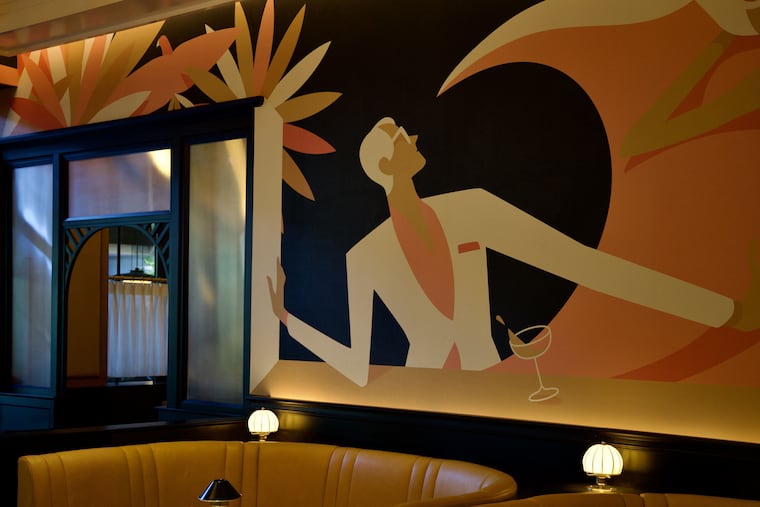
For years, South Florida was where Philadelphians retired, vacationed, or escaped winter. Increasingly, it is also where Philadelphia’s biggest restaurateurs are doing business.
Stephen Starr now has five restaurants there, following the March 17 opening of Slim’s, a steakhouse at Bal Harbour Shops at the northern tip of Miami Beach. He promises at least three more Florida projects, including another outpost of his French brasserie Pastis at the Nora Hotel in West Palm Beach, expected in late 2026, and one restaurant each in West Palm Beach and Palm Beach.
In the last year, Michael Solomonov and Steve Cook opened Aviv at the 1 Hotel South Beach. Last spring, Michael Schulson opened a branch of Double Knot, his izakaya, in Miami’s Wynwood neighborhood, and another is due soon in Delray Beach. Three years ago, Dave Magrogan, whose Philadelphia-area holdings include Harvest Seasonal Grill & Wine Bar, opened Jupiter Grill in Jupiter. Bucks County’s Jeffrey Chodorow, now developing Mr. Edison at the Bellevue in Center City, is planning a revival of his pan-Asian China Grill in Bal Harbour, expected in 2027.
Taken together, the moves suggest that South Florida has become more than just a side market for Philadelphia operators. For restaurateurs with recognizable brands, enough backing, and concepts that travel, it is increasingly a logical second home.
That is especially true for Starr, who has been active there since 2009, when he opened Steak 954 in Fort Lauderdale. Besides Slim’s, his current Florida roster includes Makoto in Bal Harbour, El Vez in Fort Lauderdale, and Pastis in Miami.
“Florida is a very business-friendly state,” Starr said. “Initially, of course, opening there was a business opportunity, but I also just think it’s probably one of the most spectacular places in the United States.”
Referring specifically to Miami Beach, he added: “It’s so unique and international. What other American city feels like a tropical island?”
Other Philadelphia operators have arrived by different routes.
For Solomonov and Cook of CookNSolo, the path to Aviv began with a Zahav pop-up at the 1 Hotel during Art Basel in 2018, in the same space that would eventually become Aviv, Solomonov said.
“We did three nights of service, and it was just so much fun and so wildly successful,” Solomonov said. CookNSolo and representatives of SH Hotels & Resorts kept talking, and a deal was made.
Aviv, with its pale woods, creamy banquettes, tropical greenery, open kitchen, and breezy polish, isn’t a South Beach version of Zahav. Instead, Solomonov said it was shaped by what he sees as a kinship between Tel Aviv and Miami.
“Vibrancy. Eclectic inspiration. The social energy, the vibe — there’s something about Tel Aviv and Miami that feels connected,” he said.
That thinking extends to the menu, which he described as vegetable-forward and Israeli, centered on charcoal cooking. Aviv reflects the sensibility diners know from CookNSolo, but it also borrows from Miami’s own food culture.
“This sounds cliché, but I think we do pretty honest food down there,” Solomonov said. “There aren’t a ton of bells and whistles. We also use ingredients that resonate in Miami — guava, for example, because of the Cuban influence. We use it to marinate chicken, and then cook over charcoal. That gives it a sense of place and makes it different from what we do up here.”
Solomonov also knows the risks. His group’s earlier Miami ventures, including branches of Dizengoff and Federal Donuts, did not last. “It was an example of us learning some very expensive lessons about expansion and about doing new projects out of market,” he said. Aviv is operated by SH Hotels & Resorts under a management agreement.
Schulson’s Florida story has its own arc. Before opening Double Knot in Wynwood, he operated Monkitail, a modern izakaya, at the Diplomat in Hollywood, which closed during the pandemic. He said the Wynwood opportunity came through Goldman Properties, whose presence in both Philadelphia and Miami made the move feel like a natural extension of an existing relationship.
“They reached out and said, ‘Would you guys be interested in coming to Miami and doing something with us there?’” Schulson said. “That was just a natural fit.”
Now he is extending that foothold to Delray Beach, where Double Knot is headed to Atlantic Avenue this spring in a project involving Philadelphia developers Ira Lubert and Dean Adler. For Schulson, Florida offers both opportunity and complexity: a market fueled by population growth, wealth migration, and constant activity, but with rhythms and tastes distinct from Philadelphia’s.
“There’s a lot of businesses moving down there, especially from New York — hedge funds, banks, institutions — and that’s been good,” said Schulson, who recently opened a Double Knot in Manhattan. “Now it’s cooled down from that, but it’s still a very busy market.”
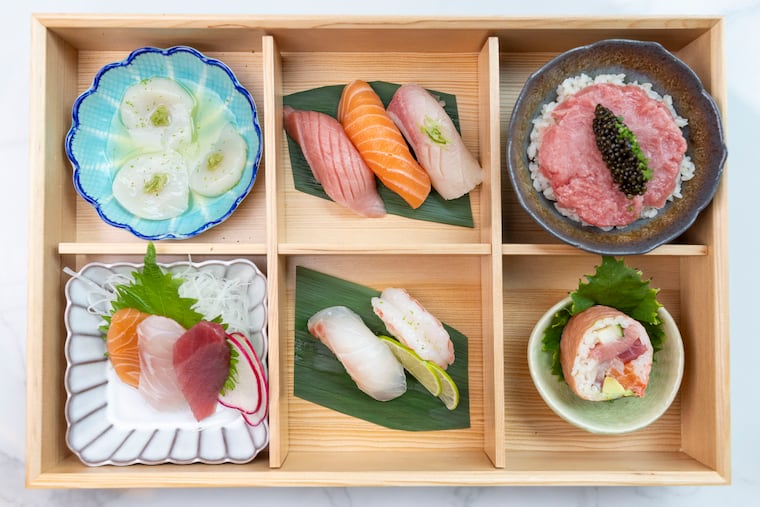
Those differences show up most clearly on the plate, he said. In Philadelphia, diners may lean into richer and heavier dishes, especially in colder months. At the Miami Double Knot — down the block from Starr’s Pastis — the appetite is for lighter and fresher options, with Japanese dishes shaped in part by local Latin influences, including crudos, sashimis, tuna, and yellowtail.
That flexibility may help explain South Florida’s appeal. The concepts that seem to travel best are the ones that can adapt to climate, clientele, and setting without losing their identity.
The competition is keen, particularly in Palm Beach County, where Magrogan has Jupiter Grill, a modern steakhouse on the water. “There is always a new, very well-done, very shiny new restaurant,” he said. “There’s such a fever pace down here and a lot of favorable business conditions — but rent is not one of them.”
The Philadelphia-to-Florida connection is not new. In 1993, Steve Martorano left Northeast Philadelphia, where he owned Steve’s Ristorante (later renamed Macaroni’s), to open Cafe Martorano in Fort Lauderdale. In 2008, Barry Gutin and Larry Cohen went to Orlando to open their third Cuba Libre, the restaurant and rum bar also in Old City and Atlantic City. Last year, the Pashalis family opened a Naples branch of Estia, their upmarket Greek restaurants in Center City, Radnor, and Marlton.
What feels different now is the concentration of activity and the prominence of the names involved in South Florida. These are not one-off experiments so much as deliberate plays by operators with strong hometown brands and ambitions beyond the region.
“People are happy there,” Starr said. “The palm trees, the beach — it just has a great energy.”

- Influencer or agent? In today’s market, Realtors have to be both to score clients.
- Someone said ‘Wawa subs,’ they renamed Harry the K’s, and Philly took it personally | Weekly Report Card
- Citywide Quest: Do you know where in Philly these baseball-themed photos were taken?
- The best things we ate this week
- A quieter Delaware Shore escape in Bethany Beach and Fenwick Island | Field Trip
- They wanted more space than they had in Newtown Square. They found what they were looking for in Malvern. | How I Bought This House
- How to have a Perfect Philly Day, according to Colored Girls Museum founder Vashti DuBois
- My neighbor's fertilizer smells awful. What can I do?
- Behind the scenes with Mikie Sherrill and Rocky