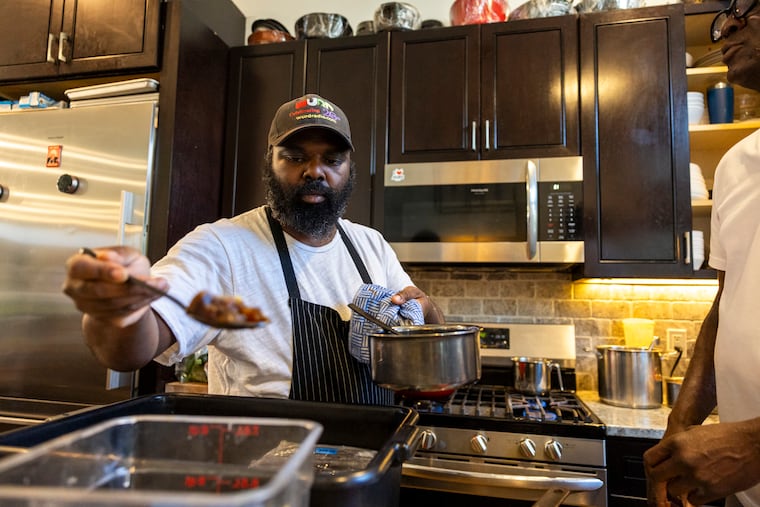
The Foundation for Delaware County’s Family Village aims to close health gaps in Delaware County
The Family Village initiative brings together the foundation's range of services to support pregnant people and new parents, especially those affected by Crozer Health's closure.
Tonya Robertson was working one of her three jobs at a charter school in Chester when she broke down crying to a colleague: She was homeless, living in a domestic violence shelter with three children, and pregnant with twins.
Her co-workers suggested she talk to the school’s counselor, who gave her a stack of applications to apply for federally funded food support, at-home prenatal nurse visits, and maternal health resources, all coordinated through The Foundation for Delaware County.
The nonprofit has for almost a decade provided access to safety net programs such as Women, Infants, and Children, the nutrition program known as WIC; Healthy Start; and the Supplemental Nutrition Assistance Program (SNAP), the food program for low-income families. It also offers a menu of other support services for families, such as a program that provides at-home prenatal visits, housing assistance, legal aid, doulas, mental health resources for new mothers, and a fathers’ support group.
“They had so many resources — things I was scared to open up my mouth about, things I didn’t want to say I needed,” said Robertson, 39, of Marcus Hook.
She said she wishes she’d known about the organization sooner, during the years she struggled to raise her three older children as a single mother.
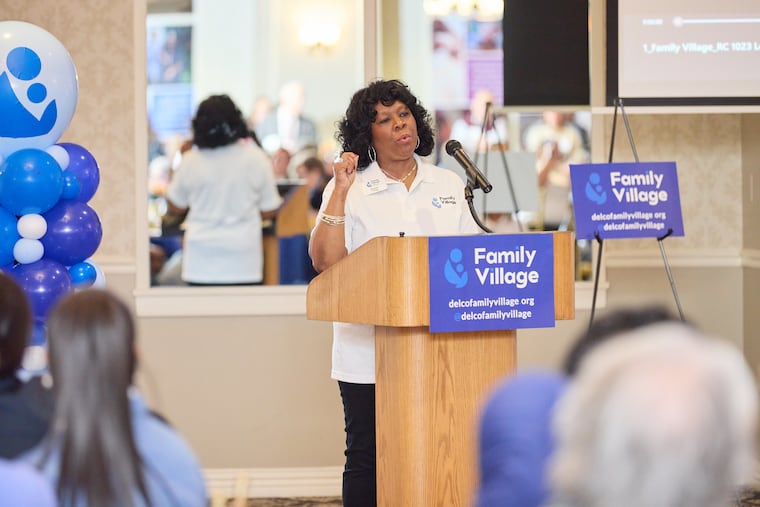
Now the foundation is rebranding its offerings as the Family Village, in an effort to raise awareness about the nonprofit’s full range of services. Foundation leaders said that in the past, people may have connected with the organization for a specific resource, such as WIC or SNAP, without learning about other programs they could benefit from. The idea of the Family Village is to make the foundation’s services more cohesive, wrapping around those in need.
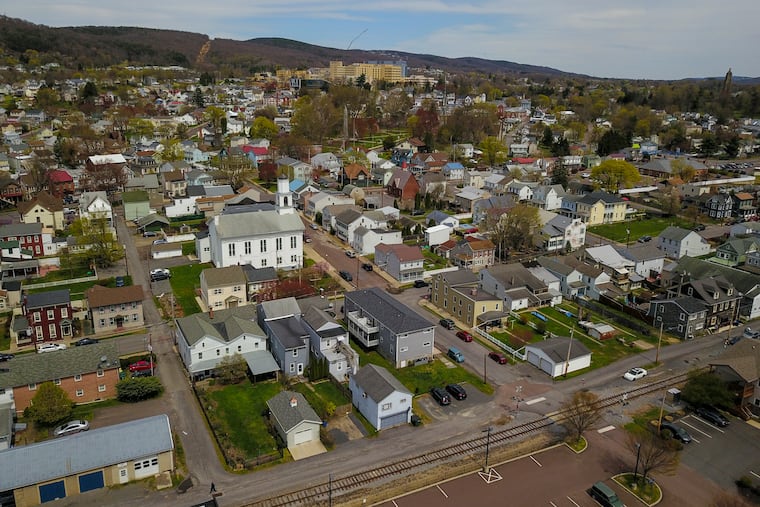
The initiative has been years in the making, but is especially timely after the county’s largest health provider, Crozer Health, closed earlier this year when its for-profit owner filed for bankruptcy. The health system had long been an anchor for Chester and the surrounding communities, providing critical access to maternity, pediatric, and mental health services.
» READ MORE: Here’s Delaware County’s plan for addressing emergency response shortages following Crozer’s closure
“Children don’t come with instructions. We all need a helping hand at some point,” said Joanne Craig, the foundation’s chief impact officer. “We have this great continuum of resources for families, but from the outside looking in, it wasn’t always easy to see and understand.”
Filling gaps in Delaware County
The Foundation for Delaware County was formed in 2016, when the nonprofit Crozer-Keystone Health System was sold to Prospect Medical Holdings. When for-profit companies acquire nonprofit health systems, Pennsylvania law requires the nonprofit assets be set aside in an independent charity. Crozer’s nonprofit assets became the Foundation for Delaware County.
The foundation’s overarching mission is to support the health and welfare of Delaware County residents by coordinating government safety-net programs and creating its own offerings to help families in need. The foundation also provides millions of dollars in grants to nonprofits and charities to support public health, housing, and youth development.
With $53.9 million in net assets as of October, the foundation is the largest philanthropic organization in Delaware County, serving some 8,000 people a year.
Many of the foundation’s most used programs, such as Healthy Start, a federally funded prenatal and early childhood initiative, began before the foundation was spun out of Crozer, in response to the high infant mortality rate in Chester.
Other programs — such as one that provides cribs and safe-sleep education, and a support group for new fathers — were created in response to needs raised by families the foundation was already working with.
“We found ourselves filling gaps,” Craig said.
When Prospect said it would close the remaining Crozer hospitals, The Foundation for Delaware County was pressured by the case’s bankruptcy judge to take on part of the company’s debt to keep the hospital open until a new operator was found. The foundation shelled out $20 million to extend operations temporarily and later contributed $3 million to help former patients obtain their medical records.
The foundation’s new Family Village initiative can’t close all the gaps Crozer’s closure left — the area lost its largest emergency department and maternity ward, the only 24-7 mental health crisis center, and critical pediatric care.
ChristianaCare won an auction to take over five former Crozer outpatient locations in Broomall, Media, Glen Mills, and Havertown, and has plans to open two new micro hospitals in Aston and Springfield.
Delaware County in August selected Belmont Behavioral Health to establish a new crisis response center and expand mental health services.
But Craig said she hopes the foundation’s new approach will help families better access resources that remain available — and that they may not have known about.
Help without judgment
Before connecting with the foundation, Robertson was skeptical of organizations and programs that offered help.
Her grandfather, for instance, berated her for enrolling in SNAP and the at-home nurse program, warning her that she could end up losing her children, if coordinators decided her home and parenting weren’t good enough.
“I’m so scared to let someone in, let them come in my house and see that my house is not up to par, see that I’m struggling with this, or that I can’t feed them,” Robertson said.
“If I can’t feed them, they’re going to take my kids, and I’m going to go to jail,” she added.
Research has found that these fears are often justified, with social service workers deeming parents of color unfit at higher rates than white parents, and equating poverty with neglect.
Healthcare workers, social workers, and teachers are among so-called mandated reporters, who are required to report to Child Protective Services any suspicion of abuse. Only a fraction of reports are substantiated after being investigated, but they stoke fear and can dissuade families from seeking help.
But Robertson was working three jobs and still couldn’t feed her family, so she filled out the forms the school counselor had given her.
Her first prenatal visits through the Nurse-Family Partnership were at the domestic violence shelter where she was living.
Robertson was proud when she was able to afford to move her family into an apartment in Chester. But her nurse told her the gaping hole in the ceiling and mold growing in the corners were unsafe. She connected Robertson with the foundation’s Housing Opportunities Program for Equity, which helps people secure safe housing and navigate problems with landlords.
After her twins were born, the foundation’s Moving Beyond Depression program helped Robertson work through postpartum depression, which may have otherwise affected her ability to work and care for her children.
Two years later, Robertson said she still faces challenges. The recent government shutdown cut off the family’s food stamps, making for tough budgeting decisions earlier this month.
But now she knows where to turn for help, if the load ever becomes too heavy again.
Editor’s note: This story was updated with additional information on the foundation’s mission.