Philly vaccination experts hail a court ruling that halts changes to childhood vaccine recommendations
Discord between Robert F. Kennedy Jr.'s Centers for Disease Control and Prevention and medical professional groups has sowed distrust and confusion for families, experts say.
Philadelphia vaccine experts on Tuesday called a federal court decision reversing changes to the U.S. childhood vaccination schedule under Health and Human Services Secretary Robert F. Kennedy Jr. a win for public health.
But discord between the Centers for Disease Control and Prevention under his leadership and medical professional groups has sowed distrust and confusion for families, experts say.
Federal health agencies were stopped from implementing a January overhaul of the childhood vaccination schedule that decreased the number of recommended childhood immunizations from 17 to 11.
The ruling by U.S. District Judge Brian Murphy in Massachusetts also unwound other vaccine recommendations made last year by a panel of independent experts, the Advisory Committee on Immunization Practices, that advises the CDC.
Last spring, Kennedy fired the entire committee and replaced it with handpicked members that included several vaccine skeptics. Kennedy himself is a longtime anti-vaccination activist.
The reconstituted committee’s members have recommended delaying hepatitis B shots for most newborns, which have been universally recommended at birth since 1991. (In January, Kennedy went further, saying that the vaccine was no longer recommended for all children — just those at high risk of contracting the virus.)
The revamped committee also voted against universally recommending COVID-19 vaccinations, instead saying patients could get the shots after “shared clinical decision-making” with a doctor.
The decisions were decried by public health experts who say ACIP’s stances will increase preventable diseases and deaths in children.
Several major medical organizations, including the American Medical Association and the American Academy of Pediatrics, filed suit last July to block changes to COVID vaccine recommendations. The organizations updated their lawsuit as Kennedy oversaw further changes to vaccination recommendations.
In his ruling, Murphy said that HHS violated federal law around government procedures by bypassing ACIP in the January overhaul of the vaccination schedule. The new recommendations said that only children at higher risk of health complications should get vaccines that protect against certain serious illnesses, like rotavirus and hepatitis B.
He also noted that the reconstituted ACIP includes members with no expertise or professional qualifications on vaccination.
HHS spokesperson Andrew Nixon indicated in an e-mailed statement that the administration may challenge the ruling. “HHS looks forward to this judge’s decision being overturned just like his other attempts to keep the Trump administration from governing,” he said.
The back-and-forth headlines and lengthy legal battles can be confusing to parents, said Charlotte Moser, codirector of the Vaccine Education Center at Children’s Hospital of Philadelphia.
“But families can take comfort in the fact that the science is and has been stable when it comes to the safety of vaccines and their effectiveness,” she said.
Also a former ACIP member whom Kennedy fired last summer, she noted that vaccines work: “And they’ve been protecting children for decades.”
‘A war on vaccines’
For years, states have used ACIP’s recommendations to require which vaccines should be covered by insurers and mandated for schoolchildren.
Amid shake-ups on the committee, several states, including Pennsylvania, have changed their own policies around vaccine distribution to ensure that people can continue to access vaccines no longer recommended by the CDC.
Gov. Josh Shapiro, a Democrat who signed onto a separate lawsuit over the vaccine schedule changes, hailed the court ruling.
“Hey @SecKennedy, you heard the courts,” he said Monday in an X post. “And if we haven’t made it clear enough: here in Pennsylvania, we trust doctors to help us make healthcare decisions — not conspiracy theorists like you."
The ongoing debate about the CDC’s recommended childhood vaccination schedule has so far not affected access to vaccines, as insurers have continued to cover all vaccines under the old schedule.
But Kennedy’s appointment elevated anti-vaccine activism to the highest levels of federal policymaking, said Paul Offit, a physician and a leading national vaccine advocate who heads CHOP’s Vaccine Education Center.
“He altered the current vaccine schedule to make it so that certain vaccines appear to be unnecessary or optional,” Offit said. “It was an assault. A war on vaccines.”
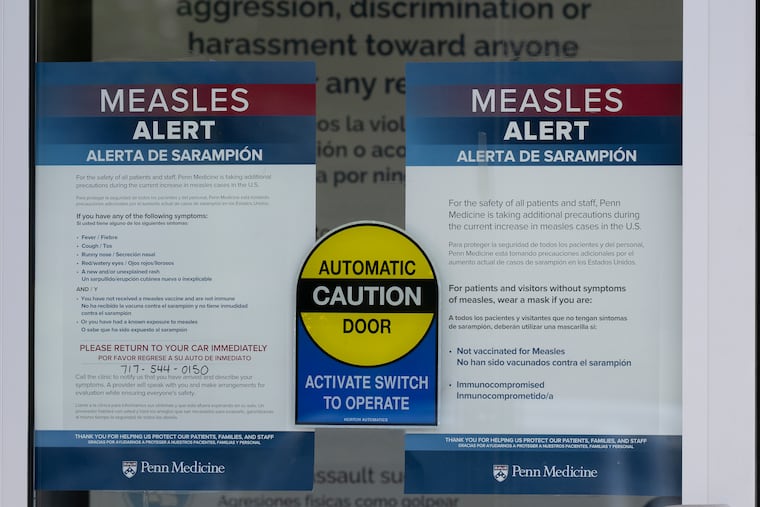
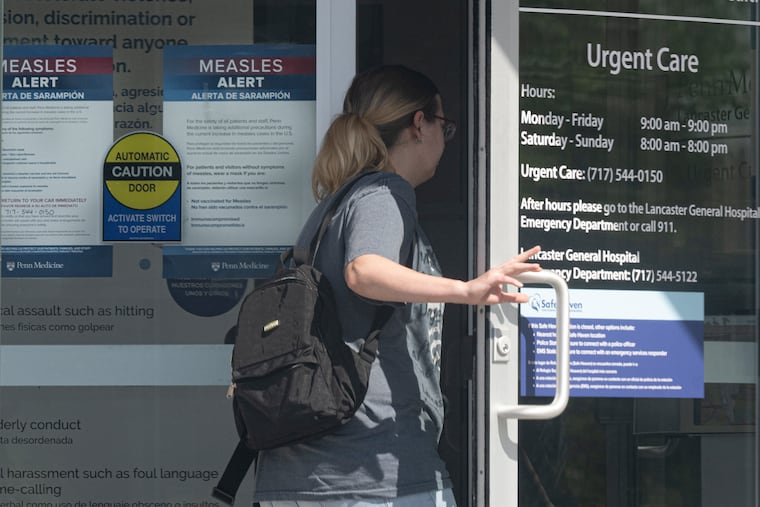
Public distrust of vaccines has been growing since the COVID-19 pandemic, Offit noted, and the United States is already seeing a resurgence of vaccine-preventable diseases, including tetanus, measles, flu, and whooping cough.
Offit, a co-inventor of a rotavirus vaccine who has sparred publicly with Kennedy for years, said many Americans no longer experience the suffering associated with vaccine-preventable diseases. “People don’t appreciate how sick or dead these viruses can make you,” he said.
Vaccines and public trust
In a survey last year, researchers at the Annenberg Public Policy Center at the University of Pennsylvania found that people would be more likely to trust their medical provider or a professional organization than the CDC if the two sides disagreed on vaccine advice.
“You have a personal relationship with that individual and you’ve played a role in selecting them, as opposed to the anonymous entity the CDC,” said Kathleen Hall Jamieson, Annenberg’s director.
People who continue to follow the CDC may become increasingly skeptical of vaccines because of the agency’s efforts to remove some vaccines from the recommended schedule or alter when they should be given, she said.
Jamieson said she expected confusion to continue as the Trump administration appeals the court’s decision.
Moser, the fired ACIP member and CHOP vaccine expert, urged parents to consult trusted healthcare providers about vaccination. Recent changes to vaccine recommendations were not based on any new data that raised fresh concerns about vaccine safety, she said.
“Many young parents today have themselves received these vaccines,” she said. “We want to make sure we’re able to protect this generation of children from these horrible diseases that we had the benefit of being protected against.”