A desperate George Washington letter from the darkest winter of the Revolution is now on view in Philly
A rare letter providing a glimpse into General George Washington at his lowest is now on display at the Museum of the American Revolution.
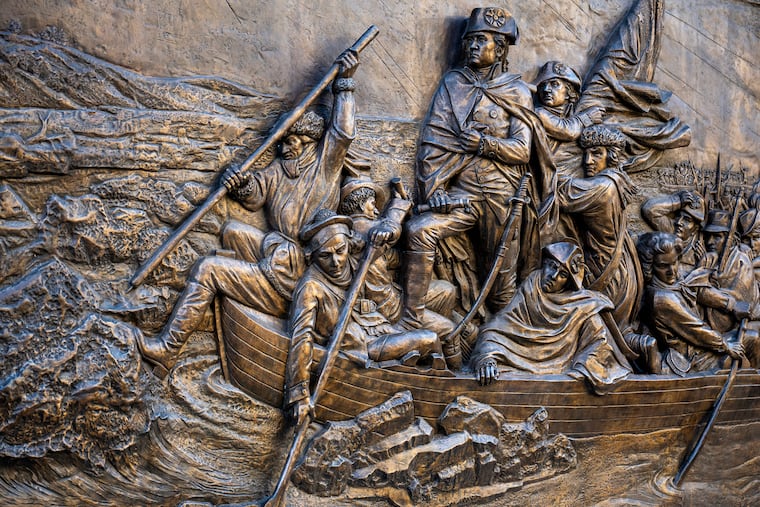
Bucks County. December 1776.
The American Revolution is on the brink of collapse. And George Washington knows it. He trembles for Philadelphia.
Washington, 44, writes by wavering candlelight in the borrowed rooms of a stately stone mansion. He wishes to heaven his quill could convey a more favorable tale. The general is on the run. The British have blasted him from his fortifications in New York and chased him clear across New Jersey, over the Delaware River into Pennsylvania. His soldiers are sick and starving and disappearing. The Revolution is coming apart.
George Washington is fighting to keep his army alive.
In Philadelphia, not 30 miles away, the citizenry has calculated the grim arithmetic. An estimated 15,000 Philadelphians — roughly half the city — flees for Bucks and Chester Counties, or to Delaware and Maryland. Even the Congress, conspiring at the State House at Sixth and Chestnut, reconvenes in Baltimore.
The birthplace of American independence can be mistaken for a ghost town. Martial law prevails. Schools are closed. Shops are shuttered. Wagons piled high with worldly possessions of fleeing families clog roads out of town. Wild rumors circulate that Washington would sooner burn Philadelphia than let the city fall into British hands. Scant city militia dig in.
The great general is reduced to hiding boats. His bedraggled men have spent days seizing or destroying every vessel they can find along the Jersey banks. Anything to keep the British from crossing the Delaware.
Washington needs men. The ones he has are counting the days until they can go home. His second in command — the ambitious, scheming Gen. Charles Lee — has managed to get himself captured at a Jersey tavern, miles from his troops.
“Unhappy man!” Washington fumes in a letter to a cousin at Mount Vernon, his Virginia plantation. “Taken by his own imprudence!”
And it is not just the army’s strength that is dwindling. It is the new nation’s will to fight.
In Jersey, people are flocking to the protection of the Crown. Washington finds little more fight in the countryside of Pennsylvania.
“If this fails,” Washington writes of his hopes for fresh troops, letting the mask of command slip, “I think the game will be pretty well up.”
A rare glimpse
By winter 1776, the spirit that swept Philadelphia in July seems all but extinguished. George Washington — and the colonies — are on the ropes. The December 1776 Washington letter provides a rare glimpse of Washington at his lowest.
Now on display at the Museum of the American Revolution, the relic marks 250 years since that winter of 1776, when a newly minted nation teetered on extinction. Dark days of rebellion, just before a remarkable turn of fortune: the Ten Crucial Days, when Washington and his ragtag army snatched improbable victories at Trenton and Princeton, reviving a dying cause. A reminder of how close it all came to ending before it had barely begun.
“Washington is trying to escape annihilation by the British,” said Matthew Skic, director of collections and exhibitions at the museum.
“From Washington’s perspective, if the Continental Army is over and done with, the Revolution is over and done with.”
Desperation pours through Washington’s elegant, looping script.
“In short your imagination can scarce extend to a situation more distressing than mine,” Washington writes, before somehow turning to the mundane affairs of Mount Vernon, a refuge from war, perhaps.
Last on display at Mount Vernon in 2006 — and remaining on display in the museum’s core exhibit through May 2027 — the letter reveals the stoic general at his rawest.
“It’s a letter that epitomizes the darkest hour,” Skic said. “We consider this the low point.”
Crucial days
The general cannot know how close he is to reversing the fortunes of war. On Christmas night, his ragged army will close the icy Delaware in a stunning surprise raid. At Trenton, the general who could barely keep his army together will have breathed new life into a dying revolution. The 10 days ahead bring more victories and waves of reenlistments.
“Those 10 crucial days are crucial because they essentially rescue the Revolution from total defeat within the first six months of the Declaration of Independence,” Skic said.
1777 would hold triumphs and heartbreaks of its own. But the Revolution would continue.