FCC approves 1 million SpaceX data centers in space. Astronomers are dismayed.
The American Astronomical Society said it was “disheartened and dismayed” as satellite interference would undermine the ability of astronomers to study and enjoy the night sky.

The Trump administration has granted SpaceX authorization to deploy a “constellation” of 1 million data centers in space to fuel the artificial intelligence boom, in a move that is worrying some scientists and environmentalists.
The Federal Communications Commission said Wednesday the orbital data centers — which SpaceX has dubbed “Starmind” — will be able to “process massive amounts of data to be used back here on Earth.” It allows humans to “harness the full power of the sun” and would be done in line with FCC rules on orbital debris, the agency added.
Putting data centers in space has long been a goal of SpaceX CEO Elon Musk, who has argued solar energy can be used to power AI systems. The plan has attracted investment for SpaceX and propelled it to become one of the world’s most valuable companies, but it has also been met with skepticism due to the inherent risks of the hostile space environment.
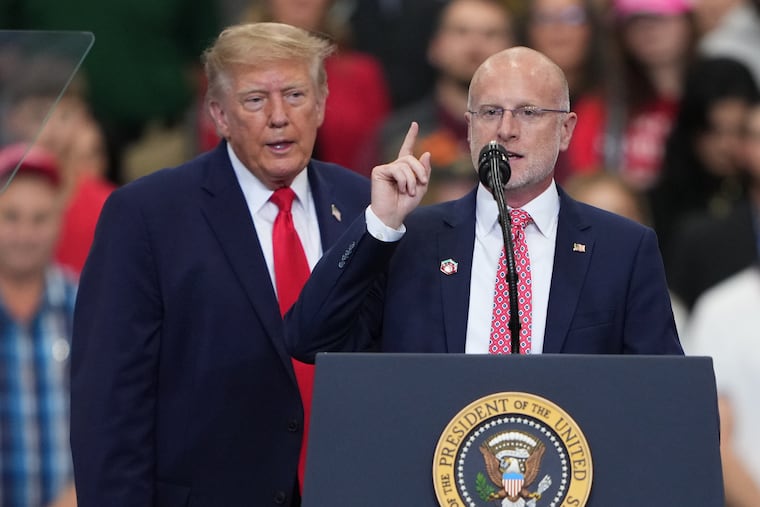
FCC Chairman Brendan Carr, who was appointed by President Donald Trump, said the move “opens a bold new frontier for the computing infrastructure needed to power America’s leadership and growth.”
“This is the kind of American ingenuity that can unite our strengths in space and advanced technology, reinforce our economic leadership, and expand prosperity here at home,” he added.
Musk welcomed the news on social media. “Much appreciated. This will be a great asset to America and the world,” he said.
Data centers are widely unpopular across the United States, with voters pushing back on them in the recent midterm elections, and critics complaining of noise, water use, and impact on electricity bills.
Under the terms of the authorization, SpaceX must deploy one space station into orbit by November 2033, with 500,000 expected to be in operation by November 2038 and the remainder by 2040. The term of the license is 15 years.
Some environmental groups and scientists sharply criticized the FCC decision, saying it risks disrupting Earth’s atmosphere and altering the night sky.
The American Astronomical Society said it was “disheartened and dismayed” as satellite interference would undermine the ability of astronomers to study and enjoy the night sky. The atmospheric pollution from so many satellite launches and reentries, as well as the risk of collisions, was also of concern, it added.
Domenico Vicinanza, associate professor of intelligent systems and data science at Britain’s Anglia Ruskin University, told The Washington Post that the prospect remains largely theoretical.
“What Elon Musk has got is the permission to build something. That’s not the same as demonstrating that he can actually do it,” he said.
Vicinanza said while solar energy in space is technically free, the vast infrastructure needed to harvest it is not. The plan to deploy satellites into space also raises issues about temperature control, connectivity, maintenance, and the environmental impacts of satellite launches and space debris.
“We must make sure that we are solving an environmental problem rather than simply moving it somewhere else,” he said.
Earthjustice, an environmental nonprofit organization, accused the FCC of failing to consider the environmental impacts, and highlighted the decision to announce the authorization just ahead of the Thanksgiving holiday.
“Drastically expanding satellites in space has a direct impact on people’s everyday lives as well as the future of our planet,” Jan Hasselman, senior attorney at Earthjustice, said in a statement Wednesday.
SpaceX and the FCC did not immediately respond to an overnight request for comment.