Baghdad curfew is eased amid dip in violence
While bloodshed has declined in the Iraqi capital, it has increased in other parts of the country.
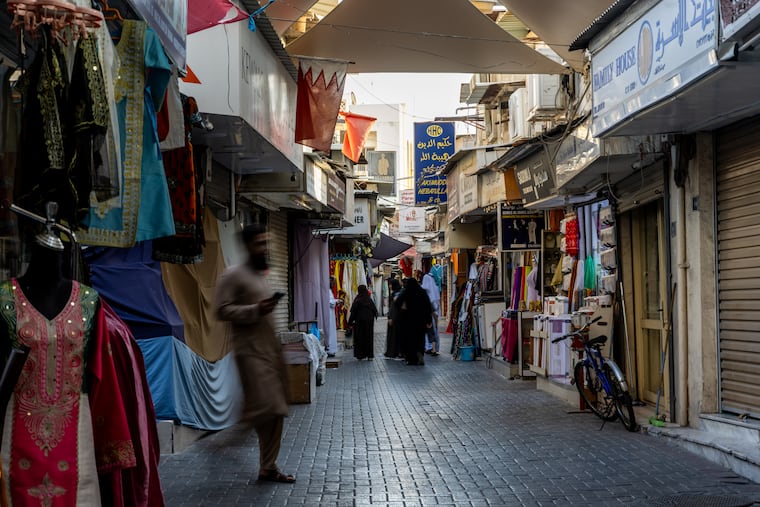
BAGHDAD - Citing improved security in the capital, the Iraqi government said yesterday that it was shortening the Baghdad curfew by two hours and would allow citizens to be on the streets until 10 p.m.
The easing of the ban on movement around the city coincided with a sharp one-day drop in the number of people known to have been killed in sectarian violence nationwide. According to police and morgue reports, 18 people were killed or found dead yesterday.
Violence in the capital has declined since the latest U.S.-Iraqi joint security operation began Feb. 14, though there have been spectacular attacks.
But bloodshed has increased elsewhere in Iraq after insurgents and militiamen moved operations out of the capital in advance of the security crackdown. Last week, more than 600 people were killed nationwide in sectarian attacks, mainly truck and suicide bombings thought to be the work of Sunni insurgents or al-Qaeda in Iraq.
Brig. Gen. Qassim al-Moussawi, the spokesman for the Baghdad security operation, said the curfew had been shortened in the capital "because the security situation has improved and people needed more time to go shopping."
Since the start of the security operation, the military had enforced a 8 p.m. to 5 a.m. ban. Before that, the curfew had been 11 p.m. to 5 a.m.
Police in Samarra, however, said U.S. and Iraqi forces had taken up positions around the city, 60 miles north of Baghdad, and imposed an indefinite curfew starting at 7 p.m. yesterday.
Samarra was the scene of an al-Qaeda bombing of a Shiite holy shrine in February 2006. Many blame that attack for the eruption of sectarian violence that later swept Baghdad and surrounding regions.
Shiite lawmakers, meanwhile, said the government decision that likely will put the oil-rich city of Kirkuk under Kurdish control was forced on Prime Minister Nouri al-Maliki when Kurds threatened to walk out of his ruling coalition and bring down the government.
The threat and Maliki's capitulation dramatically outlined the prime minister's tenuous hold on power and further emphasized the possibility, some say the likelihood, that Iraq could break into Kurdish, Shiite and Sunni regions with little or no central-government control.
A government collapse likely would have brought chaos to the seven-week-old Baghdad security operation, with Maliki a lame duck premier and commander in chief of Iraqi forces.
"The Kurdish coalition exerted enormous pressure on us. One of them was a threat by Kurdish lawmakers to boycott parliament and by ministers to quit the government," said Haidar al-Abbadi, a member of Maliki's Dawa party. He described the Kurdish pressures as "blackmail."
At issue was Article 140 of Iraq's constitution, which calls for a referendum in Kirkuk on the city's status by year's end. The government agreed Thursday, presumably on Maliki's orders and after the Kurdish threat, to a plan to resettle to their home regions Arabs who had been moved into Kirkuk after Saddam Hussein's Baath party came to power in 1968.
Much of Iraq's vast oil wealth lies under the ground in the Kirkuk region and in the Shiite-controlled south. While the Kurds refer to Kirkuk as the "Kurdish Jerusalem," control of the oil resources and the city's likely attachment to the Kurdish semiautonomous region just to the north was believed to be the driving motivation for the threat to bring down the government.
Kurdish legislator Abdul-Khaleq Zangana rejected assertions that Kurdish politicians had exerted undue force. "They can call it whatever they want, whether blackmail or pressure, but this is a Kurdish right that we will never abandon," he said.