Spain’s history and memory shape the present
A new film, La Bola Negra, plumbs the memory of the Spanish Civil War, with implications for today's politics.
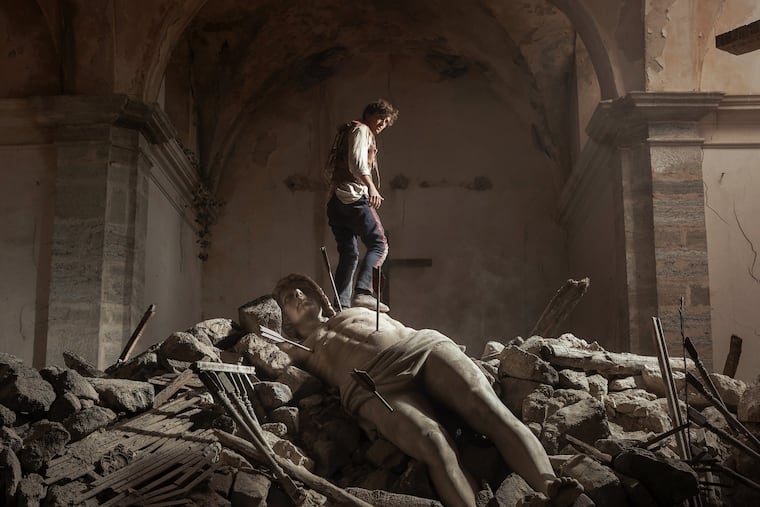
La Bola Negra is a new Spanish film that could be in contention for several Academy Awards. This movie addresses the assassination of the Spanish poet and playwright Federico García Lorca by the Nationalists during the Spanish Civil War as a result of his left-wing political convictions and his homosexuality. Directed by two Spaniards born in the 1980s and 1990s, the film illustrates a growing willingness of these generations to address the memory of the Spanish Civil War, including the repression of queer people during the war and the subsequent dictatorship.
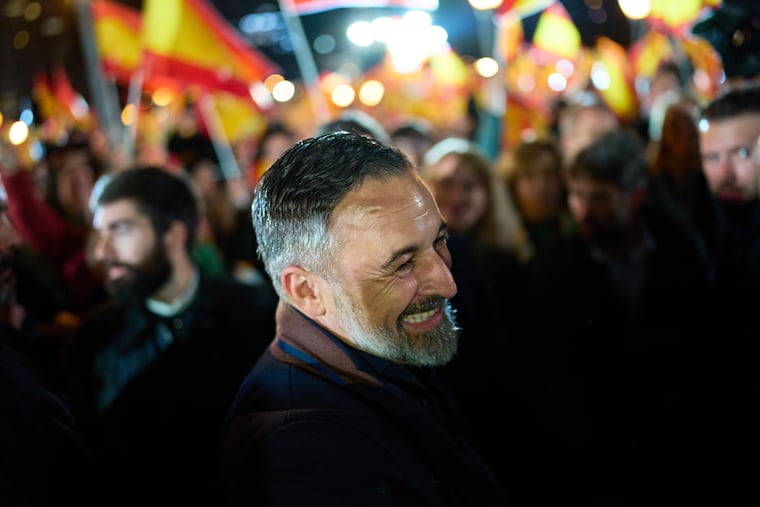
This Sunday, Spain is also heading towards a parliamentary election that could bring the far-right party Vox, some of whose leaders have expressed sympathy for Francoism, into government. The film prompts the country to revisit its traumatic past—and remember the imperative of confronting fascism, in all its forms.
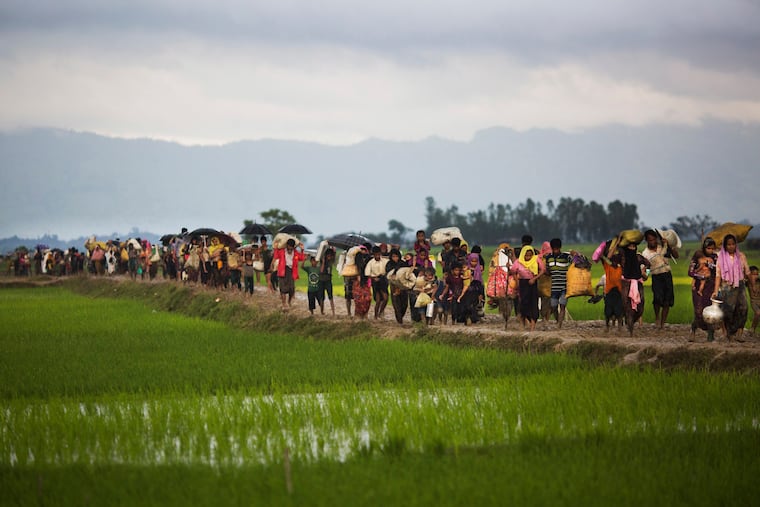
The Spanish Civil War began in mid-July 1936, when a military coup against the democratically-elected government tried and failed to seize control of the entire country. Spain became divided between Republican (or Loyalist) and Nationalist (or Rebel) areas of control, and the ensuing war lasted nearly three years. The Nationalists, led by General Francisco Franco, received crucial military support from Nazi Germany and Fascist Italy. The battlefield losses in Spain were considerable, and the conflict was also marked by widespread violence against civilians as well as mass internal and external displacement.
My own family’s story is emblematic of the repression and victimization that so many Spaniards experienced during the war. In 1936, my paternal grandmother was staying with her grandparents in a small village in the Catalan Pyrenees as her parents were preparing to welcome their third daughter in Santander, in northern Spain. After the coup, she could not return home due to the country’s division. Thus, she remained in Republican-controlled Catalonia, under the care of her grandparents, until the end of the war in April 1939.
My grandmother’s father, Ernesto, was in the military of Spain’s Second Republic. He remained loyal to the Republic and took up arms in its defense. In August 1937, he was killed in the Battle of Santander (featured in the movie), where Italian armed forces supported the Nationalists. At Puerto del Escudo, where he lost his life, a pyramid built in 1939 still stands as a memorial to the Italian soldiers who died there. My great-grandfather and his comrades likely remain in a mass grave; they were never properly buried.
During Franco’s nearly four-decade dictatorship that followed, the regime controlled the official memory of the war, providing symbolic and material reparations only to the victorious side. For example, victims of Republican violence and their families were eligible for pensions and other benefits, and crimes committed in Republican-controlled areas were extensively investigated through La Causa General. By contrast, victims of Nationalist violence received no comparable reparations and were often subjected to stigmatization and various forms of discrimination. Such discrimination also extended to some people associated with the Republican side; for instance, many schoolteachers deemed politically disloyal to the regime were purged from their positions.
After Franco’s death in 1975, Spain began its transition to democracy. As part of this largely elite-driven process, political leaders reached an informal understanding to avoid confronting the legacy of the Civil War and Francoist repression—the so-called Pact of Forgetting. Their assumption was that silence would prevent the reopening of old wounds that could jeopardize the transition to democracy. However, by the late 1990s and early 2000s, a new generation of Spaniards who had grown up in democracy helped amplify longstanding demands that the country confront its violent past and provide recognition and reparations to all victims of the Civil War and the Francoist dictatorship.
In 2007, the center-left government led by José Luis Rodríguez Zapatero enacted Spain’s first Historical Memory Law in a modest step forward in this process. Shortly after, together with Paloma Aguilar and Héctor Cebolla-Boado, we designed a pioneering survey in which Spaniards were asked about their personal and family experiences during the Civil War and dictatorship.
The research we conducted suggested that these experiences with political violence continued to impact political identities long after the establishment of democracy. People who in the survey reported victimization by the Francoists were more likely to identify as left-wing and to support transitional justice policies. Conversely, those who reported victimization by left-wing forces during the Civil War were more likely to identify as right-wing and less likely to support such policies. These patterns emerged intergenerationally and the associations were particularly strong among people who had not experienced the Civil War and Francoist dictatorship firsthand but had learned about them through stories passed down by their parents and grandparents.
That’s the significance of La Bola Negra. While it addresses events from the 1930s, such as the Battle of Santander or Lorca’s bigoted assassination, it also deals with the enduring consequences of trauma across generations. In some cases, these legacies took the form of silence, as seen in the movie with Alberto’s family: this character only learns about his grandfather’s troubled past after the older man passes away. In other cases, as in my own family, these legacies were passed down through open discussion. Until her final days, my grandmother talked about the Civil War, the loss of her father when she was only seven, and the physical separation that the war’s front lines imposed between her and her parents. One of her most striking memories was reuniting with her sisters in 1939: she did not recognize them and had trouble communicating with them because she was mostly speaking Catalan while her sisters spoke only Spanish at the time.
Nearly 20 years after we conducted our survey, historical memory remains polarizing in Spain. With the possibility of Vox entering government, and worrisome signs of Francoism losing its stigma among some segments of the population, the legacies of the country’s Francoist past have acquired renewed political relevance. In this context, La Bola Negra offers a timely reminder of the human consequences of authoritarianism. Yet, the film is not solely about Spain and its history: its themes are universal, as are the experiences of war, loss, repression, and victimization, and its argument about the need to confront fascism in all its forms remains potent.
Laia Balcells, Ph.D., is the Christopher F. Gallagher Family Professor of Government at Georgetown University. She is the author of numerous academic articles and the book Rivalry and Revenge: The Politics of Violence During Civil War (Cambridge University Press, 2017). Her research has been supported by the Harry Frank Guggenheim Foundation, among others.
Made by History takes readers beyond the headlines with articles written and edited by professional historians. Opinions expressed do not necessarily reflect the views of The Inquirer.