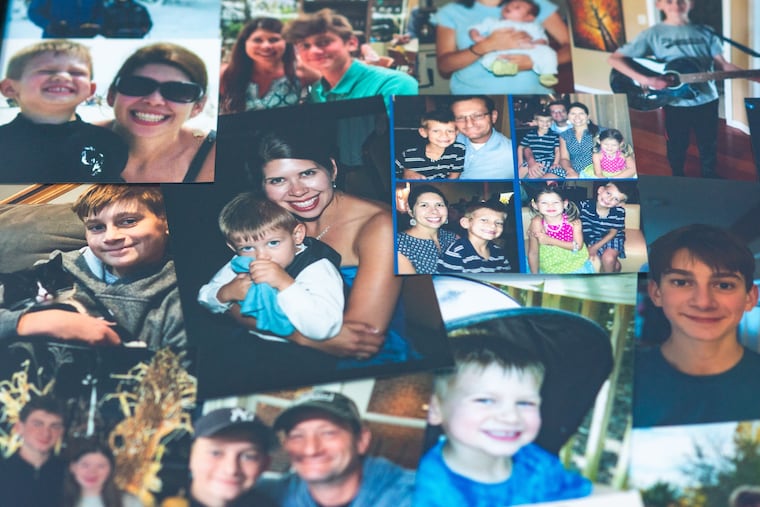
‘It’s kind of like they’re playing puppeteer’
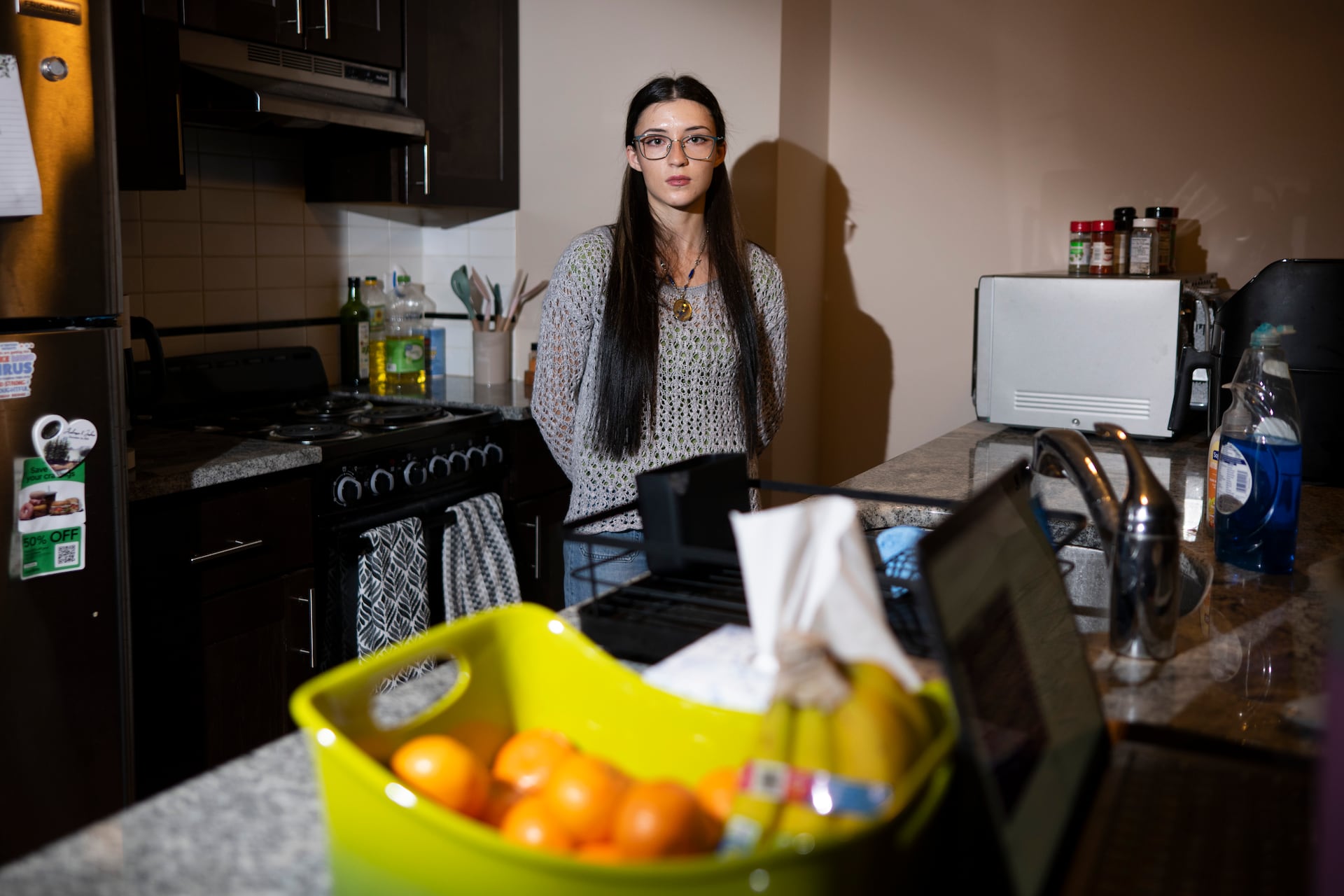
On Wednesday morning, more than 300 people lined a narrow street in Nicetown, waiting to pick up groceries in a parking lot. Some held the hands of young children in puffer coats and winter hats; others gripped canes. Everyone brought reusable bags. Volunteers shouted out the numbers of those whose turn it was, and the crowd amplified the calls: “70s and 80s! 70s and 80s!” When a vehicle approached, protective shouts went up: “Car! Car!”
As federal food aid faltered, residents flocked to this weekly food distribution hosted by TCRC Community Healing Center. Started during the pandemic, the center’s food program is meant to supplement families’ weekly grocery budgets, filling out local fridges with extra vegetables and meat.
But the freeze on the Supplemental Nutrition Assistance Program, or SNAP, meant nonprofit groups like this one found themselves trying to fully provide for hundreds of residents.
“At Broad and Diamond two weeks ago, for the first time since I’ve been doing this, we had people in line and we ran out of food,” said Jondhi Harrell, the executive director of the center, who advised a volunteer on refilling empty crates and slipped extra bananas and lettuce into a customer’s cart as he spoke.
Harrell said the number of people coming to the site had risen by nearly 40% in recent weeks.
Almost half a million Philadelphians rely on SNAP to purchase food for themselves and for their families. But since the federal government shutdown began on Oct. 1, this federal assistance — which in past shutdowns was insulated from political brinkmanship — suddenly became precarious. The Trump administration fought not to fund the food aid.
In Pennsylvania, 190,000 households received their payments last Friday, before a Supreme Court order stopped the state from continuing to send out the money.
Suddenly, a longtime safety net that prevented millions of Americans from going hungry seemed like no net at all. People across the city worried whether they would have enough money to cover groceries as the holidays approached. They checked social media and their prepaid debit cards to see, day by day, whether the money they relied on to eat had come through.
“I was kind of in shock,“ said Anfisa Blyumina, a 22-year-old Temple University student whose SNAP benefits were frozen. ”It didn’t seem like something that could have just been taken away."
» READ MORE: Need food assistance? Here’s where to find free groceries, meals, and community fridges near you.
Now that the government shutdown has ended, the White House said that recipients would see their benefits restored almost immediately.
But the damage may be far more lasting. The Inquirer spoke with people across the city, including mothers with children, students, and elderly residents, to hear how the SNAP freeze affected them — both in the last few weeks and how it might affect the future. Here are their stories in their own words.
These interviews have been edited for length and clarity.
Anfisa Blyumina
Age 22, North Philadelphia, lives with her sister
Senior at Temple University studying communications and sociology, graduating in December
Typically receives $290 per month from SNAP
I’m a student, working as much as I can, studying as much as I can.
I work multiple jobs. My sister works multiple jobs. I’ve been working since age 14 and never really stopped. I work a mentorship job and a restaurant job, 30, 35 hours a week. Schoolwork is for nighttime once I’m home from work, or in between classes.
Every two weeks we go grocery shopping. Aldi has the cheapest food.
I found out about the SNAP freeze on Instagram. I thought, people like to fearmonger a lot. Let me check my COMPASS website [where Pennsylvania residents apply for benefits and manage their cases]. I didn’t want to believe it at first, but when I saw it on there, it seemed inevitable.
I felt a little scared. I had even joked to my friends, this has to be some sort of prank, right? I’ve never seen SNAP be frozen like this. Then I tried to just think, “OK, well, how am I going to get through this month? Will I be able to feasibly survive this?”
Last time my sister and I ordered groceries, we kept in mind that we might not have SNAP benefits. We thought, “What’s necessary for us?” Microwaveable meals because we don’t have a whole lot of time to cook, some fruits and frozen vegetables to hold us over.
It was really difficult to try to keep up with what was happening. My benefits were about a week late, but then they were there.
My family immigrated to the U.S. from Kazakhstan when I was 3, and SNAP was how my family ate for many years. I don’t love being on SNAP, but it helps me survive. I’ve never seen it as a handout.
SNAP has been this constant in my life. It didn’t seem like something that could be taken away so easily.
Lisa Mellon
Age 59, Bridesburg, lives with her 26-year-old son who has a disability
Former hairdresser, currently living with a disability
Typically receives $398 per month from SNAP
I lost $398 a month in food stamps since the government shut down. It’s a disgrace. I have an empty fridge, empty freezer, empty cupboard. Like, nothing. I lost five pounds in the last month.
It’s horrible. I borrowed money from neighbors so we can survive. I have two cats that I love. Sometimes, I’ll make sure they eat and my son eats but I’ll skip meals. It’s bad, but I know people a lot worse off than me.
What if you have lots of little kids to feed? You see more and more of them coming here to Feast of Justice food pantry in Northeast Philadelphia.
I got married at 19, when I was young and dumb. I started cutting hair at 17. In 2012 I had to stop. I got degenerative bone disease and fractured both hips. I became an old lady in my 40s. Then it went to my hands, and I haven’t been able to stand for long enough time to cut hair. And I can’t hold scissors. I get about $1,000 a month in SSI [Supplemental Security Income] for my disability. That’s why losing that $398 in food stamps really hurts.
At home, I ration the pantry food and eat it till it’s gone. First, fruits and meat, then cold cereal and milk, then cold cereal with no milk. I save oatmeal till the end. It fills me up best.
The people at the pantry are awesome, loving, and caring. But I’m still in fear for my son and me. I’m just overwhelmed.
Jasmine Brown
Age 35, Germantown, lives with her 14-year-old son
Works on-call as a board administrator for Weavers Way Co-op, about 10 hours a month
Typically receives about $200 per month from SNAP
I had all these plans to do a Thanksgiving dinner. Every year, I host at my house. Those benefits help supplement the cost of groceries.
My sisters will pitch in for the meal: One sister does string beans, a pot roast. My other sister will do the desserts. Then I’m primarily responsible for the turkey breast and any additional sides — mac and cheese, sweet potatoes, greens. We do a rice and gravy, stuffing. Some cold salads. It’s usually for about 10, 15 of us.
It’s disheartening, it’s disruptive, not knowing when or if I would receive benefits this month.
It’s kind of like they’re playing puppeteer — they’re dangling stuff in front of us and then taking it away. I’m sure the politicians are not in the same position. It’s just kind of unfair to normal people like me.
I actually saw the SNAP freeze on Facebook first. You can’t believe everything you see on Facebook, but my sister, who works for the county assistance office, confirmed it. To keep track of what’s happening now, honestly, I just check my card. Just to see if they loaded the funds on there.
Weavers Way Co-op [which is providing weekly assistance to coop members affected by the freeze or financial hardship] is helping me. They’re playing the part of a hero. It’s kind of like a Band-Aid. I’m eligible for up to $125 per week from them.
I’m preparing for the worst, expecting the best. Preparing myself to not have that assistance. I only have one child — he’s 14, he’s a boy. He eats a lot. Growing boys, they love to eat.
T.W.
Age 25, Olney, lives with her 6-year-old son, 5-year-old daughter, and grandmother
Worked for an Amazon contractor but was laid off in October
She typically receives $700 per month from SNAP
Feeding kids is expensive. My kids are very picky. Growing up, if your mom gives you a peanut butter-jelly sandwich, you’re gonna eat the peanut butter. My kids don’t like peanut butter. They don’t like jelly.
My mom told me about the SNAP freeze. I didn’t really believe it at first, but the more people talked about it, I’m like, “OK, this is serious.”
Honestly, I’m a religious person. I really just leave it in the hands of God. I just pray, I read my Bible. When you put your worries to him, you’ll be fine. My mom’s been helping, my grandma’s been helping.
I have a very hustler mindset. I don’t really look at SNAP like, “Oh, this is the end-all.” I have things that I’m trying to do to better my life, for me and my children. I don’t want to be on government assistance for the rest of my life. But as far as other people, I feel like the freeze is crazy. There’s a lot of people with more kids than me.
I like to cook. The last thing I made was potatoes with ground beef, shredded cheese, tomatoes, cilantro, lemon juice, lime.
If my kids could choose what to eat, my son would eat breakfast all day: grits with turkey sausage, pancakes, waffles. My daughter, she’s a meat-eater. She loves sausage, chicken, turkey.
This month, cooking has been a little rough. I put together some “put-together” meals. The kids don’t notice because they’re picky anyway. They’re gonna eat.
[At TCRC Community Healing Center food distribution], if they’re giving out meat, that’d be nice, because that would be an actual meal I can make. But you take what you can get.
Honestly, the part of Philadelphia I’m from, we already know how to put together meals with whatever we’ve got. I feel like if you have meat, you can do anything — if you have a chicken, if you have ground beef, if you have a hot dog.
Shawn Rinnier and Allan Henderson
Rinnier owns 14 Save A Lot grocery stores in the Philadelphia area
Henderson manages a store location in West Philadelphia where 50% of purchases are made using SNAP electronic benefit transfer cards
We hear the government saying they’ll bring back SNAP, but when? We operate in a low-income area, and 50% of our business is from SNAP benefits. It’s crucial for our customers, but it’s also crucial for our business, since we operate on a razor-sharp line.
If the government allocates multiple days of food stamps in one day, stores are going to be overwhelmed. We just don’t know what’s going to happen. It’s like getting ready for a snow scare. There’s no predictability behind what people will do when they get in here. — Rinnier
In the store, if there are no sales, there’s no payroll. Employee hours have had to get cut. I’ve had to start sending people home because I don’t have anything for them to do. But some of the people losing hours are getting SNAP benefits themselves. So how are they going to survive when they’re hit twice like this, losing pay and losing SNAP?
Since Nov. 1, there’s been an uptick in theft in the store. It’s been frequent. They’re stealing for the center of the dinner plate. They come in with shopping bags, fill them up, then walk out. We’ve had to add a second security guard in here. We get the meat back, and they don’t get arrested.
People just want their benefits, especially women with kids, the elderly, and the disabled on fixed incomes. They don’t know who to point the finger at. It’s just so much frustration now. — Henderson