Why hasn’t Trump sent troops to Philly, the city where ‘bad things happen’? Everyone has a theory.
“We don’t do ourselves a favor by getting panicked in advance, but we also need to be ready," said Pastor Jay Bergen, a leader of No ICE Philly.

In the last six months, President Donald Trump has sent troops, immigration agents, or both to Democratic cities from coast to coast. The list includes Los Angeles, Chicago, Washington, Memphis, Portland, Ore., Charlotte, N.C., New Orleans, and Minneapolis.
But not Philadelphia.
The city that seemed an obvious early target, condemned by Trump as the place where “bad things happen,” has somehow escaped his wrath. At least so far.
That has sparked speculation from City Hall to Washington over why the president would ignore the staunchly Democratic city with which he has famously feuded. Here we offer some insight into whether that’s likely to change.
Why has Philadelphia been spared when smaller, less prominent cities have not?
Nobody knows. Or at least nobody knows for sure. But lots of people in government and immigration circles have ideas.
There’s the weather theory, that it’s hard for immigration agents who depend on cars to make arrests in cities that get winter snow and ice. Except, of course, the administration just launched Immigration and Customs Enforcement operations in Minneapolis, which gets 54 inches of snow a year.
Then there’s the swing-state theory, that Trump is staying out of Philadelphia because Pennsylvania ranks among the handful of states that can tip presidential elections. But that doesn’t explain Trump’s surge into North Carolina, where he sent immigration forces last month.
While the Tar Heel State voted for Trump three times, elections there can be decided by fewer than 3 percentage points.
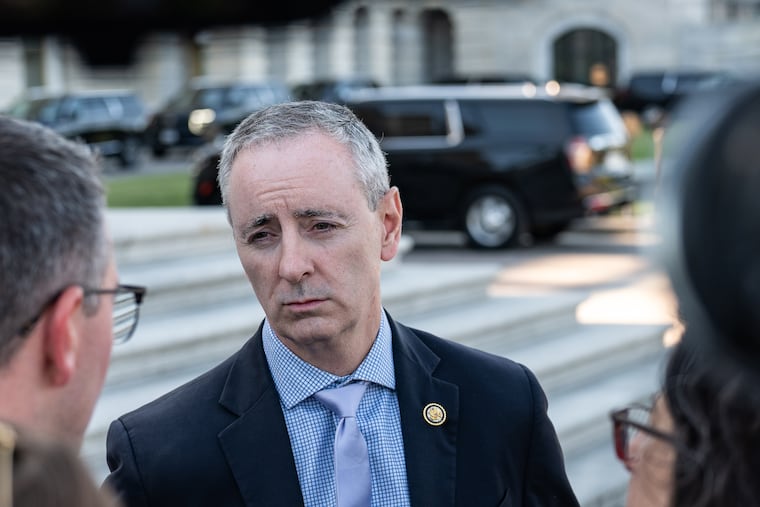
U.S. Rep. Brendan Boyle, a Democrat whose North and Northeast Philadelphia district includes many immigrants, suggested a blue-state theory, that Trump has mostly targeted cities in states that voted for Vice President Kamala Harris in the 2024 presidential election. But Boyle acknowledged that North Carolina and Tennessee are exceptions.
“It could just be that they’re working their way down the list,” Boyle said.
Has Mayor Cherelle L. Parker had a hand in keeping troops out of Philadelphia?
It depends on whom you talk to.
For months she has passed up opportunities to publicly criticize the president, turning aside questions about his intentions by saying she is focused on the needs of Philadelphia. Some believe her more passive approach has kept the city out of the White House crosshairs.
People close to the mayor point out that big-city mayors who land on the president’s bad side have faced big consequences. For instance, in Los Angeles, Mayor Karen Bass frequently clashed with Trump ― and faced a National Guard deployment.
Some point out that Parker has good relationships with Republicans who are friendly with the president, including U.S. Sen. Dave McCormick of Pennsylvania, who has praised the mayor on multiple occasions.
On the other hand, some in the city’s political class ― especially those already skeptical of Parker ― say the suggestion that she has shielded the city gives her too much credit.
One strategist posited that the lack of overt federal action has more to do with Trump’s trying to protect a razor-thin Republican majority in the House, and that targeting Philadelphia could anger voters in the Bucks County and Lehigh Valley districts where Republicans hold seats.
What does Trump say about his plans for Philadelphia?
Not much. Or at least nothing specific.
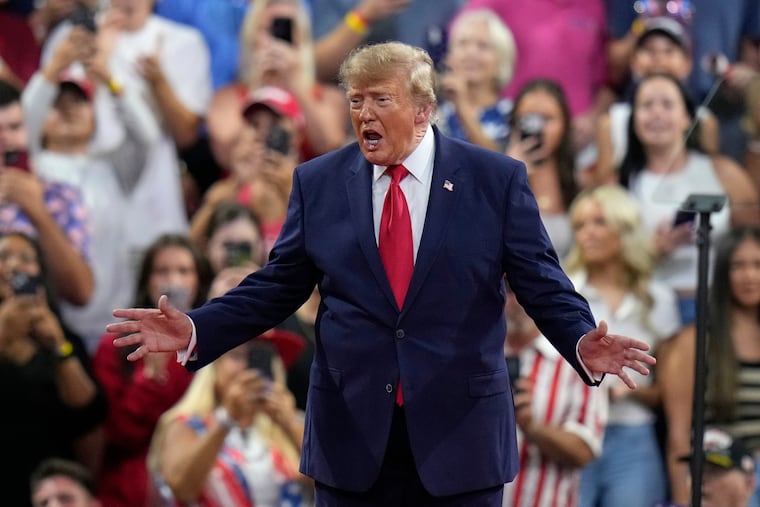
During a raucous campaign-style rally Tuesday night in Northeast Pennsylvania, Trump made no mention of his intentions ― even as he railed against immigration and accused Democrats of making the state a “dumping ground” for immigrants.
Trump suggested there should be a “permanent pause” on immigration from “hellholes like Afghanistan, Haiti, Somalia and many other countries,” declared Washington the safest it has been in decades, and praised ICE as “incredible.”
He also reminisced about hosting the Philadelphia Eagles at the White House earlier this year, after their Super Bowl win, hailing head coach Nick Sirianni as a “real leader” and marveling at running back Saquon Barkley’s muscles.
“I love Philadelphia,” Trump declared. “It’s gotten a little rougher, but we will take it.”
That was a marked change from a decade ago, when Trump called Jim Kenney a “terrible” mayor, and Kenney called him a “nincompoop.”
Kenney fought Trump in court and won in 2018, when a U.S. District Court judge ruled that the president could not end federal grants based on how the city treats immigrants. After the ruling, the Irish mayor was captured on video dancing a jig and calling out “Sanctuary City!”
More recently, in May, Philadelphia landed on Trump’s list of more than 500 sanctuary jurisdictions that he planned to target for funding cuts. That was no surprise. Nor was it surprising that in August, when the administration zapped hundreds of places off that list, Philadelphia was among the 18 cities that remained.
“I don’t know why they’re not here yet,” said Peter Pedemonti, codirector of New Sanctuary Movement of Philadelphia. But the larger point is that “ICE is in neighborhoods every day, they are taking away people every day,” and he urged those who support immigrants to prepare.
“Now is the time to get involved with organizations that are organizing around this,” Pedemonti said. “There are neighbors who need us.”
Has Gov. Josh Shapiro helped dissuade federal action in Philadelphia?
It’s hard to say. Shapiro has challenged Trump in court multiple times, including when he was the state attorney general during Trump’s first term.
As governor, Shapiro sued the administration over its move to freeze billions in federal funds for public health programs, infrastructure projects, and farm and food bank contracts. He also joined a multistate suit challenging an executive order that restricted gender-affirming care for minors.
On immigration, however, Shapiro has been careful not to directly engage in the sanctuary city debate, saying his job is to provide opportunity for all Pennsylvanians. But he has been critical of Trump’s enforcement tactics, calling them fear-inducing and detrimental to the state’s economy and safety.
Still, Trump has not lashed out at Shapiro, a popular swing-state governor. At his rally in Mount Pocono last week, in which he criticized several Democrats, Trump didn’t mention Shapiro ― or the Republican in attendance who is running against the governor in 2026, Stacy Garrity.
Why is the president sending troops to American cities in the first place? Isn’t that unusual?
Highly unusual ― and fought in court by the leaders of many of the cities that have been targeted. On Wednesday, a federal judge blocked Trump’s deployment of troops to Los Angeles, saying it was “profoundly un-American” to suggest that peaceful protesters “constitute a risk justifying the federalization of military forces.”
Trump says the National Guard is needed to end violence, to help support deportations, and to fight crime in Democratic-run cities. Last week he declared that Democrats were “destroying” Charlotte, after a Honduran man who had twice been deported allegedly stabbed a person on a commuter train.
Two members of the West Virginia National Guard were hospitalized in critical condition ― one subsequently died ― after being shot by a gunman in Washington the day before Thanksgiving.
That the attack was allegedly carried out by an Afghan man who had been granted asylum helped spark a wave of immigration policy changes, all in the name of greater security. For some immigrants who are attempting to legally stay in the country, that has resulted in the cancellation of citizenship ceremonies and the freezing of asylum processes.
So what happens next?
It’s hard to say. Immigration enforcement will surely continue to toughen.
More immigrants are being arrested when they show up for what they expect to be routine immigration appointments, suddenly finding themselves handcuffed and whisked into detention. In Philadelphia this year, more than 90 immigrants have been trailed from the Criminal Justice Center by ICE agents and then arrested on the sidewalks outside, according to advocates who are pushing the sheriff to ban the agency from the courthouse.
But it’s difficult to predict when or whether troops might land on Market Street.
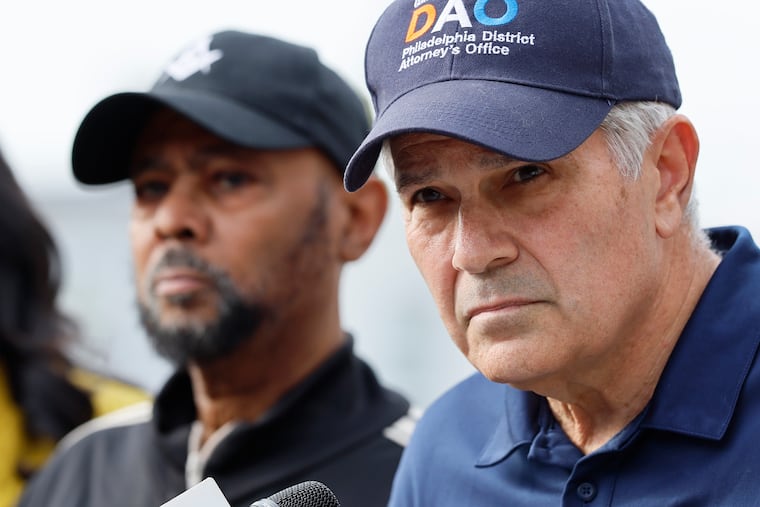
“I’ve heard so many different theories,” said Jay Bergen, the pastor at Germantown Mennonite Church, who has helped lead demonstrations against courthouse arrests. “It’s probably all of them ― a little bit of the way Shapiro has positioned himself, the way the mayor has positioned herself, a little bit the electoral map of Pennsylvania, a little bit, more than a little bit, Trump’s own personality.”
That Philadelphia has been ignored to date doesn’t mean it won’t be in Trump’s sights tomorrow, Bergen said.
“This administration thrives on being unpredictable, and on sowing as much exhaustion and pain as possible,” Bergen said. “We don’t do ourselves a favor by getting panicked in advance, but we also need to be ready.”