Trump administration moves to close AI chip loophole before China trip
The rule aims to close what many in Washington see as a loophole that has allowed China to sidestep a Commerce Department ban that prevents Chinese firms from buying the most advanced AI chips.
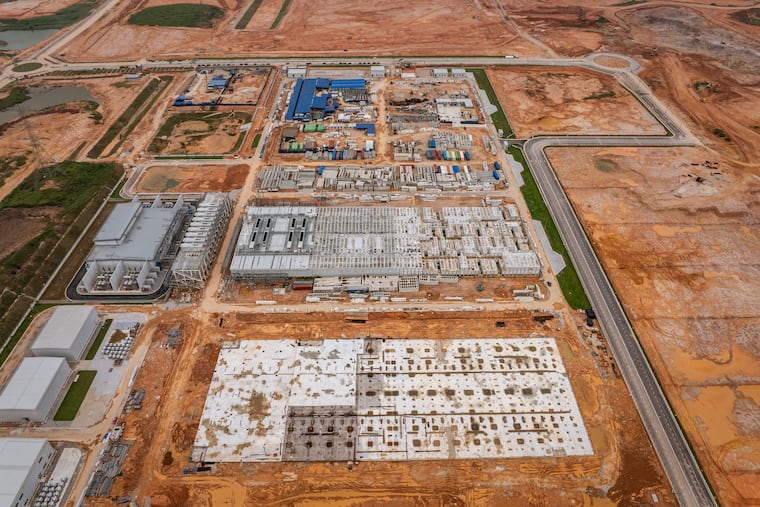
WASHINGTON — The Trump administration said Monday that it was moving forward with a new rule that would clamp down on China’s ability to access advanced artificial intelligence chips through the use of data centers outside China’s borders.
The rule aims to close what many in Washington see as a loophole that has allowed China to sidestep a Commerce Department ban that prevents Chinese firms from buying the most advanced AI chips made by companies like Nvidia. China’s ability to continue accessing the chips by renting them from data centers in Southeast Asian countries and elsewhere has been a significant source of contention within the Trump administration.
The new rule establishes restrictions for overseas data centers that supply “significant volumes of computing power” to firms with headquarters in a small group of high-risk countries, a list that includes China, Russia, and Iran. Data centers are also required to perform due diligence on their customers. The provision, which goes into effect in 90 days, will “undermine” the ability of companies in those countries to use U.S. chips to train advanced AI models, the release said.
It will also require a license to export advanced chips to companies with headquarters in Indonesia, Malaysia, Singapore, Thailand, or Brazil, which have a higher than normal risk of smuggling, the administration said.
The plan to restrict that loophole comes just days before President Donald Trump is scheduled to travel to China for an economic summit, where he will also meet with the Chinese leader, Xi Jinping.
Share prices of chip stocks tumbled Monday morning. Nvidia fell more than 2%. Intel fell more than 6% and Micron more than 7%. Indexes that track these stocks fell too — the Philadelphia Semiconductor index sank more than 5%, and the broader, tech-heavy Nasdaq opened in the red, too.
The formerly obscure issue has become more prominent in recent weeks with the revelations about Megaspeed, a Singaporean data center firm created by a woman who had an affair with Jensen Huang, who was ousted as Nvidia’s CEO last week. U.S. authorities deemed the woman, Alice Huang, to be an asset for Chinese intelligence services, and they are investigating Megaspeed over allegations of smuggling chips to China.
That scandal has turned foreign data centers into a subject of debate at the highest levels of the administration, with the Commerce Department, which oversees the regulations, clashing over them with other parts of the government. The announcement Monday said the new rule was “written by and at the direction of the Department of Treasury and the National Security Council” — both agencies that have pushed for more stringent rules.
In recent months, Treasury Secretary Scott Bessent, Secretary of State Marco Rubio, and the U.S. trade representative, Jamieson Greer, have all pushed to reinstate broad restrictions on data centers, amid concerns about Nvidia’s advanced chips reaching China.
But they faced pushback from Commerce Secretary Howard Lutnick, who oversees chip export policy. Lutnick had pushed for a leaner version of the rules, one that would be less onerous for Nvidia and foreign data centers.
Those tensions spilled out into the open Friday, when Bessent blamed Lutnick’s department in a TV interview for failing to sanction Megaspeed, saying that other departments had pushed for the measure but that the Commerce Department “has the pen.” He added that Nvidia should be “held accountable” if it did not do enough to prevent illegal diversion of chips to China.
While the new rule appeared to be fairly stringent, analysts said that its enforcement would be up to the Commerce Department, and it remained to be seen how the department would put it in place.
Megaspeed’s business, the operation of data centers in Southeast Asia that remotely serve Chinese clients, is legal. That means Chinese companies that are blocked from buying advanced Nvidia chips directly can simply rent them through other Southeast Asian firms.
Nvidia and its proponents contend that the sales help create jobs in the United States and ensure that companies around the world are reliant on American technology.
But some officials in the Trump administration and in Congress increasingly appear to believe that Chinese access to these data centers has undercut U.S. export controls and allowed China’s AI ecosystem to flourish. Some worry this could give Beijing an economic edge, as well as a military one.
In a news release, the Commerce Department said the rule was “designed to ensure that existing restrictions on access to sensitive American technology cannot be circumvented through remote computing arrangements involving data centers in third countries.”
The move would bring U.S. rules on remote access of data centers into alignment with its rules on the physical shipment of sensitive American technology, the department said.
Just before leaving office, the Biden administration issued global rules on chip sales, including restrictions on Chinese firms remotely accessing data centers. Trump officials said they would no longer enforce the rules after Trump won another term, and in May 2025 they officially rescinded the restrictions.
Since then, various draft versions of the rules have gained momentum in the government, only to be shot down by opponents.
It remains to be seen whether the new rules will trigger blowback from China. Trump heads to Asia this week and arrives in China on Wednesday for meetings that are expected to address the war in Iran, nuclear nonproliferation and trade.
This article originally appeared in the New York Times.