Trump’s Board of Peace lowers ambitions as peace plan lags
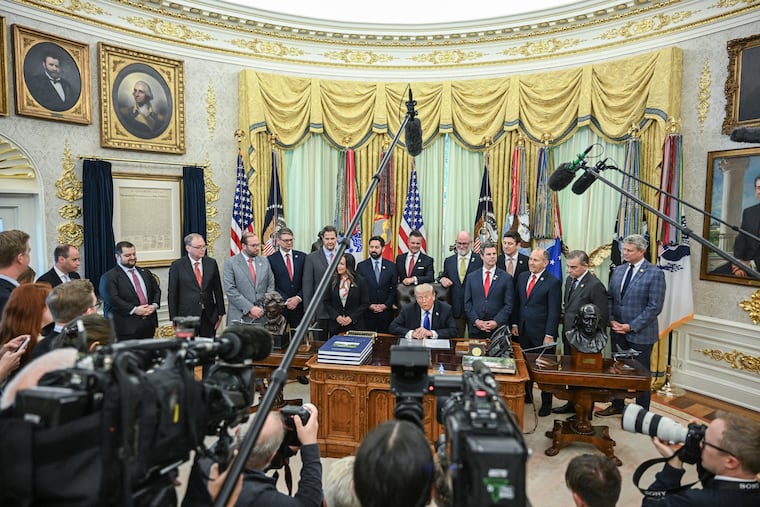
Israel’s right-wing government and the Board of Peace created by President Donald Trump to implement his Gaza peace plan appear on a collision course over the future of the enclave.
Israel’s right-wing government and the Board of Peace created by President Donald Trump to implement his Gaza peace plan appear on a collision course over the future of the enclave.
“We are coming home. Gaza is ours,” National Security Minister Itamar Ben Gvir said as he led a demonstration of hundreds of supporters, along with other Israeli government ministers and lawmakers, to the northern Gaza border July 19.
A number of Israeli officials, without contradiction by Prime Minister Benjamin Netanyahu, have said that Israel is not leaving Gaza and vowed to reestablish settlements that were dismantled when it agreed to “disengage” from the enclave more than a decade ago.
A White House official confirmed that Trump will meet Tuesday with Netanyahu, who is traveling to Washington to attend a memorial service for Sen. Lindsey Graham. The meeting is likely to center on Iran and Trump’s peace efforts in Lebanon.
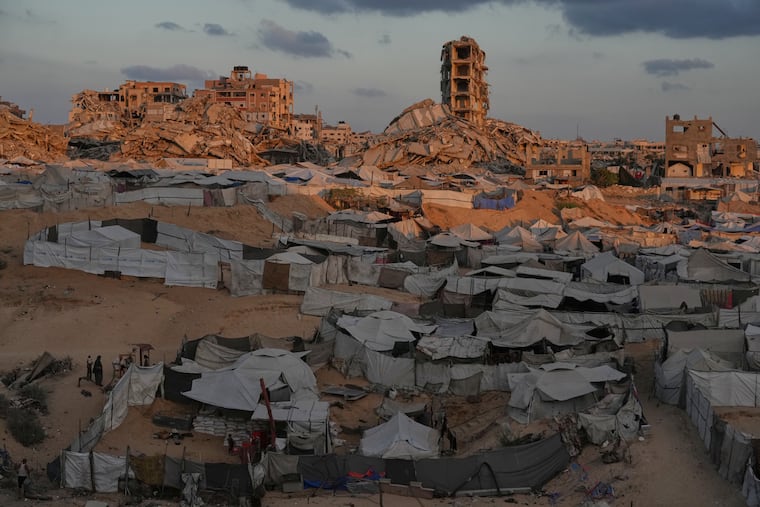
Trump’s Board of Peace has struggled to make progress moving beyond the first phase of his plan, which included the release of all remaining Hamas-held hostages and a ceasefire that left what is now more than 60% of Gaza cleared of Palestinians and occupied by the Israel Defense Forces, and the rest controlled by Hamas.
Phase Two outlines a sequenced disarmament of Hamas, Israeli withdrawal, and installation of an interim Palestinian government and police force with security provided by an International Stabilization force while internationally financed reconstruction of Gaza takes place.
Earlier this month, Board of Peace officials briefed Congress on a new element of the plan that would precede those stalemated steps with construction of a pilot “humanitarian and governance zone” for about 50,000 Gazans who agree to live there.
The briefing was intended to demonstrate progress and transparency to skeptical lawmakers and others who have questioned what the board has achieved thus far.
While international humanitarian agencies last week noted improvement in food access, the World Food Program said that “the overall humanitarian situation remains brutal” for the up to 2 million Gazans who remain in the truncated, Hamas-controlled part of the enclave, surrounded by the IDF. “Families lack water, sanitation, and medicine,” the WFP said, citing continued problems of international funding and Israeli-restricted humanitarian access.
The pilot community is to be located in an IDF-controlled area near the now-razed city of Rafah in southern Gaza, according to Board of Peace officials. The officials said it will be separated from the Israelis by a still-to-be formed international force composed of foreign troops and commanded by U.S. Army Maj. Gen. Jasper Jeffers.
Gazans who have strayed, intentionally or not, across the current dividing line between Israeli and Hamas control — marked by the IDF with widely spaced, yellow concrete blocks that have gradually been moved inward to consume more of Gaza — have been shot at regularly by Israeli troops; some have been killed.
The current position of the so-called “yellow line,” which Netanyahu said in May he had ordered extended to 70% of Gaza, is far beyond the 53% allotted under the peace deal. IDF Gen. Eyal Zamir has described the line as Israel’s “new border,” where the military exercises “operational control.” The IDF has said it gives warnings before using lethal force against anyone crossing the line.
On the eve of Netanyahu’s visit to Washington, Israel’s security cabinet on Sunday said that, in principle, it would allow the international force to enter the Israeli-controlled area in support of the planned pilot community.
According to Israeli news accounts of the cabinet meeting, any Palestinian moving to the pilot community would have to be individually screened for ties to Hamas, and the entry of any foreign troops would have to be directly approved by Netanyahu and his foreign and defense ministers.
But “it’s unclear whether Palestinian civilians would find that to be a sufficiently secure arrangement and would feel comfortable doing it,” said former U.S. ambassador to Israel Dan Shapiro, now at the Atlantic Council think tank.
“The model is a little bit bizarre in the idea that it says to Palestinians who are not currently under Israeli control, come live under Israeli control. It’s better for you,” Shapiro said.
According to a senior Board of Peace official, who spoke in an interview on the condition they not be identified by name, Palestinians who agreed to move into the pilot area would be free to come and go into Hamas-controlled Gaza at any time.
The official described the pilot project as “serious temporary housing.” They estimated that it will cost $150 million — including humanitarian and medical needs and — and completed before the end of this year.
The planned humanitarian zone, called “New Rafah,” would be a far cry from the ambitious redevelopment of Gaza into a high-tech industrial center and waterfront resort, with high-rise residential communities, high-speed transportation and parks, outlined by Trump negotiator and son-in-law Jared Kushner.
When he introduced what he called “New Gaza” in January at the World Economic Forum in Davos, where world leaders first signed up for the Board of Peace, Kushner said demolition and removal of unexploded ordnance, at least in the Israeli-occupied portion of Gaza, had already commenced. Construction of New Gaza, he said, would begin under the second phase of Trump’s peace plan.
“We’re looking to cultivate a very deep relationship with both chambers and across the aisle” in Congress, the Board of Peace official said, adding that they planned to appoint a permanent congressional liaison. A second official said that in the briefings, the board was “signaling its readiness to receive $200 million” from a State Department peacekeeping account to add to what is now about $300 million that other countries have donated for overall Gaza renewal.
The State Department did not respond to specific questions about peacekeeping funds but said that it “continues to evaluate how existing authorities, programs, and interagency coordination can best support” the peace and stability objectives laid out in Trump’s plan.
So far, Bahrain and Morocco have publicly acknowledged contributing funds to the endeavor, plus what the senior official said were “other folks who I don’t think are out there yet.” This month, the European Commission and 15 European countries agreed to provide around $1 billion “to support the implementation of ongoing and planned early recovery projects” for Gaza.
Asked whether that money would go into private Board of Peace accounts at J.P. Morgan or a World Bank account that is part of Trump’s peace plan, and thus available for the pilot project, a European Commission spokesperson said each donor nation would decide where and through what channels it wanted its specific contribution to go.
Spokespeople for staff of the House Foreign Affairs Committee and Senate Foreign Relations and Appropriations Committees declined to comment on the briefings by Jeffers, Board of Peace adviser Joshua Gruenbaum and retired Lt. Gen. Mark Schwartz, who is organizing a civilian Palestinian police force.
While refinements in the Trump plan made by Board of Peace High Representative Nickolay Mladenov spell out in detail partial Hamas disarmament and IDF withdrawals in reciprocal sequence, neither side trusts the other and each has adopted a “you first” stance.
The pilot project “makes sense in that while disarmament [of Hamas] is not moving forward,” the Board of Peace is “looking for some way to show other elements of the plan can advance,” Shapiro said. “None of this is easy. The Israelis are very resistant to it because they want to prioritize disarmament. … And there may be political factors” in the run-up to Israel’s October elections.
Last week, Hamas announced selection of a new leader, Khalil al-Hayya, to replace Yahya Sinwar, killed by the IDF in Gaza in 2024. One of his priorities, al-Hayya said in a televised address, was “to accelerate and carry out reconstruction … not a gift or favor from anyone” and not tied to any “trade-offs, concessions, or political positions.”
He offered no explanation of how that would be accomplished.
The senior Board of Peace official said that some progress was being made in negotiations with Hamas over turning over their weapons in sequence with Israeli withdrawal, and expressed little concern about any intransigence by Israel.
“A lot of times what politicians in the Middle East tell you is not exactly what is happening in reality,” the official said. “We have really good relationships with Prime Minister Netanyahu and his team. I think when we are ready to go deploy that first pilot program, they’re going to be committed to making sure it’s a success.”