How Nvidia fought for years in Washington to sell its prized chips to China
The revelations have raised questions about why Nvidia fought so hard to secure access to China, even as American companies clamored for its AI hardware.
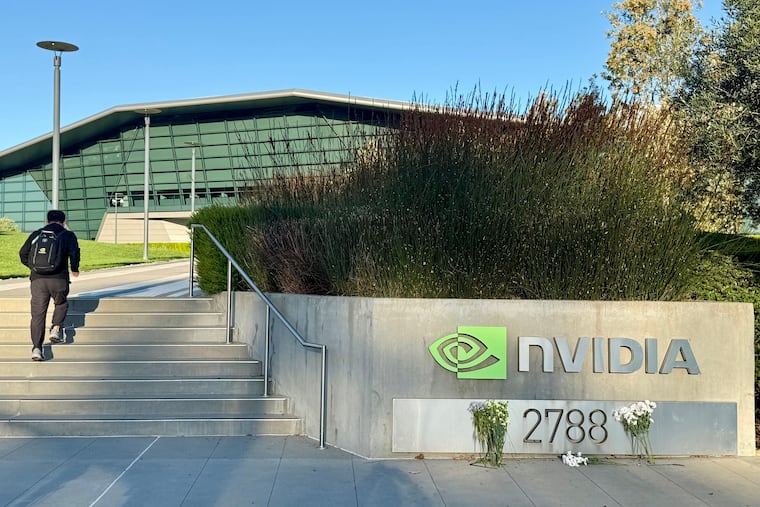
For years, Nvidia founder Jensen Huang and his lobbyists barreled through Washington seeking to secure the company’s right to sell its powerful artificial intelligence chips to China.
The company’s campaign involved Huang himself making calls, according to two people familiar with its approach, who spoke on the condition of anonymity to describe private meetings. One of them described the company as lobbying, “constantly and aggressively.”
Chris McGuire, a former National Security Council official who helped design the first restrictions on AI chip exports in the Biden administration, said the rules were the product of painstaking analysis drawing on public data, industry information and material gathered by the intelligence community, to determine how best to protect American security.
Seeking to push back, McGuire said Nvidia took a different approach: “They would come in and yell on vibes or on numbers that were very wrong.”
Nvidia’s footing in Washington slipped dramatically this month after Huang resigned and admitted to an affair with a woman suspected of being a Chinese spy, who ran a company that is facing an investigation into whether it was involved in a vast black market for Nvidia chips.
The revelations have raised questions about why Nvidia fought so hard to secure access to China, even as American companies clamored for its AI hardware — and the hardball tactics it used to try to erode roadblocks designed to keep its most powerful technology out of Chinese hands.
In an effort to increase his influence, Huang developed a close relationship with President Donald Trump and the company employed bold tactics that fostered mistrust in Washington, according to 10 congressional aides, former officials and others familiar with the company’s approach. Many of the people spoke on the condition of anonymity to describe private meetings and deliberations.
When lawmakers proposed in May 2025 requiring technology on AI chips so they could be tracked to deter smuggling, Nvidia pushed back. The company told lawmakers’ offices that the idea would be all but impossible to implement, and “defy the laws of physics,” according to a Senate aide. A few months later the company announced that it was releasing its own tracking software.
“We knew from that moment that they’re not going to be very honest in their dealings with us and Congress,” said the aide, who spoke on the condition of anonymity to describe private meetings.
Nvidia did not respond to a request for comment.
To a growing number of officials in Washington, restricting exports of powerful AI chips is a matter of national security — a means to keeping America’s edge in a technology poised to remake the competition between the world’s two superpowers.
One early warning came in June 2022, when researchers at Georgetown University released an analysis of Chinese military and corporate records showing its armed forces were obtaining AI chips from Nvidia and other American firms — technology that was supporting their modernization efforts.
For Nvidia, the allure of China was simple. The country is home to world-class AI experts who are building technology that is just a few months behind their American rivals, and to pursue their work they need data centers packed with top-flight computer chips.
Nvidia’s corporate filings show that it is dependent on three big customers for almost half its revenue. And as big U.S. customers look to design their own chips, access to Chinese buyers would be a source of security for Nvidia.
“This totally makes economic sense for Nvidia,” said Tim Fist, the president of the Institute for Progress, a think tank focused on technology. “Even though the demand for its chips in the U.S. outstrips supply.”
Only a small share of Nvidia’s revenue is linked to China’s AI companies, according to analysts’ estimates. But losing access to the country could represent a significant long-term threat, as China’s tech giants work to improve their own chips.
“If you give China no U.S. chips, it will make domestic competition that much more formidable,” technology analyst Dan Ives said.
Huang told Wall Street analysts on an August 2025 earnings call that China represented a $50 billion-a-year opportunity. He acknowledged that tapping that market required Washington, saying he would continue to make the case with Trump administration about “the importance of American tech companies to be able to lead and win the AI race.”
And when Biden administration officials first imposed export controls in late 2022, restricting the most advanced chips from being sold to China, Nvidia’s engineers quickly designed new kinds of chips just below the thresholds in the government’s rules. Huang told analysts at the time that the chip “meets the clear test in letter and in spirit.”
By 2025, lawmakers were exploring a more sweeping approach to controlling where domestic AI chips could be sold.
One early proposal cut to the heart of the global scramble for AI computing power. It would have required chipmakers to sell to American customers ahead of those in China and other rival nations — a potential boon for some of Nvidia’s biggest customers, who have long desired more chips than the company could sell them.
On stage at a conference last October, a manager on Microsoft’s policy team said the bill looked “really positive,” a moment that underscored the diverging interests of Nvidia and a major buyer of its hardware.
But with Huang ascendant in Washington, the bill stalled. And in December, the president approved exports of a new class of the company’s chips to China. The chips, known as H200s, were one generation removed from the company’s most powerful, but the move was a clear sign that the administration was open to China buying more advanced American technology.
For the Commerce Department staff responsible for overseeing the rules, a former agency official said, the decision was a “watershed moment.”
Nvidia almost immediately began filing applications to sell millions of chips to Chinese firms, according to documents released by the House Foreign Affairs Committee on Thursday. The applications included major Chinese companies like Alibaba and Tencent that the Pentagon has tagged as having connections to the nation’s military.
A Trump appointee at the department expedited the approval of the licenses, The Washington Post previously reported. The company has said the licenses were subject to months of government scrutiny and that the sales were legal.
The Commerce Department did not respond to requests for comment.
By May, the Commerce Department had signed off on sales of almost 580,000 Nvidia chips, according to the documents.
The documents date back to May and don’t reflect final shipments and the value of the orders is redacted, but the company said this week that it had made $2.4 billion in sales to China under the licenses in the most recent quarter.
Huang’s ouster in the midst of a Chinese spying scandal has rapidly upended the company’s — and Washington’s — approach.
Colette Kress, who stepped in as the company’s interim CEO, said this week she was shutting down Chinese sales of H200s. Trump administration officials issued new rules designed to close a loophole that let Chinese firms access restricted top-tier Nvidia tech using data centers elsewhere in Asia. And lawmakers are poised to implement further rules, with congressional leaders saying they back the effort.
Nvidia’s board said it is launching a new committee focused on national security and export controls.
“We are committed to working constructively with government and industry partners to help establish and advance a robust framework that uses every tool at our disposal to safeguard national security while supporting continued technological innovation,” Harvey Jones, the board’s chairman, said in a statement.
Though Kress said she was ending some sales to China, Nvidia does not expect tightening controls to hurt its bottom line. There’s more than enough demand for its chips elsewhere.