Arson attacks by Israeli settlers in West Bank add to tense political debate
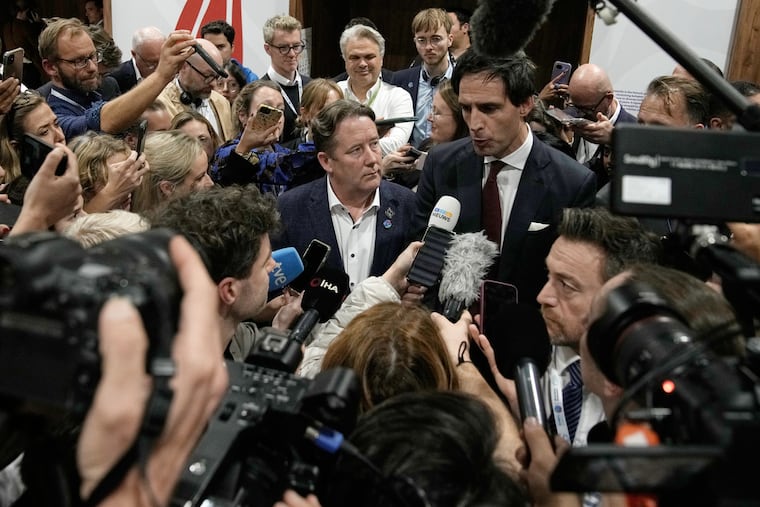
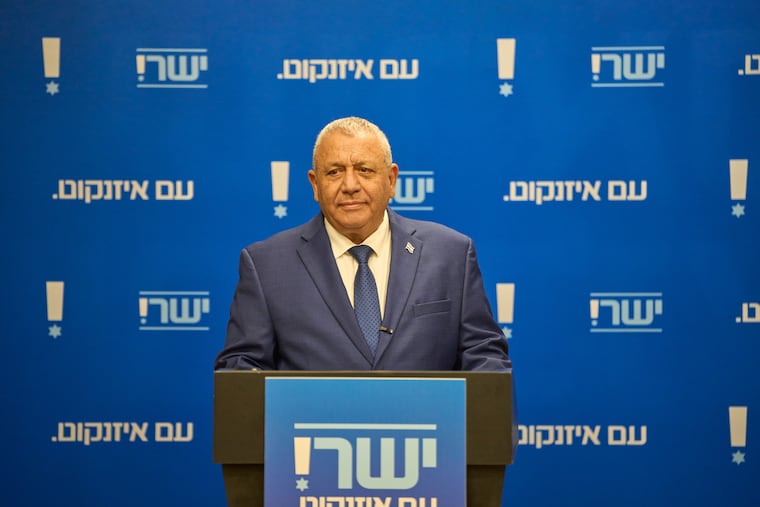
Opposition bloc leader Gadi Eisenkot, who is trying to form a government that would replace Prime Minister Benjamin Netanyahu, condemned the attacks as “Jewish terrorism.”
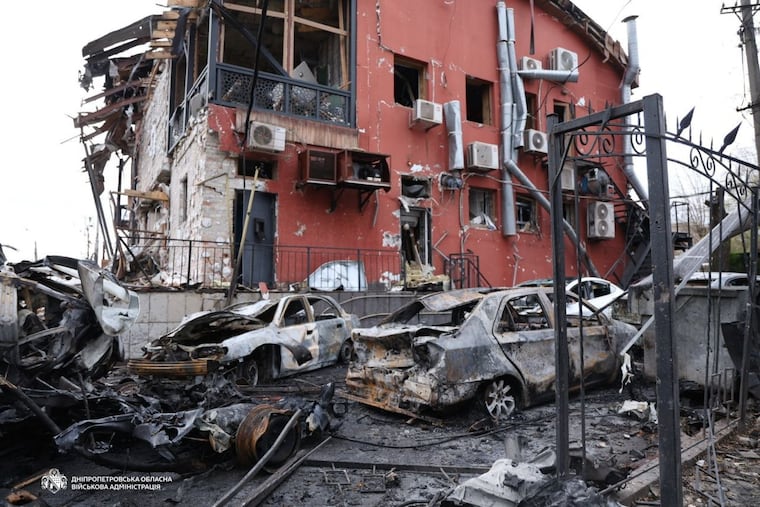
TEL AVIV — In a string of arson and vandalism attacks overnight Saturday, Israeli settlers burned cars and sprayed graffiti in at least four towns in the West Bank, prompting law enforcement authorities to open an investigation and the Israel Defense Forces to complain that military resources were being diverted to deal with settler violence.
Opposition bloc leader Gadi Eisenkot, who is trying to form a government that would replace Prime Minister Benjamin Netanyahu, condemned the attacks as “Jewish terrorism,” and the settler incidents quickly moved to the center of Israeli national politics.
Eisenkot’s allies said the attacks showed the need to oust Netanyahu and his hard-line, pro-settler coalition partners. Netanyahu’s backers accused the opposition of exaggerating the incidents and voicing outrage to win the support of Arab parties in forming a government.
Itamar Ben Gvir, Netanyahu’s pro-settler, far-right national security minister, said Eisenkot’s rush to call the attacks “Jewish terrorism” was “just a down payment” to the Arab Joint List, “ahead of the day his government is formed with the help of terror supporters.”
Other politicians, however, said Netanyahu’s government had spurred a sharp acceleration of settler violence and then turned a blind eye to the crimes.
“Settler terrorism in the West Bank does not happen in a vacuum,” said Yousef Jabareen, the chair of the Joint List, an Arab party that won an unprecedented 11 seats in the Oct. 27 election. “It is the direct result of the deepening occupation and of a government policy under which violence against Palestinians has become an everyday routine.”
The military said security forces were dispatched overnight “to the areas of Deir as-Sudan, Deir Abu Masha’al, Kafr Malik, and At-Tuwani, following reports and footage showing vehicles being set on fire and graffiti being sprayed in the area.”
“The IDF strongly condemns acts of violence of this nature, which harm public order, divert forces from their primary missions, and hinder ongoing operational and counterterrorism activities,” the military said in a statement.
An Israeli police spokesperson said that “following incidents of arson, graffiti spraying, and property damage at four locations in the Judea and Samaria area … the Judea and Samaria District Police have opened an investigation.” Police have not yet announced any arrests.
Judea and Samaria are Jewish biblical names that Israelis often use to describe the West Bank.
Jehad Ghunaimat, 53, a resident of Kfar Malek, a West Bank village northeast of Ramallah, said about 15 masked settlers attacked around midnight and burned seven vehicles that belonged to his family. “They drew hate slogans and graffiti on the house walls,” Ghunaimat said.
The graffiti, he said, included a warning: “This is the beginning, revenge is yet to come”
Israeli military forces arrived at 4 a.m., Ghunaimat said, and returned several hours later with police to check for evidence. He said the settlers came from the direction of the new outpost between Kfar Malek and another village, Mughayer, about 4½ miles away.
Yair Golan, chair of the left-wing Democrats party and an ally of Eisenkot, said Netanyahu’s government “is giving a tailwind to Jewish terrorism and abandoning security.”
“Jewish terrorism harms innocent Palestinians and IDF soldiers, and is driving Israel into unprecedented international isolation,” Golan said, posting on X. He pledged that a new government would shift course.
“In the government we form, there will be zero tolerance for all terrorism, Palestinian or Jewish,” he wrote, adding that a new coalition “will bring back administrative detentions.”
The controversial practice of administrative detentions, which Israel uses widely against Palestinians, allows security forces to detain people without trial, on the defense minister’s signature. Defense Minister Israel Katz ended its use against Jews in the West Bank shortly after taking office in November 2024.