Commerce Department chip inquiry was halted after Nvidia intervention
Officials described the way the case was handed off from the Commerce Department to the Justice Department as unusual and concerning.
WASHINGTON — Investigators at the Commerce Department were deep into a monthslong investigation of a Singaporean company that they suspected of smuggling Nvidia’s artificial intelligence chips into China when their work came to a sudden halt late last year.
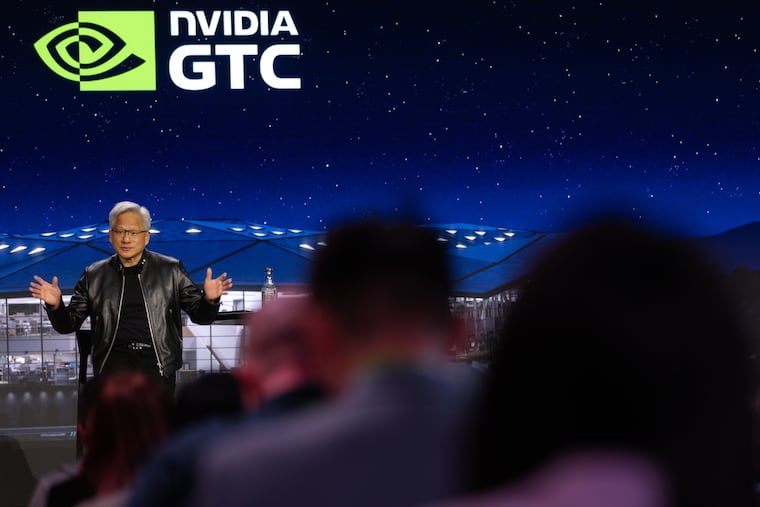
The investigation centered on Megaspeed, a data center company led by an executive who U.S. officials now believe to be a Chinese spy who had a relationship with Nvidia’s CEO, Jensen Huang.
But the case was abruptly transferred to the Justice Department last year. The shift came after Commerce Department investigators working on the case received an email from Nvidia’s general counsel seeking information about the inquiry into Megaspeed.
It is not necessarily unusual for Commerce Department agents working on a case to speak with a company’s representatives about issues involving their firm. But what was unusual was the content of the message. Tim Teter, Nvidia’s general counsel, said that Jeff Kessler, a top official at the department, had given Nvidia permission to reach out about the case.
The agents were alarmed that Nvidia had invoked the name of Kessler, their superior, who was nominated to his role by President Donald Trump. Some viewed Kessler’s interaction with Nvidia as violating government procedure and potentially tainting the case, according to current and former government officials and others familiar with the incident.
It is not clear what led to Teter’s outreach to the department, but the recent revelations about Huang’s acknowledged affair with a Megaspeed executive have only intensified scrutiny of Nvidia’s role in influencing policy on chip sales to China. The New York Times reported last month that the U.S. government had concluded that Huang Le, or Alice Huang, a top executive at the firm, was a spy working on behalf of the Chinese government.
On Sunday, Nvidia said it was opening an investigation into Jensen Huang, after he acknowledged to the company’s board that he had been intimate with Alice Huang. The pair, who are not related, had been photographed together on multiple occasions, including at a bar and a restaurant in Taiwan alongside other tech executives.
The incident raised questions about what Kessler, who reports directly to Commerce Secretary Howard Lutnick, had discussed with Nvidia. It also raised the possibility that those discussions could become their own subject of inquiry.
Perhaps inadvertently, some officials said, Kessler had opened himself to accusations of undue influence and potentially jeopardized his department’s work on Megaspeed.
The case was quickly transferred to the Justice Department in an effort to avoid any potential compromise of the government’s investigation of Megaspeed, these people said. The Justice Department is conducting a criminal inquiry into Megaspeed, according to people familiar with the matter.
A Justice Department spokesperson said the agency does not comment on continuing investigations. A Commerce Department spokesperson said that department had been aggressively enforcing its rules and had conducted this and other actions strictly by the book.
John Rizzo, a spokesperson for Nvidia, said the company consults with officials “to answer their questions, provide information we have gathered from the field, request their guidance and instructions, and ask whether they have any follow-ups.”
The company works “to help government and our partners halt any would-be smugglers while serving the critical market of lawful customers that help America win worldwide,” he added.
A representative for Megaspeed said the company was conducting an internal investigation into allegations of chip diversion and had repeatedly offered to cooperate with the U.S. government but that those offers had gone unanswered.
The United States began investigating Megaspeed and Alice Huang in 2024, after the company started importing billions of dollars’ worth of advanced Nvidia AI equipment into Malaysia. Megaspeed had been planning and constructing data centers around Southeast Asia to serve Chinese clients, including Alibaba, the Chinese tech giant. While that behavior is legal, U.S. officials were concerned that some of the Nvidia chips the company had bought were illegally routed into China.
The United States has imposed restrictions on which technologies could be sold to China through export controls, which ban certain chips from being sold there and require U.S. companies to get licenses to sell others. Nvidia has opposed those controls and argued for selling its products more freely.
In August 2025, officials at the Commerce Department’s Bureau of Industry and Security who were pursuing the case received an email from Teter, the general counsel of Nvidia, people familiar with the incident said. In a message to the agents, Teter said that Kessler had given him permission to reach out about the case.
A Commerce Department official said that Nvidia had contacted the employees directly to request a meeting with one of them. When the employees declined the meeting, Teter responded to the employees by saying he was unsure what the issue was because Kessler had said Nvidia could communicate with the bureau’s employees.
The employees forwarded the email chain to Kessler. Hours later, Kessler responded, saying they should continue to handle the case strictly by the book, the official said.
Kessler did not order his employees to divulge information to Nvidia, and he did not weigh in with the agents on what meetings to take or what information to divulge, that official said.
Kessler did not respond to requests for comment.
As an undersecretary, Kessler would typically be walled off from the finer details of such an investigation given that he might be called on to serve as a neutral arbiter in the case. Kessler’s interactions with Nvidia could also be subject to legal discovery or a subpoena if the department were to pursue future legal action against Megaspeed, officials said.
It is not clear if other factors contributed to the decision to suspend the Commerce Department’s work. That decision also coincided with the collection of U.S. intelligence that would conclude that Alice Huang had spied for the Chinese government. Trump was briefed in October 2025 that she had a relationship with Jensen Huang and was presumed to be a spy, but the president chose not to do anything with that intelligence.
The Justice and Commerce departments often pursue export control cases in tandem, but the Justice Department can take the lead in cases involving criminality and intelligence. The Justice Department can pursue criminal penalties that often require a higher burden of proof, while the Commerce Department levies civil penalties including fines.
But officials described the way the case was handed off from the Commerce Department as unusual and concerning.
Several officials, who requested anonymity to discuss a highly sensitive issue, questioned why the Commerce Department was discussing the case with Nvidia, a party that had not been ruled out as a subject of the investigation.
After the email from Teter, Commerce officials convened meetings to discuss the incident and rapidly disclosed it to partner law enforcement agencies. The Justice Department requested that the Commerce Department pause its work on the investigation, and Commerce complied, one person familiar with the case said.
The outcome was a source of frustration to agents investigating Megaspeed, who had spent months building a case. It may also have prevented the Commerce Department from taking quicker action to stop technology shipments to Megaspeed.
Government officials inside and outside the Commerce Department already had concerns about the Trump administration’s deference to Nvidia, a driving force behind America’s AI growth and the U.S. stock market. Huang has been an influential voice on export control policy with both Trump and Lutnick, the secretary in charge of the Commerce Department, which controls American technology exports.
The Trump administration, including the Justice Department, has also taken the view that the federal government should avoid making regulatory or enforcement decisions that limit American companies’ ability to dominate the AI industry. Nvidia’s chips are a major driver of that industry.
Since Trump’s return to office, Kessler and other leaders at the department had mandated that any investigations into Nvidia and other outreach to the company first receive their approval. Kessler, who reports directly to Lutnick, has also maintained tight control over the licenses granted by the department, many of which involve Nvidia technology, as well as the department’s communications with the company.
While other agencies have proposed placing Megaspeed on the entity list, a trade blacklist overseen by the Commerce Department, the department has not moved forward with the action. The department has not added a company to the entity list in more than a year, the longest stretch without such a listing in 18 years.
This article originally appeared in the New York Times.