As ugly as it was to witness, the bike boycott of pro-Israeli businesses brings free speech to Rittenhouse Square
I found the protesters bigoted and antisemitic. But I’m also proud to live in a country where everyone has the right to speak their minds — even when we think what someone says is disgusting.
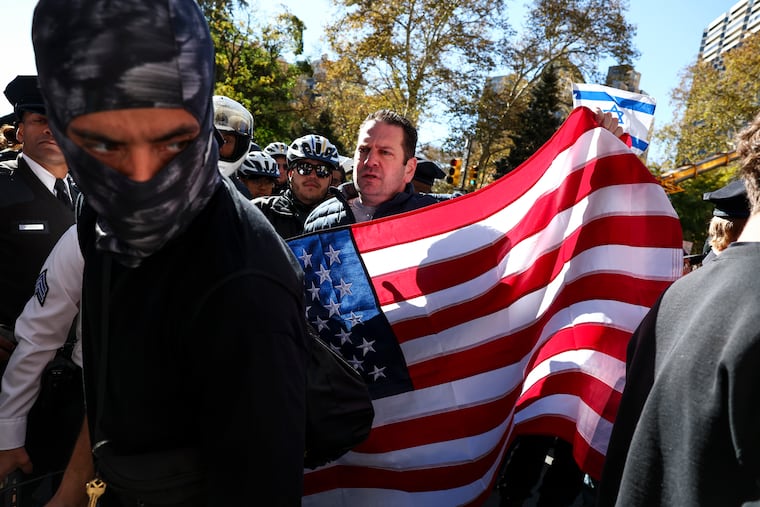

“Ride around Rittenhouse as we show these zio business owners that we see them for the disgusting humans they are.”
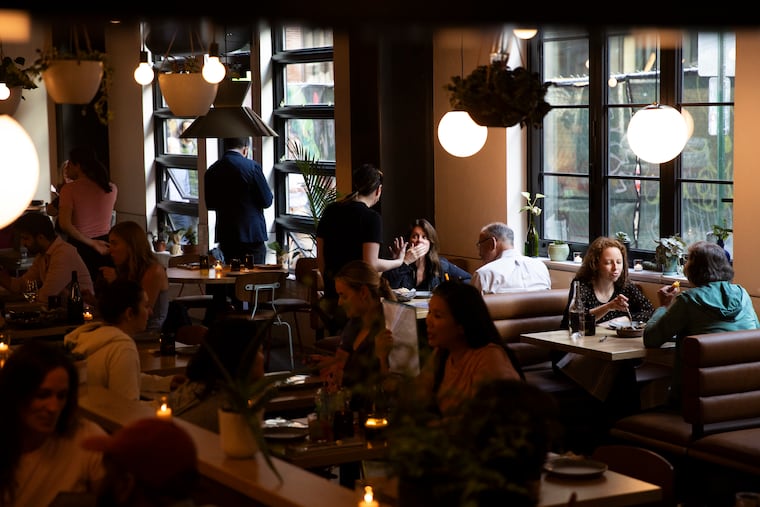
That’s what Philly Bike on Your Left posted last week, announcing their protest ride on Sunday to demand a boycott of several nearby Jewish-owned eateries. I’m Jewish and I live a few blocks from Rittenhouse Square. And I thought the bikers’ language was disgusting in its own right.
But I’m also proud to live in a country where everyone has the right to speak their minds, even when I find them bigoted and antisemitic. And I’m terrified at the prospect of the government telling us what’s so hateful that we can’t say or hear it.
That’s what the Trump administration has done to our elite universities over the past two years. It forced Columbia to pay $200 million and to adopt the White House’s definition of antisemitism, with a federal monitor checking to see if the university abides by the deal. Brown had to pay $50 million to get the government to call off an investigation of antisemitism on campus.
And to substantiate allegedly antisemitic activity at Penn, where I teach, the administration subpoenaed the names and phone numbers of students and staffers who joined Jewish-themed organizations. Fortunately, the White House backed off that demand a few months later.
But the administration’s investigation of Penn — and about 60 other schools — continues. Last week, after the GOP was drubbed in the midterm elections, the chief White House lawyer in the antisemitism probes stepped down. It’s too early to know how that will affect the investigations going forward.
But they have already chilled speech on campus. In response to the Trump threats, colleges are adopting “open expression” rules that — wait for it — limit open expression. At Penn, for example, a proposed set of guidelines would require seven days’ advance notice to stage a protest. It would also restrict speech that “targets individuals or groups” on the basis of race, sex, nation, religion, and sexual orientation.
» READ MORE: How the Haverford antisemitism settlement harms free speech | Jonathan Zimmerman
Sounds good, right? Wrong. Once you ban language on those grounds, anything — literally, anything — can be prohibited. Calling for a wall on America’s southern border? That’s anti-Mexican, and it has to go. Questioning whether the accused men in the Cornell case committed rape? That misogynist. It’s out.
I’m sure some people on the political left think it’s fine — indeed, necessary — to censor those comments. But I would guess that many of them also insist that we should be allowed to chant, “From the river to the sea, Palestine must be free,” which some Jews hear as a call for their elimination.
There’s just as much inconsistency on the right, of course. The river-to-sea comment is hate speech, they say, and we need to stamp it out. But “Build That Wall”? That’s free speech, and we need to protect it.
Please. The only answer to a double standard is a single one: everyone gets to speak, even when you hate what they have to say. Period.
The only answer to a double standard is a single one: everyone gets to speak, even when you hate what they have to say.
But that doesn’t mean you have to keep quiet yourself. To the contrary, raising your voice against hateful speech is one of the most important forms for free speech. And we saw a rich demonstration of that on Sunday at Rittenhouse Square.
An estimated 200 counterprotesters turned out to challenge the 300-odd pro-boycott protesters, who included about 200 bikers. It wasn’t a tea party. Both sides screamed invective at each other, and some of it would be unprintable in this newspaper.
But that’s part of free speech, too. When temperatures rise, we get intemperate.
That doesn’t mean you can engage in physical violence, of course. Three people were arrested: two for disorderly conduct and one for assaulting a police officer. But there was no property damage. Everyone said what they had to say — or yelled it — and then they went home.
To my hearing, the counterprotesters got the better of the argument. The boycotters — and the nearly 20 activist groups backing them — claim they’re anti-Israel, not antisemitic. They targeted the restaurants because the owners “support” Israel.
Really? Huda owner Yehuda Sichel says he raised money for a group aiding children who were injured or traumatized after the Hamas attack on them in 2023. The funds went directly the municipality where they lived, not to the Israel government or military.
But to the bike protesters, anyone assisting people in Israel — in any way — is simply a “zio.” That term has an ugly antisemitic history of its own. Philly Bike on Your Left deleted it from its earlier post, replacing the word with “zionist.”
But it continued to denounce the restaurants for allegedly supporting “the genocidal, child-killing, ethno-supremacist apartheid state of ‘Israel.’”
That sounds pretty antisemitic, especially the scare-quotes around “Israel.” The boycotters are free to disagree with me, because this is America. Nobody gets to tell them what they can or can’t say, about Israel or anything else.
And you can say whatever you want about them, too. We should all be proud of that.
About our columnists
In contrast to news reporters, who operate within an independent, nonpartisan framework, columnists are charged with including their perspectives, opinions, and viewpoints when presenting their reporting. Inquirer columnists include Jenice Armstrong, Will Bunch, Luis F. Carrasco, Paul Davies, Daniel Pearson, Trudy Rubin, and Sabrina Vourvoulias.