Trump claims active ceasefire talks, but Iran denies direct negotiations
The conflict, which officials originally said would last only a few weeks but is now entering in its sixth month, has dragged down Trump’s poll numbers.
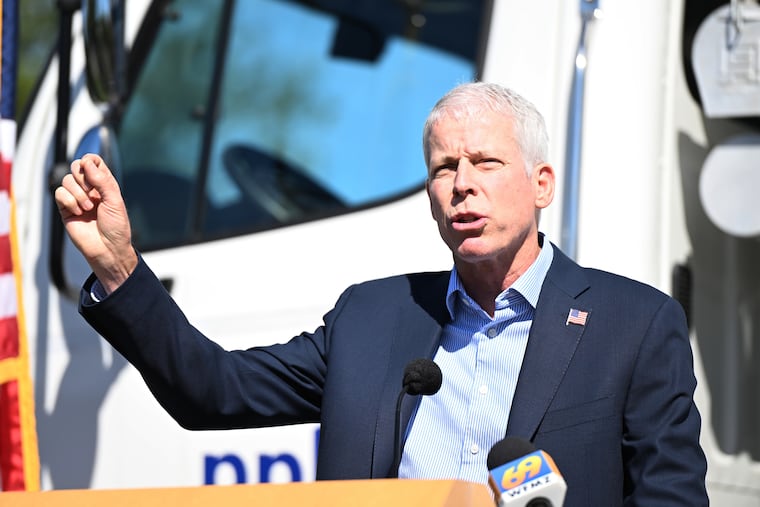
The status of the Iran war remained in limbo Monday, as President Donald Trump insisted that talks between Tehran and Washington were “going on right now” while Iran’s Foreign Ministry spokesman said, “We are not currently holding negotiations with the United States.”
Trump, who in a social media post earlier in the day called Iranian leaders “unbelievably duplicitous,” told reporters in the Oval Office that “we’re straight about” talks between the two countries, though “they deny. But they’re not denying it now. They just put out a statement, not denying it.”
Asked where that statement could be found, a White House spokesperson referred The Washington Post back to the president’s remarks.
Trump said Iran, along with other regional states, had “begged” for talks, leading him to call off what he had described as an imminent U.S. attack that would have been “harder than any attack … since World War II.”
“We were going to hit them very hard yesterday, very, very hard,” Trump said. But “I want to give them every last chance before decapitation. It’s very tough to do what we have planned, still planned,” he said. “I’m very proud of the fact that I will give people a chance.”
It was far from the first time since the war began on Feb. 28 that the two sides have offered differing versions of reality on damage done by their dueling airstrikes, what they have agreed to in on-again-off-again informal talks, or even whether those talks were happening.
The conflict, which officials originally said would last only a few weeks but is now entering in its sixth month, has dragged down Trump’s poll numbers. Growing numbers of Republican lawmakers and voters have questioned both the rationale for the war and Trump’s strategy.
Although Trump went into the war saying his goal was to destroy Tehran’s nuclear program — an objective he previously said was achieved after 12 days of U.S. and Israeli bombing last summer — Iran’s closure of the Strait of Hormuz within days after the conflict began quickly became the focus of administration attention. The narrow waterway is a chokepoint, bordered by Iran and Oman in the Persian Gulf, through which at least 20 percent of the world’s energy supplies transit.
Iran refused to let ships pass without permission, said it was going to impose tolls, and began mining the channel and shooting at commercial vessels. In April, the U.S. imposed a naval blockade barring all ships from entering or leaving Iranian ports. Iran continued to menace international shipping while Washington responded by bombing Iranian defensive sites around the waterway and some infrastructure farther inland, leading Tehran to fire missiles and drones at its Persian Gulf neighbors that host U.S. military facilities.
As the price of gasoline surged at U.S. pumps, the two sides agreed to direct talks in mid-April in Islamabad, with the U.S. delegation headed by Vice President JD Vance. Unable to reach agreement there, after subsequent lower-level negotiations they signed a 14-point memorandum of understanding in mid-June that included a pullback of the U.S. blockade, an easing of sanctions against Iran, and plans for Iran and Oman to jointly figure out a way to manage the strait, while Washington and Tehran moved to nuclear negotiations.
The ceasefire collapsed within weeks, largely over Iran’s insistence on continuing its control over the strait. The U.S. reimposed its blockade and sanctions, as both sides resumed sporadic military attacks.
In recent days, regional Arab powers — including Saudi Arabia, the United Arab Emirates and Qatar — have been in touch with Trump as they try to facilitate an end to the conflict, which is damaging their economies. Iran has also been reaching out to many of those same leaders.
U.S. intelligence agencies have assessed that Iran is unlikely to change its own negotiating stance or be defeated in the near term.
According to Tehran, there have been no direct negotiations with the U.S. since April, although both sides concede that messages have been passed through regional mediators.
Last week, Oman sent Tehran a proposal for reopening the Strait of Hormuz that would divide maritime traffic 50-50 between routes along their opposite coastlines. Muscat also suggested a system of “voluntary” contributions from nonprofits, interested states and companies to pay for navigational aid, maintenance and environmental safeguards for the strait.
Similar to a process used by Singapore, Malaysia and Indonesia, which border the Strait of Malacca, an international trade chokepoint between the Pacific and Indian oceans, the proposed system could be a face-saving way for Iran to move away from the tolls and controls that it has demanded and that Trump and other world leaders have said can never be allowed.
In a press briefing Monday in Tehran, Foreign Ministry spokesman Esmaeil Baqaei said that Iran was negotiating only with Oman over ensuring the safe passage of commercial shipping through the strait and that there were no talks with the United States.
“The strait was not closed because of disagreements between Iran and Oman,” Baqaei said. “It has faced disruption since last March due to the military aggression of the United States and the Zionist regime” in Israel.
In his Truth Social post Monday morning, Trump was dismissive of the Iran-Oman talks. “They ask for a meeting, some would say ‘beg,’ talks begin, with more scheduled in the immediate future,” he said of Iran, “and they say, openly and proudly, that they’re not having any discussions, that nothing is being talked about, and they’re only dealing with ‘Oman.’”
“They then go on to give their usual blather in saying, the Strait of Hormuz will be operated powerfully by them,” Trump said. But the United States has erected a “wall of steel” with its naval blockade, and “nothing gets through to Iran, unless we want it to, and nothing will get through, unless a Deal, or Total Surrender, is accomplished.”
Isaac Arnsdorf contributed to this report.