A lawsuit challenges arrests of immigrants who come to Philly’s ICE office for routine appointments
The lawsuit says a policy change by ICE in Philadelphia was unlawful, and turned arrests of immigrants during routine check-ins from an "unheard of" occurrence to a routine practice.
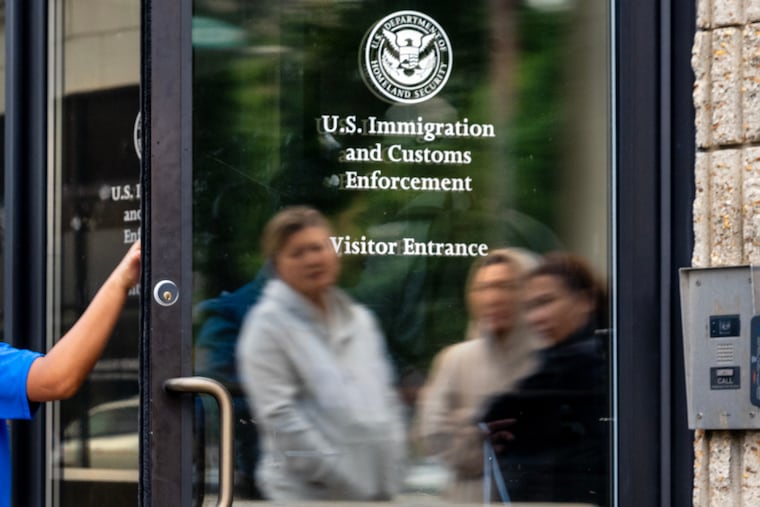
A 36-year-old survivor of slavery said he has tried to follow all the rules since fleeing Mauritania, a mostly desert land in West Africa, and seeking asylum in the United States in 2023.
But when Ousmane Soumare arrived at the U.S. Immigration and Customs Enforcement office in Philadelphia in November for a routine check-in, he was detained by officers.
Now Soumare, who was released by a federal judge’s order, and two other immigrants who fear a similar fate in their forthcoming appointments are suing ICE and the Department of Homeland Security over the policy change that led to such arrests.
The Philadelphia ICE field office violated federal law when it “unlawfully rescinded” a longstanding policy that largely allowed immigrants to pursue their immigration cases without fear of rearrest, the suit says. ICE then “began re-arresting and re-detaining people previously determined to pose no risk of flight or danger to the community and still in full compliance with all conditions of their release,” the suit says.
Soumare, Lassana Dianifaba, and a third immigrant, who was not named in court documents, filed the lawsuit Wednesday in federal court in Philadelphia.
» READ MORE: Trump administration sues Philadelphia over ‘ICE Out’ face mask ban for law enforcement
“When the government releases a person from custody, there is an implicit promise that their liberty will be honored as long as they follow what is asked of them,” said Vanessa Stine, senior staff attorney with the ACLU of Pennsylvania, which represents the immigrants. “These rearrests disregard a decades-old policy and sow fear and chaos.”
ICE does not comment on pending litigation, a spokesperson said.
‘Unheard of’
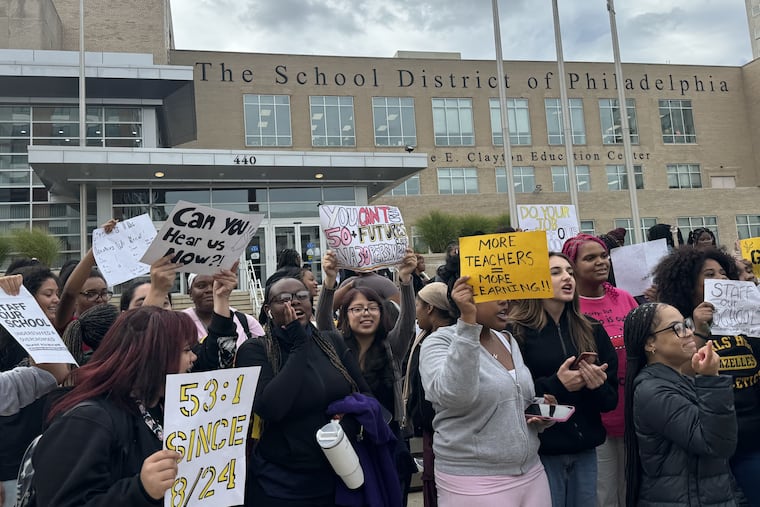
In Philadelphia, ICE arrests of people who arrive for what they thought would be routine check-ins and appointments have gone from rare to common.
That is because “sometime toward the middle of 2025,” the suit says, the local ICE office rescinded its policy that required individualized evaluation of new circumstances that would indicate an immigrant is a danger or flight risk.
Each year thousands of people report to ICE or related immigration agencies for the mandatory check-ins. Some immigrants are required to appear every couple of weeks, some once a month, others once a year.
The appointments help immigration officials keep track of people who in the past have been low priorities for deportation, allowed to live freely as they pursue legal efforts to stay in the United States. Now that landscape has shifted.
The change coincided with President Donald Trump’s administration’s implementation of a policy that mandates detention for virtually every undocumented immigrant encountered by authorities.
These mandatory detentions have led to an avalanche of lawsuits by immigrants. Philadelphia’s federal judges have granted their requests for bond hearings at near-universal rates.
» READ MORE: Immigration lawsuits are dominating Philly’s federal courthouse as ICE push continues
A ruling from the U.S. Court of Appeals for the Third Circuit on the constitutionality of the mandatory detention policy is pending.
The changes have put immigrants in risky positions, making every visit to the ICE field office a gamble, because they have little choice but to show up.
Six immigration attorneys filed affidavits in support of the new proposed class-action lawsuit that detail an explosion of cases. Christopher Casazza estimated his firm has represented roughly 190 people who were detained at ICE check-ins since September.
Before 2025, it was “unheard of” for a law-abiding immigrant to be detained at a routine check-in, Casazza said.
Steven Morley, who served as an immigration judge between 2010 and 2022, said in an affidavit that he could not recall “any circumstance” of people being re-detained unless they had committed a crime.
Philadelphia federal judges responding to the flood of lawsuits by immigrants challenging their detention have also taken notice of the shift.
In February, U.S. District Judge Gail A. Weilheimer wrote that ICE had set a “trap” for “thousands of noncitizens” by arresting immigrants who were following instructions.
ICE offices in other cities have similarly reversed course on requiring a material change in circumstance to re-detain released immigrants, and federal judges in California and New York found the lack of individual assessment unlawful.
The proposed class action in Philadelphia asks a federal judge to certify the class, and declare the rescission of the changed circumstances policy unlawful.
Soumare’s next check-in is scheduled for July, and he is anxious about visiting the ICE office again.
“When I think of the risk of being re-detained at my next check in, it scares me,” he said in a court filing. “But I will still attend because I want to follow all the necessary steps to stay here.”
Visa holders and green card applicants
Even people who are seeking legal status through lawful government processes are in danger of arrest.
Green-card applicants, asylum seekers, and others who have ongoing legal or visa cases to stay in the United States have been unexpectedly taken, part of a Trump administration strategy, lawyers and advocates say, to boost the number of immigration arrests and to deport anyone who can possibly be deported.
Arrests have occurred not just at ICE offices, but also at U.S. Citizenship and Immigration Services and at private offices of federal contractors.
ICE says that all immigrants who do not hold legal immigration status may be subject to arrest and removal. They say that arrests undertaken at federal agencies are safer for officers, because visitors have been screened for weapons when they enter the buildings.