Philly-based appeals court appears divided over ICE policy of detaining nearly all undocumented immigrants
The mandatory detention policy was rolled out by President Donald Trump’s administration last year, and has led to an avalanche of lawsuits by immigrants who challenged their incarceration.
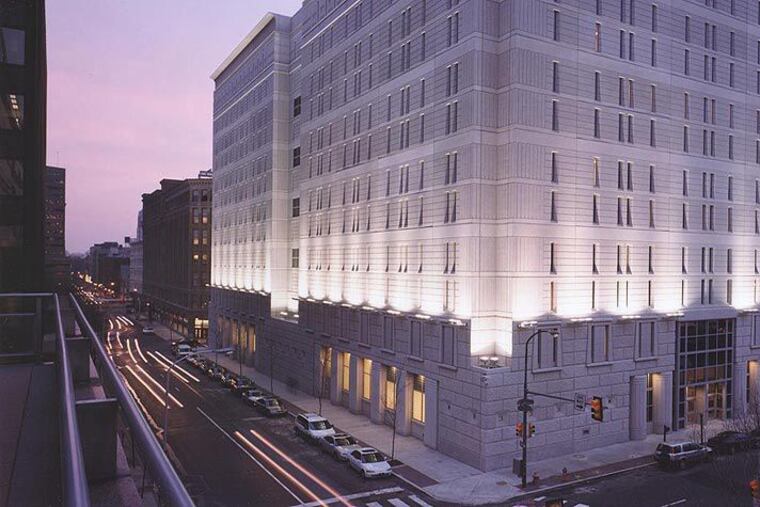
A Philadelphia federal appeals court appeared divided Monday about whether a controversial policy mandating detention for nearly all undocumented immigrants is legal.
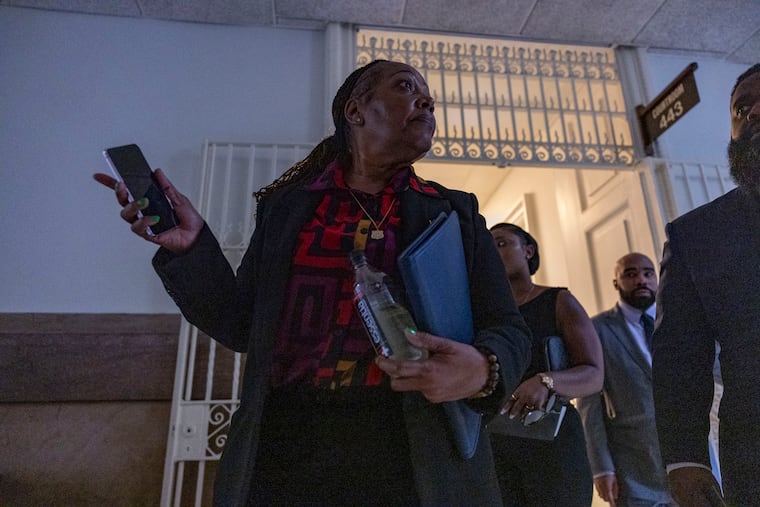
During oral arguments before a three-judge panel inside a Center City courtroom, the judges repeatedly pressed attorneys about whether and how federal immigration law offers different considerations to undocumented immigrants who have recently crossed the border when compared to those who have been in the country for years.
While much of the high-stakes hearing focused on arcane legal issues and specific wording within various statutes, tensions were raised when U.S. Circuit Judge Theodore A. McKee pressed Justice Department lawyer Charles Roberts on whether undocumented immigrants can be detained indefinitely without recourse under the policy. Roberts seemed reluctant to provide a definitive response.
“You need to answer the question because I’m asking you the question,” said McKee, an appointee of then-President Bill Clinton. “That’s why you’re standing there.”
Roberts said subject was not at the core of the issues being discussed Monday. Instead, he said, the heart of the matter is whether federal law permits authorities to detain undocumented immigrants and hold them as their cases proceed through immigration court — something Roberts said is legal.
An attorney for two men challenging that position called that “dead wrong,” saying the law provides different standards for how and when immigrants can be detained depending on how recently they’ve entered the country, and depending on which legal avenues they may be using in trying to stay.
The law “recognizes the reality that once people live here and establish deep ties to family and community here in the country, they’re differently situated particularly from a detention perspective,” said Michael Tan of the American Civil Liberties Union, who argued the case on behalf of two immigrants challenging the policy.
The mandatory detention policy was rolled out by President Donald Trump’s administration last year, and has led to an avalanche of lawsuits by immigrants who challenged their incarceration and demanded a bond hearing. Philadelphia’s federal judges have granted these requests, known as habeas corpus petitions, at near-universal rates.
The flood of litigation challenging the policy has occurred across the country. And so far, five circuit courts have ruled on the issue — with a variety of opinions.
Two have sided with the Trump administration: The New Orleans-based Fifth and the St. Louis-based Eighth Circuit. But the New York-based Second Circuit, Atlanta-based 11th Circuit and Cincinnati-based 6th Circuit Court rejected ICE’s new interpretation of mandatory detention.
A three-judge panel of the Chicago-based Seventh Circuit Court, meanwhile, was deadlocked.
Challenges concerning mandatory detention are pending in virtually every other circuit court. And the issue is likely to reach the U.S. Supreme Court because of the lack of clarity among appellate courts: Speaking in Hershey last week, Chief Justice John Roberts said a disagreement among the circuits was the most compelling reason for the highest court in the land to consider a case.
The Third Circuit case involves two undocumented immigrants who have been in the United States for over a decade and were picked up by ICE after the mandatory detention policy began. Neither has a criminal history. Federal judges in Philadelphia ordered their release, finding their detention was unlawful.
The government’s position in this case, as well as thousands of other cases across the nation, is that detained immigrants don’t have the right to a bond hearing, in which an immigration judge would determine whether they can remain in the community during their removal proceedings.
“You’re asking us to order you to spend, I don’t know how many millions of dollars a day, to incarcerate a lot of folks who don’t need to be incarcerated,” McKee said. “But let’s assume there’s a whole universe of people out there … who are not a risk of flight, not a danger to the community.”
U.S. Circuit Judge Jennifer Mascott, whom Trump appointed last year, said the court also needs to consider the burden created by providing every detained immigrant a hearing. She also asked questions that appeared more open to the argument that the government is legally permitted to detain any undocumented immigrant.
U.S. Circuit Judge Patty Shwartz concluded the hearing by saying the panel would take the issue under advisement. She did not say how quickly the court might issue its ruling.