10 alleged drug traffickers arrested following joint investigation by FBI, U.S. Attorney’s Office and Philly Police
Ten alleged drug traffickers, including two kingpins in Philadelphia, are charged with conspiracy to distribute cocaine and possession with intent to distribute following a multiyear investigation.
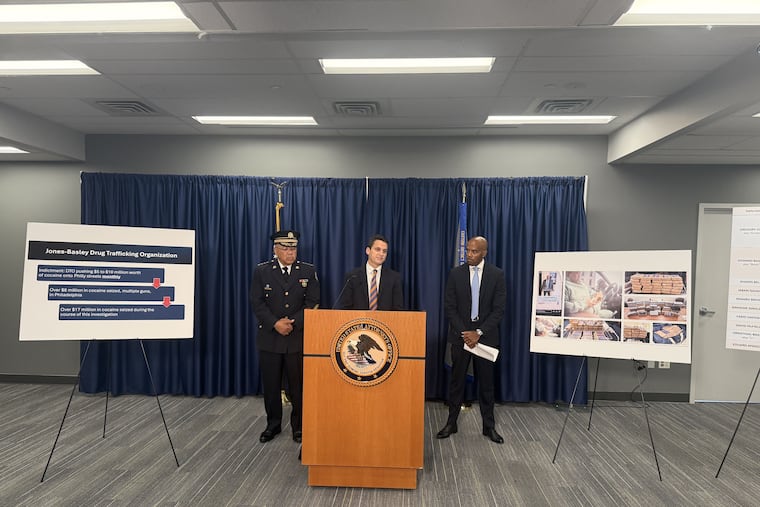
Ten alleged drug traffickers, including the organization’s two leaders, -- Gregory “Smallz” Jones, 48, and Edward “Beeb” Basley, 47 -- have been charged with conspiracy to distribute five kilograms or more of cocaine and possession with intent to distribute among other charges.
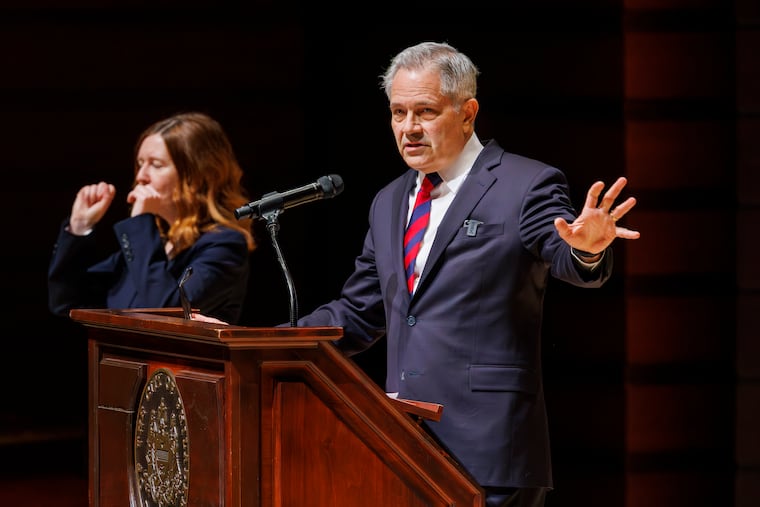
The charges follow a yearslong investigation into the operation which originates at the U.S.-Mexico border and ends on the streets of Philadelphia. The Jones-Basley organization is responsible for distributing $5 to $10 million worth of cocaine to the Philly streets every month, said David Metcalf, U.S. Attorney for the Eastern District of Pennsylvania.
“Every prosecution that our office initiates aims to make our country and our community safer but few have this magnitude of impact,” he said. “These are apex suppliers.”
Five of the defendants were arrested by the FBI Tuesday and the other five were already in state or federal custody. If convicted, all the defendants face maximum sentences of life in prison.
Almost all the defendants involved had previously been prosecuted by the U.S. Attorney’s office for similar offenses, Metcalf said, including Jones in 2009 and Basley in 2007.
“This prosecution is not just of a drug trafficking network, it is the decapitation of a conspiracy to inject poison into our streets,” Metcalf said.
Jones allegedly served as the primary leader of the organization and procured the drugs from a supplier in Mexico, who delivered bulk shipments via tractor trailer to the Philadelphia area.
In May, one truck bound for Philadelphia containing 89 kilograms, or nearly 200 pounds, of cocaine was stopped in Knoxville by the Tennessee Highway Patrol, Metcalf said. The driver was Orenthial “D” Bailey, 50, one of the defendants.
For the trucks that made it undetected to Philadelphia, Jones met with the drivers in parking lots in and around the city to pay for and collect the cocaine. He’d then, meet up with his partner to deliver his share after which both would distribute the drugs to customers and subdealers, according to Metcalf.
Cases like these are top priority for the U.S. Attorney’s office, Metcalf said, because the people at the top of drug operations are generally the hardest ones to replace.
“It is not simply easy to have a relationship with a Mexican cartel member or a source of supply internationally,” Metcalf said. “That takes a great degree of trust, it takes a great degree of confidence. Those types of relationships and that type of infrastructure is difficult to replicate.”