A Philly man went to jail for cursing at a judge. The Pa. Supreme Court reversed his conviction.
“Being offended shouldn’t justify a criminal conviction for the rest of your life,” Aaron Marcus said, the lawyer representing the man who yelled an expletive at a judge.
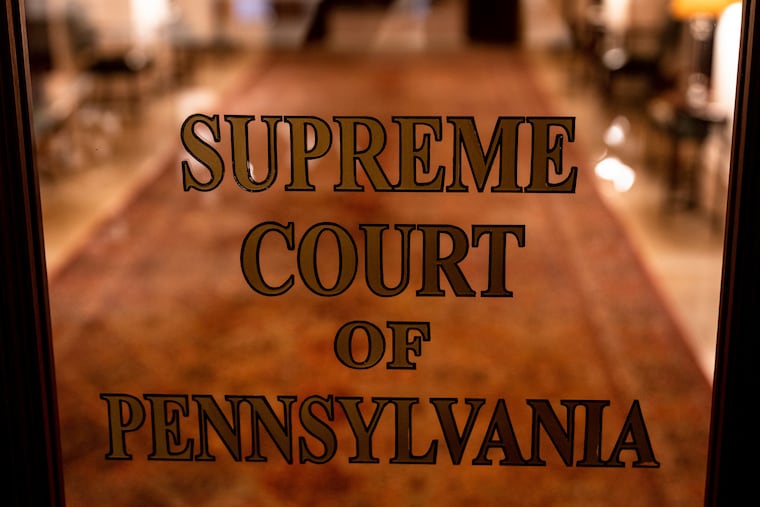
This article is not legal advice. But according to the Pennsylvania Supreme Court, yelling vulgarities at a judge isn’t a crime if a court proceeding wasn’t significantly obstructed.
The high court weighed in last week on the 2022 conviction of Basile Outlaw, who from the gallery of a Philadelphia Common Pleas Court, stood up and said “that judge is a [expletive],” according to the majority opinion.
“What did you say?” Judge Roxanne E. Covington replied.
“Never mind,” Outlaw said. “I’m leaving.”
Outlaw, 35, was in court that day to support a friend, who was a defendant in a criminal case. His outburst followed a ruling that didn’t go his friend’s way, a transgression that landed him in jail for 30 days.
Merely insulting a judge, leading to a momentary pause in a hearing, is not enough to justify a criminal contempt conviction, a unanimous Supreme Court held.
The Supreme Court’s reversal of Outlaw’s conviction is important because it guarantees protections for people who are overcome by emotion on a difficult day for them or a loved one, Aaron Marcus, a Defender Association of Philadelphia lawyer who represented Outlaw.
“Being offended shouldn’t justify a criminal conviction for the rest of your life,” Marcus said.
The Pennsylvania Attorney General’s Office, which argued on behalf of the commonwealth in the Supreme Court, did not respond to a request for comment.
After Outlaw left the courtroom, a deputy sheriff and court employee went after him, and he returned on his own. Marcus said his client wanted to apologize. But Covington ordered his arrest on contempt and set his bail at $75,000.
Outlaw did not deny his outburst, which rhymed with cough-sufferer, and expressed remorse. He was sentenced a week later to 15 to 30 days in jail.
In his appeal, Outlaw argued there wasn’t enough evidence that he obstructed the administration of justice to sustain his conviction. The prosecutors agreed, but the Superior Court judges did not.
Outlaw demonstrated “his own utter disrespect for the court,” the Superior Court found. The court said Outlaw potentially encouraged other attendees to “commit similar disruptions.”
“Calling a judge an indecent name in open court undermines the court’s authority and does obvious harm to its ability to conduct an orderly proceeding,” the Superior Court’s expletive-laden opinion said.
But a unanimous Supreme Court took a different view, relying on previous cases about court outbursts.
Justice David Wecht’s majority opinion explains that even though the comment “fell below the expected standard of courtroom decorum” the delay in the hearing was limited to the judge asking “what did you say?,” which was insufficient to convict Outlaw.
Because the Philadelphia District Attorney’s Office agreed with Outlaw’s position, the Supreme Court asked the Pennsylvania Attorney’s General Office to argue on behalf of the conviction. The office said contempt was appropriate because obstruction of the administration of justice includes “disrespect that undermines judicial authority in the eyes of the public.”
But Pennsylvania Supreme Court precedent says “inappropriate and even ill-mannered conduct which does not obstruct or delay the trial falls short” of punishable criminal contempt, Wecht wrote.