Gov. Josh Shapiro cruised to reelection in Pennsylvania. Now the real campaign begins.
A more substantial test of Shapiro’s strength is still to come, as he's staked his reputation on helping Pennsylvania Democrats win up and down the ballot.
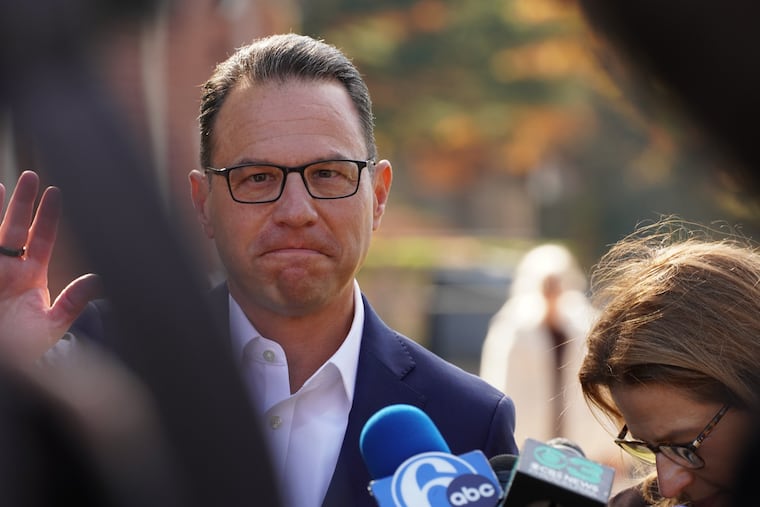
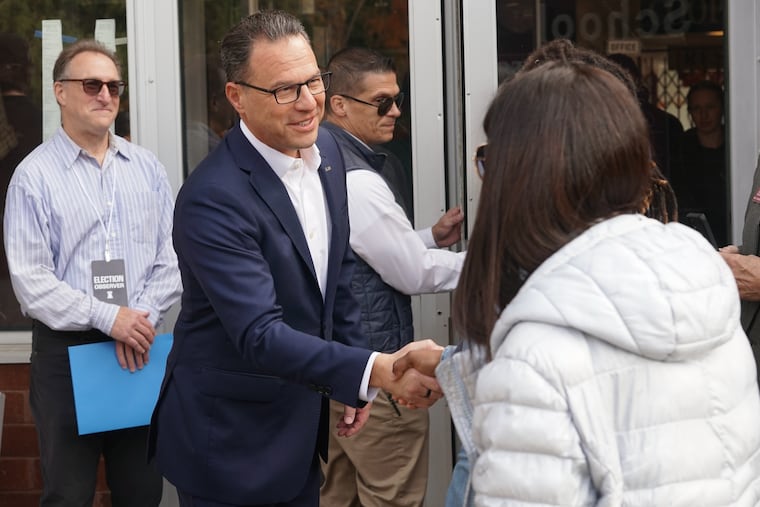
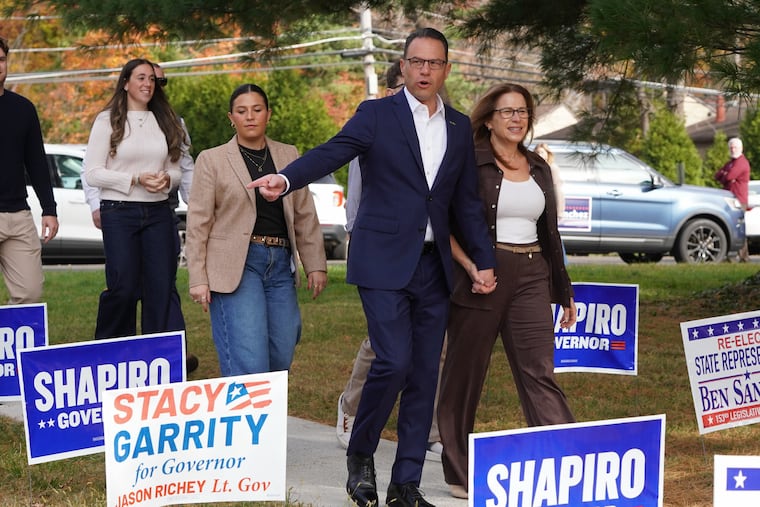
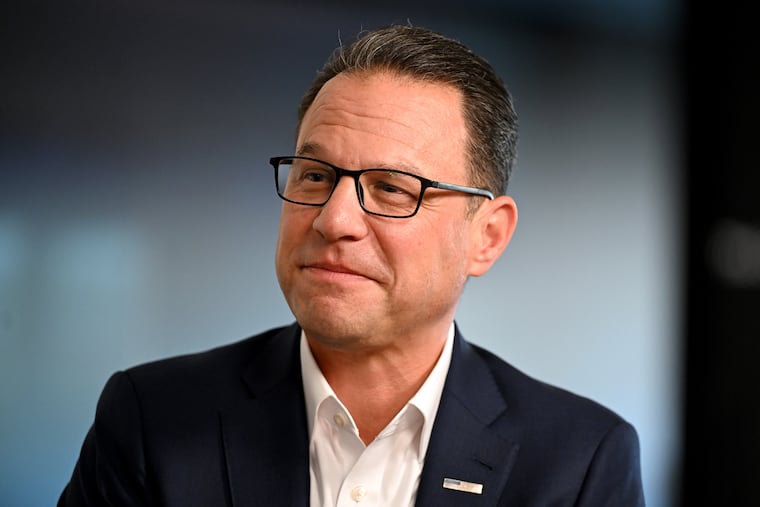
Gov. Josh Shapiro cruised to reelection on Tuesday, trouncing his Republican opponent Stacy Garrity in a decisive victory that strengthens the Democrat’s prospects for a 2028 presidential run.
The Associated Press called the race for Shapiro shortly after polls closed across the state. The resounding win for Shapiro, 53, of Abington Township, cements his dominance in the critical battleground state that voted for President Donald Trump just two years ago.
But a more substantial test of Shapiro’s strength is still to come in the following hours and days, as he’s staked his reputation on helping Democrats win up and down the ballot. The move could bolster his national standing at a time when the Democratic Party searches for a new leader to carry it into the post-Trump era. Shapiro invested $10 million of his campaign war chest to flip four congressional seats and to win a Democratic trifecta of control in Harrisburg for the first time since 1993, in races that had yet to be called on Tuesday evening.
» READ MORE: Why Josh Shapiro put himself on the line for the midterms — but still won’t talk about 2028
Garrity, 62, meanwhile, struggled to convince GOP donors to contribute to her campaign against the popular incumbent, despite receiving the state Republican Party’s endorsement unprecedentedly early in September 2025 and an endorsement from Trump in January.
A poll conducted by The Inquirer, New York Times, and Siena University found a quarter of GOP voters in the final weeks of the campaign still didn’t know enough about Garrity or her platform to form an opinion of her. For months, she was unable to purchase TV ads, while Shapiro was spending millions defining her as data centers’ “No. 1 fan.” An eleventh-hour push by skill games industry backers allowed Garrity to gain some advertising momentum in the final days of the campaign, but it was not enough to change Tuesday’s result.
Beyond the governor’s race
For months, public opinion polls showed Shapiro with a double-digit lead over Garrity with strong support from his Democratic base, solid favorability from independent voters, and even a notable sliver of support from voters who backed Trump two years ago. He also maintained record-high job approval ratings among modern Pennsylvania governors at the same time Trump’s approval ratings hit new lows.
Shapiro’s strong polling lead allowed him to focus his attention on rebuilding and securing his grip on the Pennsylvania Democratic Party, coordinating across state and congressional campaigns for a unified strategy in an election year already likely to benefit Democrats as the party out of power in Washington.
Shapiro over the last year has more clearly signaled his intentions to enter the 2028 presidential race. In his second four-year term as Pennsylvania governor, he may need to navigate a delicate balancing act in his job leading the nation’s fifth most-populous state while campaigning nationally. Pennsylvania voters are split over whether they want to see him run for the nation’s highest office, an Inquirer/New York Times/Siena poll found. (He would not have to resign to campaign for president, but would be required to resign if he was elected.)
Shapiro has been an elected official for two decades, previously serving as Pennsylvania’s attorney general, a Montgomery County commissioner, and a state representative. In 2024, he was on the short list to become Vice President Kamala Harris’ running mate, boosting his name recognition on the national stage. Since then, he’s continued to elevate his profile and lay the groundwork for a White House run, including publishing a memoir, sitting for national network TV interviews, and creating a federal political action committee which he can use to fundraise nationally and more easily fund a presidential bid.
» READ MORE: Gov. Josh Shapiro launches a federal PAC — the strongest signal yet he’s eyeing a 2028 run
Shapiro on Tuesday ran alongside Lt. Gov. Austin Davis, a former Democratic state lawmaker from outside Pittsburgh, and the first Black person ever elected to Pennsylvania’s executive branch. Davis, 37, will return to his position as the presiding officer of the state Senate — a role that could take on new importance this year as a potential tiebreaking vote in the state Senate, and depending on how far Shapiro makes it in a presidential campaign.
A high-stakes bid
Shapiro wagered his electoral success in the midterm election not on his own reelection, but on his ability to help Democrats flip four Pennsylvania congressional seats and secure the U.S. House.
He pitched himself and other Democrats on the ballot as a backstop to Trump’s “chaos, cruelty and corruption” — an appeal that broke through to multiple voters Tuesday. Some said they want to see him run for higher office soon.
In East Bradford Township, Doug Swartz said he cast a vote for “future President Shapiro.”
The 66-year-old said he’s been impressed with the governor’s political career, starting when he was a state representative.
“I think he’s the kind of guy who can be a consensus builder, and shown that he can reach across the aisle and play well with everyone,” Swartz said. “He’s got a great record on taxes, and, obviously the cost of living is out of his control.”
Shapiro also staked his political capital into flipping the state Senate to Democratic control, in efforts to bring a Democratic trifecta to Harrisburg. If that bid is successful, Shapiro has set an aspirational agenda to pass a number of top Democratic policy priorities that have been on the back burner for decades, including increasing the state’s minimum wage to $15 per hour, codifying abortion and LGBTQ rights, and allocating a new funding stream for mass transit. Clearing the way to pass those policies would notch another win for Shapiro and strengthen his list of achievements headed into a 2028 Democratic primary.
» READ MORE: Why Josh Shapiro and top Pa. Democrats think they can win a trifecta for the first time since 1993
But if Republicans hold onto control of the state Senate, he will again lead a split legislature that has become known for its dysfunction and gridlock — and give Shapiro, who has long branded himself a bipartisan dealmaker, less Democratic wins to boast to a national electorate. It could take days to know the outcome of these races and who will control the chamber.
Garrity, for her part, ran her campaign on a message that under Shapiro’s leadership, Pennsylvania is lagging other states in national rankings in its economic growth, education, and more. But that message hardly reached voters until the final days, when she received more than $6 million from the skill games industry after she voiced her support for them during the race’s lone debate on Oct. 7.
Initially, Garrity was poised to be a more formidable candidate against Shapiro, after Republicans coalesced around her early in an effort to avoid suffering another double-digit defeat like Shapiro’s race in 2022 against far-right state Sen. Doug Mastriano (R., Franklin). Republicans at the time blamed Mastriano for downballot losses, and vowed not to repeat their mistakes.
In the end, Garrity was unable to fundraise the millions of dollars necessary to rival Shapiro’s campaign hauls, and saw little national support as national Republicans focused elsewhere. Top Republican groups stayed out of the race, instead opting to invest in races they saw as more winnable in a particularly challenging midterm year for the GOP.
Caria Knight, of Mt. Airy, changed her party affiliation from Democrat to Republican specifically because of Garrity. She was impressed by her military experience as a retired U.S. Army colonel, as well as her tenure as treasurer.
Knight recognized, however, that Garrity’s chance of winning the governorship was “slim,” but said she was happy to support her anyway because of her values.
Successes, challenges, and gridlock
Shapiro’s first term as governor was marked by several attention-grabbing successes, including reopening a collapsed portion of I-95 in 12 days that bolstered his administration’s “get stuff done” motto and his focus on speeding up government approvals for licenses and permits. During his first term, state lawmakers also developed a new state tax credit for working families, created a new funding system for public education, and delivered a pension increase for retired teachers, police officers and firefighters. He also has touted implementing the “strictest guardrails in the nation” for data centers in August — a major shift in stance after previously supporting the increasingly unpopular developments.
But his term was also marked by a number of challenges, particularly in navigating the split legislature. He struggled as a dealmaker after a 2023 misstep in state budget negotiations over a deal on a school voucher program that led to tarnished relationships with top Senate Republicans.
Some voters on Tuesday said they still hadn’t forgotten his backtrack on school choice.
“He ran last time on education and kids and having vouchers,” said Lisa Mallon, 62, a Republican committeewoman in Abington. “As soon as he got in office, he pulled back on it.”
Around the same time in 2023, a longtime top aide, former State Rep. Mike Vereb (R., Montgomery), abruptly resigned after he was accused of sexual harassment by a female staffer in the governor’s office, resulting in the state paying the accuser a $295,000 settlement. His resignation came just before news of the allegations were reported by The Inquirer, and Shapiro has repeatedly said he had no knowledge of the investigation into Vereb.
More recently, Shapiro has attempted to lead the state through its worst measles outbreak in more than three decades, which has seen the deaths of at least six Pennsylvania residents. The deaths led to a public clash between Shapiro and U.S. Health and Human Services Secretary Robert F. Kennedy Jr., an anti-vaccine activist, whose agencies have refused to classify three of the state’s six deaths as caused by measles.
Shapiro also grappled with an increasingly dangerous job as a public figure, causing him to consider whether he should continue in elected office moving forward. He has been outspoken against political violence for years, but in April 2025, that violence came to his front door: A Harrisburg man firebombed the state-owned governor’s residence on the first night of Passover, which Shapiro and his family slept inside.
The man, Cody Balmer, whose family said he was having a mental health crisis, later told police he wanted to kill Shapiro because of his perceived support for the war in Gaza. (Shapiro has called for a two-state solution and has called for more U.S. aid to be sent to people living in Gaza.) Balmer later pleaded guilty to arson and attempted murder of Shapiro.
Casting his vote on Tuesday, Jay Zide, 61, of West Chester, said he believes Shapiro is a competent governor who “seems to work well with both sides,” and who would do a much better job in the White House than the current presidential administration.
“Shapiro,” he added, “is well-spoken, and he seems like a nice fella, for being a politician.”
Staff writers Vinny Vella and Zoe Greenberg contributed to this article.