America punishes Trump’s party: Takeaways from a Democratic landslide
The results amounted to an unambiguous mandate from the public for a check on a president who pushed the limits of his power, and they imperiled whatever was left of a legislative agenda for Trump.
Democrats marched to a landslide victory in the midterm elections on Tuesday as voters across the country raged at President Donald Trump’s party, dealing Republicans stunning defeats from the Deep South to the prairie lands.
For the first time this century, Democrats won statewide in Texas, taking not just a Senate seat but also the governor’s mansion. They won a Senate seat in Kansas, which had not happened in nearly 100 years. They flipped a Senate seat in South Carolina, a state that had barely been on the battleground map. And they seized House seats in such deep-red territory that Democrats are on a glide path to their biggest congressional majority in years.
Economic anxieties at home and a war abroad proved to be a politically toxic combination for Trump and his party. Democrats were on track to win the national House popular vote by the largest margin in a half-century.
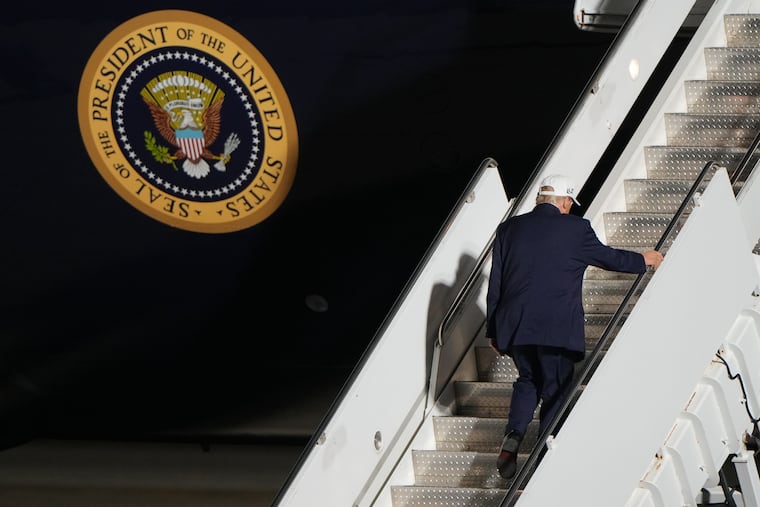
The results amounted to an unambiguous mandate from the public for a check on a president who has pushed the limits of his power, and they imperiled whatever was left of a legislative agenda for Trump. Now he and his administration will face investigations that are expected to consume much of the next Congress.
Here are eight takeaways from a brutal night for Republicans:
Democrats stormed to power in the Senate
A pediatrician in South Carolina. A minister in Kansas. A seminarian in Texas. A Paralympic gold medalist in Iowa. A logger in Maine.
Democrats had flipped half a dozen Senate seats by the time the clock struck midnight, taking control of the chamber in a sweep that seemed unthinkable just a year ago.
Entering Tuesday, Democrats did not hold a single Senate seat in a state that Trump had won all three times he ran for president. By Wednesday, they had senators-elect in six of them — including five that the president won by double digits in 2024. Democrats will enter 2027 with at least 54 seats.
The rout meant that for the rest of Trump’s second term, none of his nominees — whether for the Supreme Court or top administration posts — will be confirmed without Democratic consent. And because senators serve for six years, the Democratic victories promise to remake the chamber’s complexion into the next presidency.
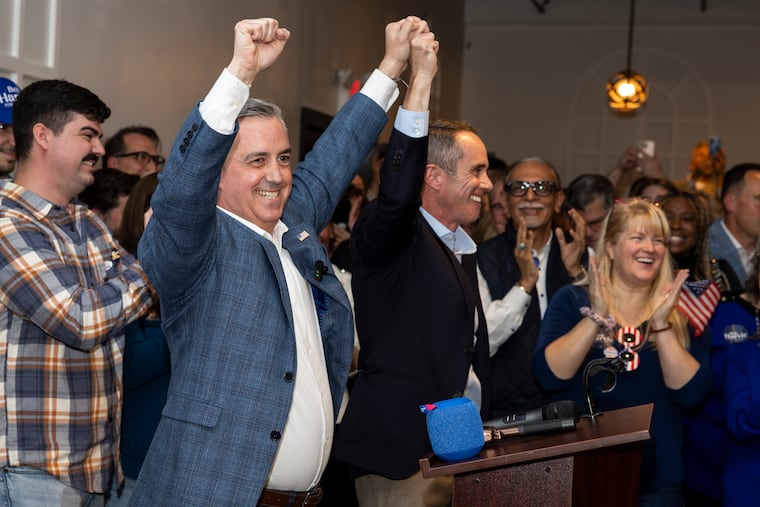
The Democrats who flipped seats included Annie Andrews in South Carolina, Adam Hamilton in Kansas, James Talarico in Texas, Josh Turek in Iowa and Troy Jackson in Maine.
In North Carolina, Roy Cooper, a former governor, became the first Democrat to win a Senate race in the state since 2008. In Ohio, former Sen. Sherrod Brown completed a comeback two years after being voted out.
The breadth of the Democratic victories suggested that the dire political climate for Republicans did more to power the opposition party’s successes than anything else.
Democrats are amassing a big House majority
Democrats flipped House seats in rural North Carolina and central Kentucky, in the suburbs of St. Louis and Omaha, Nebraska, and all along the Texas border. They seized three seats in Iowa and four in Pennsylvania. They rebuffed redrawn lines in Florida.
It was a romp.
Democrats made inroads deep into Republican territory, prevailing in a Kentucky district, for instance, that Trump carried by 15 percentage points in 2024. But they also ousted some of the sturdiest Republican survivors, including Rep. Brian Fitzpatrick of Pennsylvania, who had been the lone House Republican to win election three times in a district that Trump lost three times.
Now Democrats are on track for a sizable House majority, with Rep. Hakeem Jeffries of New York poised to become the first Black speaker in American history.
Jeffries rushed to the rooftop of the Democratic Party headquarters in Washington on Tuesday night to film a video declaring that Republicans were “shook.”
The final size of the Democratic majority was still to be decided. But as of early Wednesday, Republicans had yet to win any of the most competitive races.
War, prices and an unpopular president cost the GOP
“Pretend I am on the ballot,” the president said. His problem was that voters listened.
Before he lost the election, Trump lost the public’s trust on the issue that got him elected in the first place: the economy. And as the war in Iran dragged on, he struggled to defend a conflict that caused gas prices to rise, his MAGA coalition to fracture and Democrats to unite.
Trump aggressively campaigned in the final month, jumping from one red state to another in hopes of reviving the energy of his flagging base. But the results showed the extent of the rebuke for Republicans.
In 2018 in Trump’s first midterm election, Republicans lost the House as suburban women revolted against his leadership. This time, the rejection seemed to come from virtually every corner of his coalition, including white working-class voters in places such as Iowa, Ohio and Pennsylvania.
Trump, unsurprisingly, was defiant, distancing himself from his own defeat.
He began Tuesday morning by calling into Fox News to downplay the war in Iran. “When you talk about war, this isn’t really war,” he said.
He ended election night back on the phone with his favorite network that he sometimes loves to hate, speaking with Fox News anchor Bret Baier.
“It’s just a point in time, Bret. Just a point in time. It’s the way it is,” Trump mused. “There was a mood in the air, I guess.”
Democrats scored seismic victories in Texas
Democrats had dreamed for a generation of winning in Texas, one of the nation’s largest states, but they repeatedly fell short.
On Tuesday, they stormed to victory in the marquee statewide races. Talarico toppled Ken Paxton in the Senate contest, and Gina Hinojosa, a huge underdog, ousted Gov. Greg Abbott, a three-term incumbent.
Either outcome would have been momentous on its own. Both at once? That was more than Democrats could have hoped for not long ago.
At 37, Talarico is now one of the Democratic Party’s biggest stars. He overcame Trump’s attempt to cast him as outside the mainstream — “Talafreako” was the president’s derisive nickname — as well as the more than $200 million that Elon Musk spent trying to keep the state red.
“We just took back Texas,” Talarico told supporters in Austin.
At least some Hispanic voters in South Texas, a region that had swung toward Trump in 2024, swung back. Democrats claimed all four districts in Texas that border Mexico, which have some of the densest Latino populations anywhere in America.
“The nation will look at Texas and say we want something far more important than an election,” Hinojosa said in her victory speech. “They will look at Texas and say that faith in government has been restored.”
Republicans’ redistricting gambit sputtered
In the summer of 2025, the White House pushed Republican state legislators to redraw their congressional lines to bolster the party’s chances of holding a majority.
The effort started in Texas and spread to North Carolina, Ohio and Florida. A Supreme Court ruling that dealt a new blow to the Voting Rights Act expanded the efforts to Alabama, Tennessee and Louisiana.
But the surge of Democratic voters Tuesday overwhelmed some of the bespoke new GOP seats.
The first Democratic House flip of the night came in North Carolina, a state that Republicans had remapped. Jamie Ager, a Democratic farmer, won a western North Carolina district that Trump had carried by 10 points. And the chair of the House Republican campaign arm, Rep. Richard Hudson of North Carolina, was in danger of losing his seat.
In Florida, Reps. Kathy Castor and Jared Moskowitz survived despite a new map that put them into more Republican territory.
In an interview, Jeffries praised House Democrats who ran in new, tougher terrain.
“So many of our colleagues made the patriotic and courageous decision to stay and fight,” Jeffries said, adding, “They didn’t run away from the fire. They ran toward the fire and helped put it out.”
He ticked eight of them off by name. As of early Wednesday, none of those lawmakers had lost, and at least six had won.
Governor’s races made history
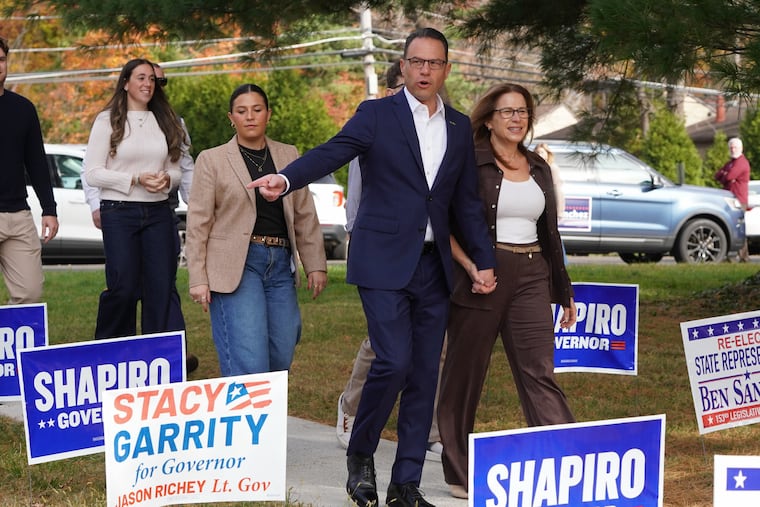
Democrats reclaimed a majority of the nation’s governor’s offices for the first time in two decades. They won at least five competitive races, in Georgia, Iowa, Ohio, Texas and Wisconsin.
Voters also elected three new Black governors: a Republican, Byron Donalds, in Florida, and two Democrats, Keisha Lance Bottoms in Georgia and David Crowley in Wisconsin. Before Tuesday, only three Black governors had ever been elected in the country’s history.
Bottoms is the first female Black governor ever to be elected.
Hinojosa was the first Latina elected to lead Texas. Another Democrat, Xavier Becerra, was the first Latino elected governor of California. Deb Haaland, a Democrat, will be the nation’s first female Native American governor after winning in New Mexico.
There were other historic firsts, too
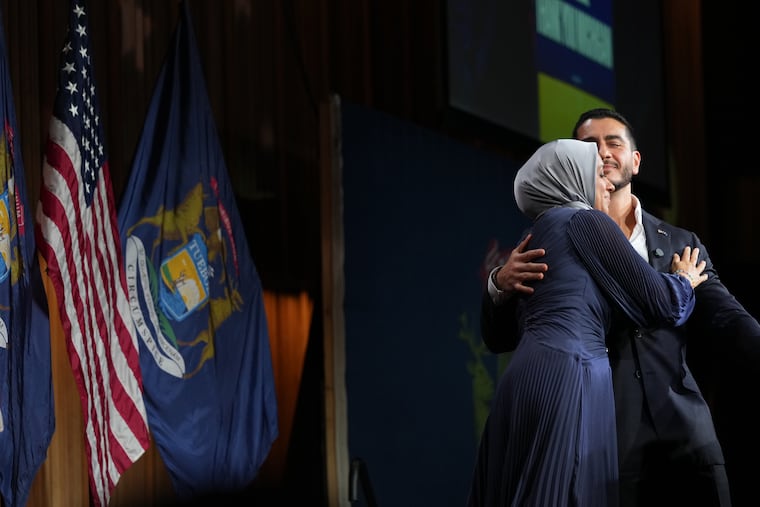
Michigan elected the nation’s first Muslim senator, Abdul El-Sayed, a Democrat. New Hampshire elected a Democrat, Rep. Chris Pappas, who will become the first openly gay man to serve in the Senate.
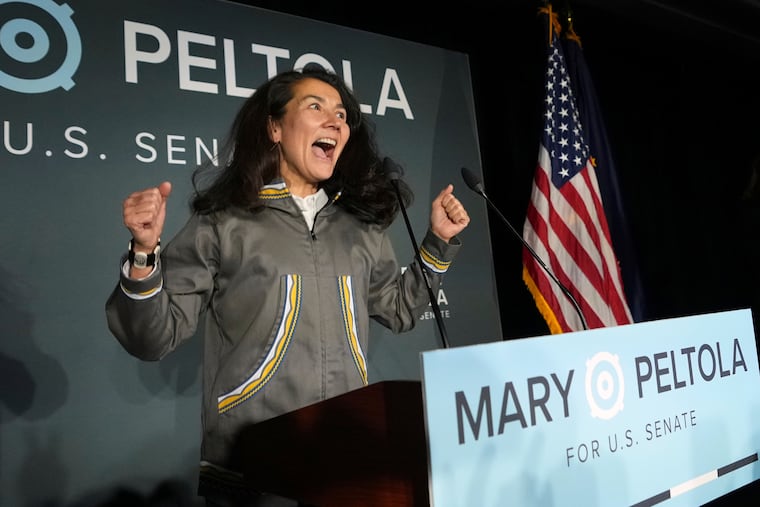
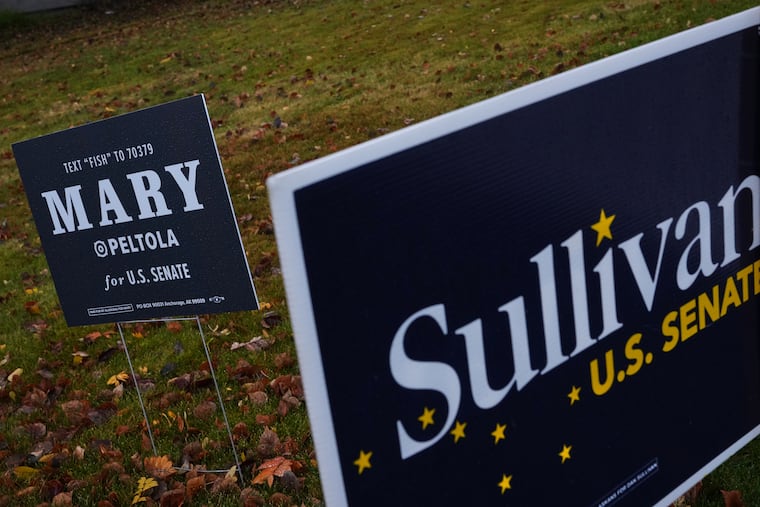
Peggy Flanagan, D-Minn., became the first Native American woman to win election to the Senate. A second Indigenous woman, Mary Peltola, D-Alaska, could join her if she is elected.
Musk’s millions didn’t make a difference
Musk, the world’s richest man, spent nearly half a billion dollars on the midterms. His party lost anyway.
Republicans, powered by Musk’s money and Trump’s $400 million super political action committee, dominated Democrats in spending in this year’s Senate races. The Democrats still swept through the battlegrounds.
It was the second consecutive election in which the national party that spent more lost, after former Vice President Kamala Harris’ cash advantage was not enough in 2024.
Now Republicans face a daunting financial future. Democrats continue to dominate them at raising small-dollar donations online. And the lone Republican who has energized Republican small donors for the last decade is Trump. He will not be atop the ticket again.
This article originally appeared in The New York Times.