Fed wins protection with Democrats taking control of the Senate
The flip effectively blocks Trump from confirming loyalist nominees to the Federal Reserve Board of Governors.
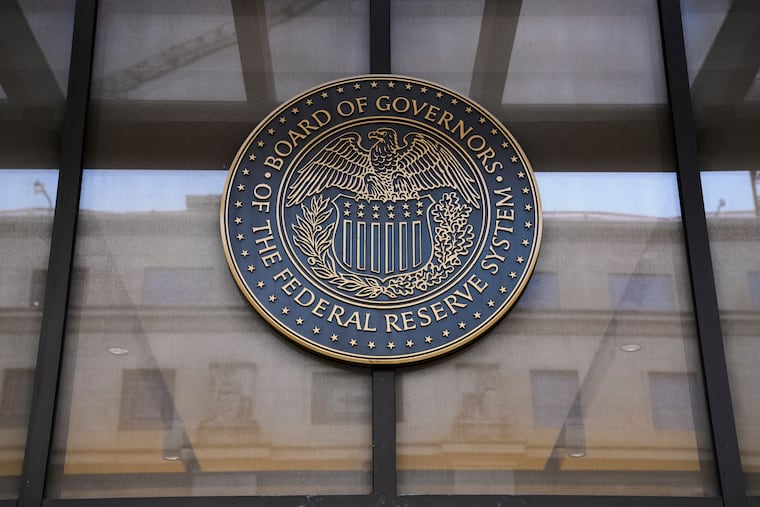
President Donald Trump’s campaign to reshape the Federal Reserve and bend interest-rate policy to his will has hit a formidable firewall after Democrats won control of the Senate on Tuesday.
The flip in the Senate, a seismic political shift that once seemed unlikely, effectively blocks the White House from confirming loyalist nominees to the Fed’s seven-member Board of Governors, stripping the administration of its most direct lever to exert greater control of the U.S. central bank.
Under a Democratic majority, Massachusetts Sen. Elizabeth Warren is likely to assume the chairmanship of the Senate Banking Committee, handing the panel that oversees the Fed to a lawmaker expected to bottle up any nominees perceived as unduly pliable to executive pressure.
Though she has long pushed for stricter oversight and accountability, particularly regarding Wall Street regulation, Warren has defended the central bank’s autonomy to set interest rates free of political interference.
“What the Fed gets from a Democratic Senate is a stronger bulwark,” said Mark Spindel, an investment manager at Potomac River Capital who cowrote a history of Fed independence. “It gives the Fed a more full-throated defense from presidential pressure.”
The result could also provide the Fed, and Chairman Kevin Warsh, more freedom to fight inflation with higher interest rates.
“The election result means the president has less leverage — on Congress, on the country, and on the Fed,” Daleep Singh, chief global economist at PGIM, and a former senior official in the Biden administration, said in an interview on Bloomberg Television. “Voters are angry about the rising cost of living. You put those two thoughts together, and the Fed is uniquely positioned to do something about it.”
Pivotal shift
A Democratic majority marks a pivotal institutional shift, depriving Trump of a Republican-controlled Senate after nearly two years of unprecedented executive pressure on the central bank.
Beyond repeated public demands for steep rate cuts, the administration has tested the boundaries of its authority, with the president cheering on a Justice Department investigation into former Chair Jerome Powell that a federal judge and lawmakers across party lines characterized as an abuse of power.
Trump has also continued to wage a campaign to oust Fed Governor Lisa Cook, a Biden appointee. The president ordered a White House hearing to examine the unproven claim that Cook committed mortgage fraud. A top White House official said last week the hearing would likely take place in December.
Trump has made clear he hoped eventually to appoint a majority of the Fed’s seven-member board. The administration has also weighed options for increasing control over the Fed’s regional reserve banks. Trump critics have pointed out that a majority on the Washington-based board would have the power to fire regional presidents.
Yet even with Republicans in charge, the administration hit resistance from Senate Banking Committee members uneasy with executive overreach — most notably when Republican Thom Tillis stalled Warsh’s nomination to become Fed chairman until the Justice Department dropped its inquiry into Powell.
“The Senate is always a constraint on the White House,” said Vincent Reinhart, chief economist at BNY Investments and a former senior Fed official. “The fact that there was pushback on how they dealt with Powell tells you how precarious the situation was. The midterms will make that even harder.”
No vacancy
At present, there are no vacancies on the Fed board. Powell bucked tradition and denied Trump an opening by remaining on after his term as chair expired in May. His term as a governor runs until January 2028. Philip Jefferson’s term as vice chair expires in September 2027, but if he remains on the board after that, Trump will have to choose someone already on the board to fill the leadership role.
Warren declined to comment for this story. A White House spokesperson said in a written statement ahead of Tuesday’s election that Trump was focused on campaigning to maintain Republican majorities in Congress to protect his economic agenda.
As of early Wednesday, Senate Democrats had clinched at least 54 seats, with just Alaska and Mississippi still unresolved. Currently, Democrats hold 47 Senate seats, including two independents who caucus with the party.
That political shift would dramatically constrain Trump’s ability to repeat tactics used last year. When Fed governor Adriana Kugler unexpectedly resigned in August 2025, the administration worked at breakneck pace with Senate Republicans to confirm Stephen Miran, a top White House economic adviser. Once seated, Miran dissented at all six policy meetings in which he participated, always in favor of steeper rate cuts, until he was replaced on the board by Warsh in May.
A Democratic majority robs the White House of any payoff if any current governor resigns or if the administration succeeds in creating an opening.
By law, a president may remove a Fed governor only “for cause” — a standard long interpreted by legal scholars as requiring proof of severe malfeasance or dereliction of duty, rather than policy disagreements. Trump is the first president to attempt to oust a sitting governor.
Limited insulation
If any vacancies appear on the Fed board — through a court decision or otherwise — a Democratic-led Banking Committee could simply refuse to advance a replacement, leaving the seat open rather than allowing Trump to install an ally.
Some Fed watchers argue a Senate flip offers only limited insulation against an aggressive executive branch. Democrats cannot prevent the White House from using pressure tactics — including the threat of dismissal — to cow sitting policymakers.
Moreover, if the administration successfully ousts disfavored officials and simply leaves those seats empty, that could still shift the balance of power at the Fed. A Democratic-run Senate provides “a marginal reduction in the threat to Fed independence, but it doesn’t strike me as a sea change,” said Michael Strain, director of economic policy studies at the conservative American Enterprise Institute.
“The bigger threat,” he added, “is weaponizing the criminal justice system in order to affect monetary policy decisions.”
Maria Eloisa Capurro contributed to this article.